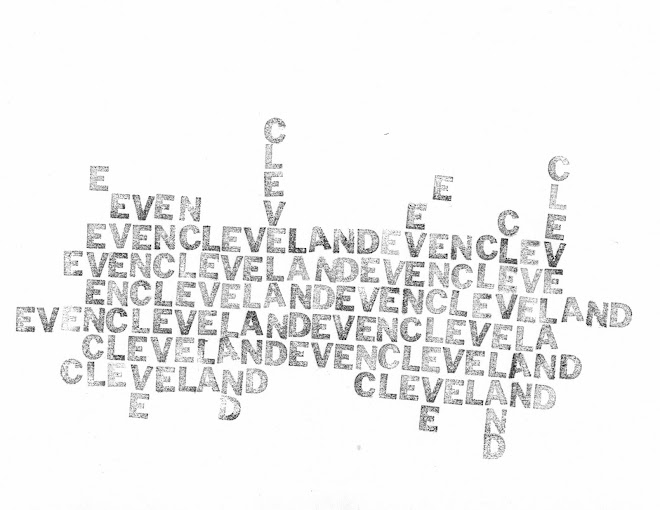
Showing posts with label invisible cities. Show all posts

The inferno of the living is not something that will be; if there is one, it is what is already here, the inferno where we live every day, that we form by being together. There are two ways to escape suffering it. The first is easy for many: accept the inferno and become such a part of it that you can no longer see it. The second is risky and demands constant vigilance and apprehension: seek and learn to recognize who and what, in the midst of the inferno, are not inferno, then make them endure, give them space.
Invisible Cities.

Thomas Hoepker: Rush hour on the New York subway, 1960. © Thomas Hoepker / Magnum Photo. Via.

Thus the city repeats its life, identical, shifting up and down on its empty chessboard. The inhabitants repeat the same scenes, with the actors changed; they repeat the same speeches with variously combined accents; they open alternate mouths in identical yawns.
Invisible Cities.

Photos from Hipsters, Hustlers, and Handball Players: Leon Levinstein's New York Photographs, 1950–1980, currently on view at The Met.

In Chloe, a great city, the people who move through the streets are all strangers. At each encounter, they imagine a thousand things about one another; meetings which could take place between them, conversations, surprises, caresses, bites. But no one greets anyone; eyes lock for a second, then dart away, seeking other eyes, never stopping.
Invisible Cities.

Rudy Burckhardt: 34th Street, NYC, 1978. Via.

The city appears to you as a whole where no desire is lost and of which you are a part, and since it enjoys everything you do not enjoy, you can do nothing but inhabit this desire and be content. Such is the power, sometimes called malignant, sometimes called benign, that ... the treacherous city possesses ...
Invisible Cities.

Etching by Martin Lewis (1881-1962), via.


Lyonel Feininger:  

Manhattan Skyscrapers (c. 1948-1956), oil on canvas. Via.
Mid-Manhattan (July 10, 1955), watercolor, charcoal and pen, and black ink on 19-1/4 by 12-1/4 inch paper.

Those who look down from the heights conjecture about what is happening in the city; they wonder if it would be pleasant or unpleasant to be in Irene that evening. Not that they have any intention of going there... but Irene is a magnet for the eyes and thoughts of those who stay up above.
... Kublai Kahn expects Marco to speak of Irene as it is seen from within. But Marco cannot do this: he has not succeeded in discovering which is the city that those of the plateau call Irene. For that matter, it is of slight importance: if you saw it, standing in its midst, it would be a different city. Irene is a name for a city in the distance, and if you approach, it changes.

For those who pass it without entering, the city is one thing; it is another for those who are trapped by it and never leave. There is the city where you arrive for the first time; and there is another city which you leave never to return. Each deserves a different name...
Invisible Cities.

Map of Manhattan via.

The city ... does not tell of its past, but contains it like lines of a hand, written in the corners of the streets, the gratings of the windows, the banisters of the steps, the antennae of the lightening rods, the poles of the flags, every segment marked in turn with scratches, indentations, scrolls.
Invisible Cities.

Czech book cover via.

... there is a city in the shape of New Amsterdam known also as New York, crammed with towers of glass and steel on an oblong island between two rivers, with streets like deep canals, all of them straight, except Broadway.
Invisible Cities.

Illustration from Miroslav Sasek's This Is New York.

With cities, it is as with dreams: everything imaginable can be dreamed, but even the most unexpected dream is a rebus that conceals a desire or, its reverse, a fear. Cities, like dreams, are made of desires and fears, even if the thread of their discourse is secret, their rules absurd, their perspectives deceitful, and everything conceals something else.
Italo Calvino - Invisible Cities.

Barbara Morgan: Fossil in Formation (1965).