Showing posts with label virginia woolf. Show all posts

uncanny materiality


Andrew Wyeth, "Perpetual Care," 1961.

... [T]he pale, strained face of a girl dressed in white once seemed to Wyeth to be looking out of the high rear window of the Baptist Church across the St. George River. Wyeth, through binoculars, had been studying this church—an echo of Cushing with its frame structure and cemetery monuments mottle orange by lichen. He investigated and found nobody there. But the powerful impression remained.

Richard Meryman, Andrew Wyeth, 1968, pg. 104.

*

The Sibyl's Leaves, a set of 46 fortune-telling cards published by William Stoddard of New York, 1833, with a lithographic witch illustration by Edward Williams Clay. Via American Antiquarian.

*

Shibata Zeshin (1807-1891), "Young watermelons and vine," from a group of six lacquer paintings. Via le jardin robo.

*

19th-century Appenzell whitework embroidered cloth, via Newlyn Lowly.

*

Hallway decorations by Nicolaas Maritz in the London home of Anthony Collett, photographed by Michael Sinclair for House & Garden, October 2021.

*

Vernacular owl-shaped birdhouse, ca. 1900. Via David Schorsch.

*


*

Jell-O jack-o-lantern from It’s Dessert Time!, 1953. Via Weird Old Food.

*
A young priest called Walchelin, returning home one clear night in Normandy around a thousand years ago, heard a great clash and din of an army approaching; he assumed it was the soldiers who followed a local warlord, and hid himself in fear behind some medlar trees. But what he saw, instead, was a ghostly troop: first the lay folk, on foot, weighed down by terrible burdens; then the clergy, bishops as well as monks, all black-cowled and weeping; another black-robed, fiery army of knights then rode by, on black chargers. All these numbers of the dead were suffering horrible tortures, the women especially, for they were riding saddles of burning nails, and were being lifted in the air by invisible forces and dropped down again onto the points. Walchelin recognised the procession: it was the familia Herlequini, or Hellequin’s rabble, the grim and unquiet crowd mustered by the lord of the dead, about which he had heard many stories.

The account is dated 1 January 1091 and is the earliest extant literary telling of this phantom army, taken down by Orderic Vitalis, an Anglo-Norman monk, from the report of his colleague, the eyewitness. Walchelin related how he thought he wouldn’t be believed if he didn’t bring back proof, so he left his hiding place and tried to catch and mount one of the riderless black horses going by: the stirrup burned his foot and the reins froze his hand. Fifteen years after his experience, the scars remained, the authenticating brand from the other world: Walchelin showed them to the chronicler.

Marina Warner, "Suffering Souls." London Review of Books, June 18, 1998.

*
Human and puppet limbs are entwined, and there is a sense, both comforting and disconcerting, of a group-individual, like the shadowy figures who merge with the dark in Goya’s Black Paintings. Each puppet is both itself and a small society, and even the puppets’ materiality is uncanny—they are floating, airy creatures weighted by earthly human spirits. The puppeteers are not the only artists giving the puppets life. On a separate platform to the right of the action, three male chanters sit in a neat row, next to men playing the shamisen, a stringed instrument with a raw and piercing tone which is often used in vocal accompaniment. The chanters give the puppets voice with intense and compressed screeches, gasps, and tears of terror, shame, and remorse—but they themselves slip from our awareness. Their disembodied voices operate like a soundtrack, synchronized with puppet gesture and emotion: a sinking chest, the kink of an elbow, a feverish shake.

Jennifer Homans, "The Puppet Masters." The New Yorker, 11/4/2024. 

*
But they had found it in the drawing room. Not that one could ever see them. The windowpanes reflected apples, reflected roses; all the leaves were green in the glass. If they moved in the drawing room, the apple only turned its yellow side. Yet, the moment after, if the door was opened, spread about the floor, hung upon the walls, pendant from the ceiling—what? My hands were empty.

Virginia Woolf, "A Haunted House.

*
Fear seemed to exude from the walls, to dim the mirrors with its clammy breath, to stir shudderingly among the tattered draperies, to impregnate the whole atmosphere as with an essence, a gas, a contagious disease.

Ella D'Arcy, "The Villa Lucienne."

*
The puppies had a pretty good life, except at night when the ghosts that lived in our house came out of the stone-floored pantry, and down from the big cupboard to the left of the chimney breast. Depend upon it, they were not dripping or ladies or genteel; they were nothing like the ghost of drowned Clara, her sodden blouse frilled to the neck. These were ghosts with filed teeth. You couldn't see them, but you could sense their presence when you saw the dogs' bristling necks, and saw the shudders run down their backbones.

Hilary Mantel, "Destroyed."

*
Anno 1670, not far from Cyrencester, was an Apparition: Being demanded, whether a good Spirit, or bad? returned no answer, but disappeared with a curious Perfume and most melodious Twang.

John Aubrey, Miscellanies, 1696.

*

a handful of apples / october


*

Cypriot limestone hand holding a piece of fruit. The Metropolitan Museum of Art.

*

A photograph of unpeeled apples by Richard Tepe, ca. 1900-1930. The Rijksmuseum.

*

Bruised stone apple, from the archives of criticalEYEfinds.

*

"Apples," folio 48 (verso), from Florilegium (A Book of Flower Studies), 1608. The Cleveland Museum of Art.

*

Doris Ulmann, "Women Gathering Apples," ca. 1930s. Ogden Museum of Southern Art

*


*

James Nasmyth,"Back of Hand & Shrivelled Apple. To illustrate the origin of certain mountain ranges by shrinkage of the globe," ca. 1870 (in or before 1873). From The moon : considered as a planet, a world, and a satellite.

*
The composer's white summer suit rests on a hanger in his study; his broad-brimmed Borsalino and stick are on a nearby table. Here is the Steinway grand he was given on his fiftieth birthday (though he composed in head, not on the piano); there is a run of the National Geographic Magazine covering the last five years of his life. On the Russian oak desk at which he worked from the time of his marriage in 1892 lies the wooden ruler Aino carved for him, with which he ruled his scores; also, an empty box of Corona cigars, and an elegant Tiffany photo frame, containing a portrait of Aino, through which the light streams. Open on the desk is a facsimile score of his greatest symphony, the Fourth. But the homely is never far away: in the kitchen, screwed to the wall, is an apple-coring machine Sibelius brought back from one of his trips to America. Made of black cast-iron, it is a Heath Robinsony contraption of prongs, screws, and blades that will peel, core, and slice your apple at the turn of the handle. From the same trip he also brought his wife a Tiffany diamond; but it is the apple-corer that sticks in the mind.

Julian Barnes, from "Ainola: Music and Silence." The Lives of Houses, ed. by Kate Kennedy and Hermione Lee. 

*
The apples are everywhere and every interval, every old clearing, an orchard. You pick them up from under your feet but to bite into them, for fellowship, and throw them away; but as you catch their young brightness in the blue air, where they suggest strings of strange-colored pearls tangled in the knotted boughs, as you notice their manner of swarming for a brief and wasted gayety, they seem to ask to be praised only by the cheerful shepherd and the oaten pipe.

Henry James, from New England: An Autumn Impression, 1905. Via The New York Review

*
The white October sun circles Kirchstetten
With colours of chrysanthemums in gardens,
And bronze and golden under wiry boughs,
A few last apples gleam like jewels.

Stephen Spender, from "Auden's Funeral."

*
I always think of those curious long autumn walks with which we ended a summer holiday, talking of what we were going to do–‘autumn plans’ we called them. They always had reference to painting and writing and how to arrange social life and domestic life better … They were always connected with autumn, leaves falling, the country getting pale and wintry, our minds excited at the prospect of lights and streets and a new season of activity beginning–October the dawn of the year.

Virginia Woolf, writing to her sister Vanessa Bell, ca. September 1927.

*

assorted gifts of varying opulence


Polspotten's brass candelabra, as twisted as an old apple tree.

Bridie Hall's intaglio soaps, for getting into a (classical) lather.

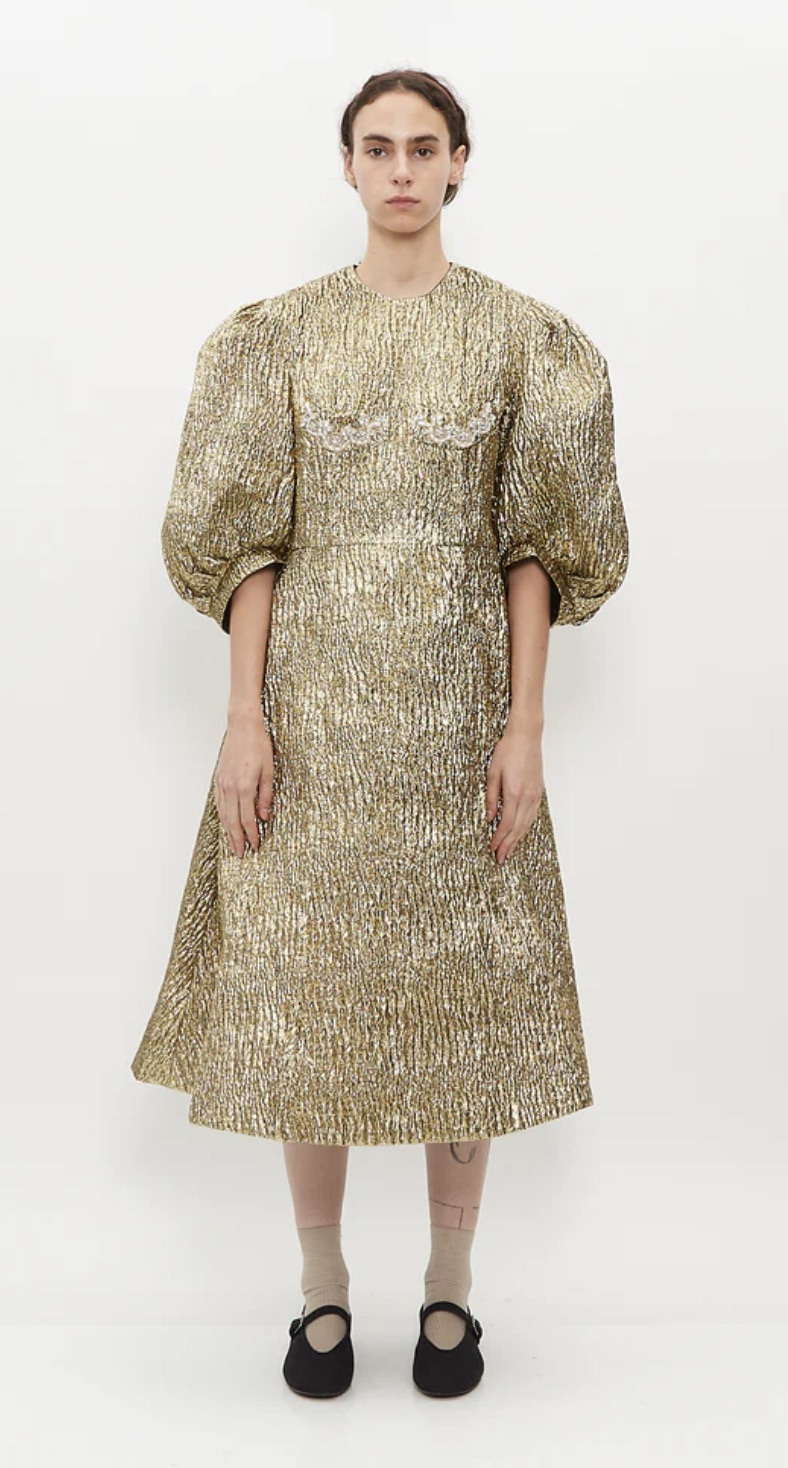
A golden gown by Simone Rocha, for sitting for your official portrait.

Delectable almond cookies, packed in a keep-forever tin.

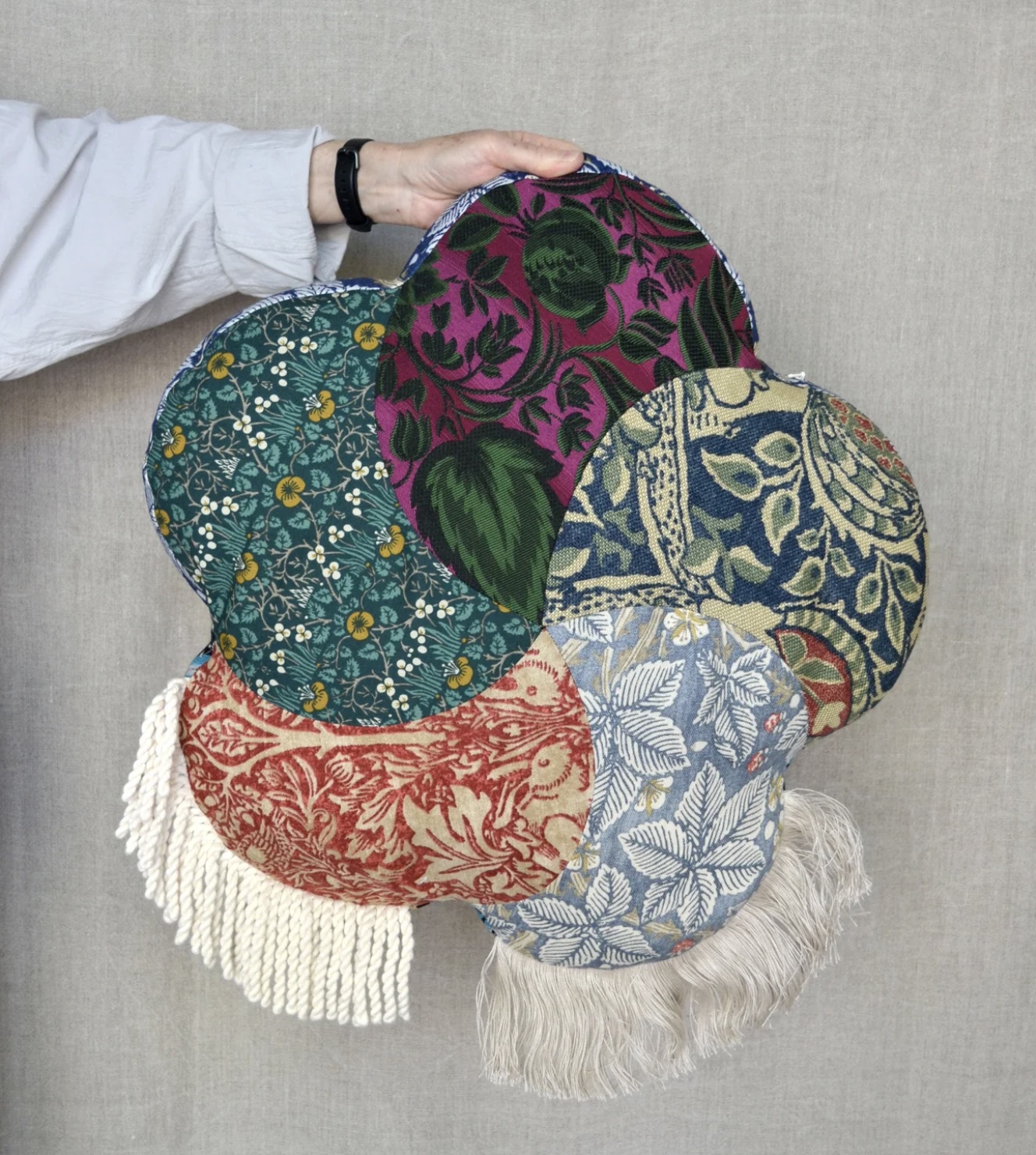
Weiner Time's exuberant cushion, for decadent lounging.

Buly matches, scented with violet and rose.

A diamond-shaped tin of marzipan sweets, because marzipan always feels fancy.


A POJ Studio kintsugui kit, for making repairs in gold.

A Hogarth Press first edition of Virginia Woolf's Monday or Tuesday, with plates by her sister, Vanessa Bell.


Bookmarks fit for royalty, designed by Ark Colour Design in Scotland.

A truly luxe hot-water-bottle cover, made by Samantha Holmes of ethically sourced alpaca and wool.

Smart shoes are always a treat—these are Tibi's Randolph flats in zebra-print pony hair.

A bottle of tears—could anything be more precious?

*

One more indulgence: These funny gift guides are an annual delight to compile for all of you anonymous folks out there. I don't make any money from them—no affiliate links, no placements, nada! I'm an online renegade!—but if they have brought you joy or amusement, please consider making a donation to Doctors Without Borders. I'm donating what I can, too, and holding the people of Palestine, Ukraine, and Sudan in my heart. Thank you.

glance to the sun


Edmund Kesting, Glance to the Sun (Blick zur Sonne). 1928.

*


I thought it peculiar that the sun, the quintessential giver of life and warmth, constant in our lives, symbol of enlightenment, spirituality, eternity, all things unreachable and ephemeral, omnipotent provider of optimism and vitamin D… and so ubiquitously photographed, is now subsumed to the internet – this warm singular object made multiple in the electronic space of the web, and viewed within the cool light of the screen.
*

From Barbara and Michael Leisgen's series Mimesis, ca. 1970-1971. Via stopping off place.

*

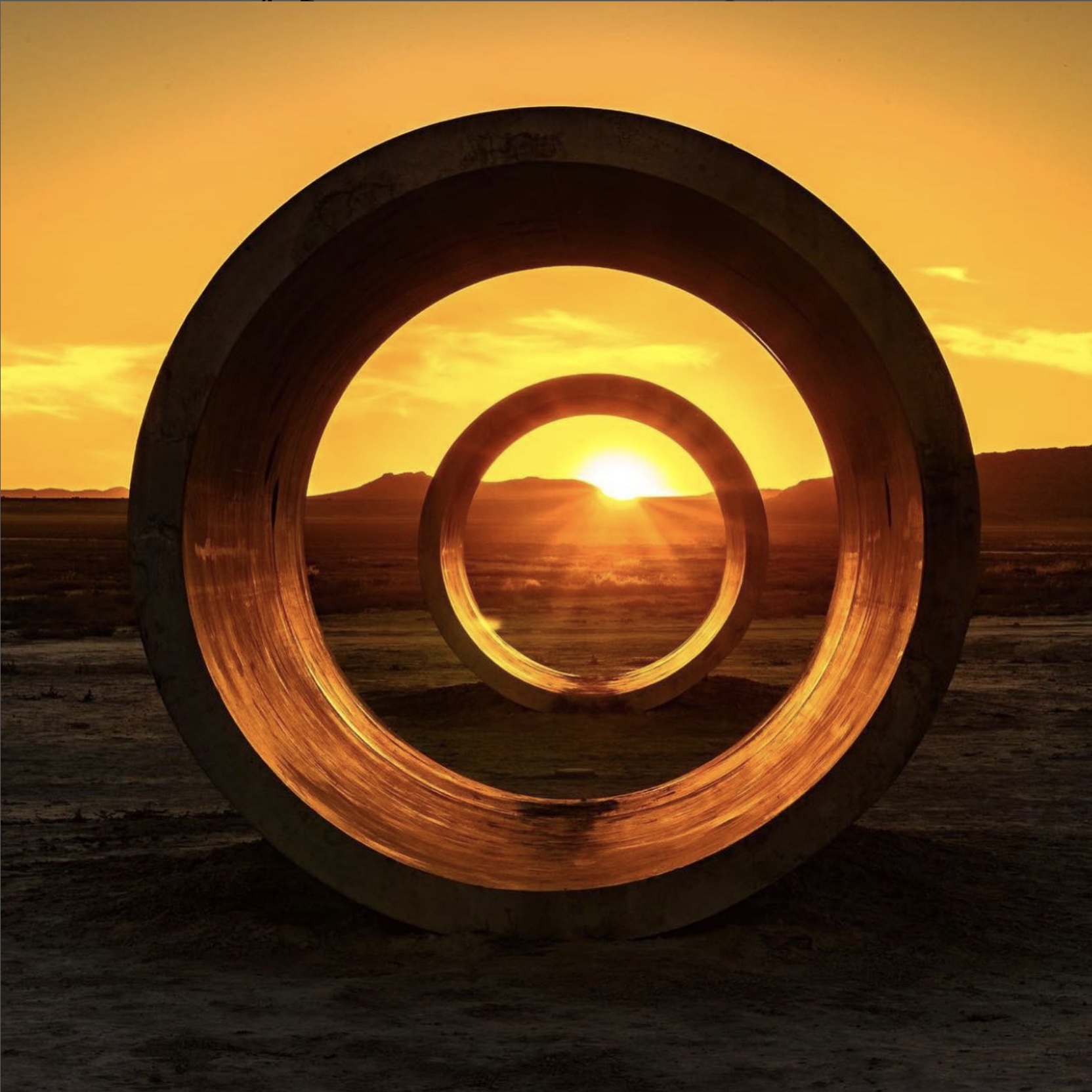
Photo of Nancy Holt's Sun Tunnels by Jason Shepherd. Per Dia Art Foundation:
Sun Tunnels marks the yearly extreme positions of the sun on the horizon—the tunnels being aligned with the angles of the rising and setting of the sun on the days of the solstices. Today is the summer solstice, where the sun will set centered through the tunnels, and the sun will remain nearly center for about 10 days after.

*

Eugène Atget, Pendant l'Eclipse. Ca. 1912, printed later by Berenice Abbott. Gold chloride-toned print. Courtesy of Yale University, New Haven, Conn.

*

First photograph of the sun: daguerrotype made by Louis Fizeau in 1845.

*
Slowly wheeling, like the rays of a searchlight, the days, the weeks, the years passed one after another across the sky.
 
Virginia Woolf, The Years

another life

There must be another life, she thought, sinking back into her chair, exasperated. Not in dreams; but here and now, in this room, with living people. She felt as if she were standing on the edge of a precipice with her hair blown back; she was about to grasp something that just evaded her. There must be another life, here and now, she repeated. This is too short, too broken. We know nothing, even about ourselves. We're only just beginning, she thought, to understand, here and there. She hollowed her hands in her lap, just as Rose had hollowed hers round her ears. She held her hands hollowed; she felt that she wanted to enclose the present moment; to make it stay; to fill it fuller and fuller with the past, the present and the future, until it shone, whole, bright, deep with understanding.

Virginia Woolf, The Years.