Showing posts with label rocks. Show all posts

prime number / gifts some 47-year-olds might enjoy


A hat from Wombhouse Books (Jamaica Kincaid forever and ever).

Grayson Perry's magical thinking tote, decorated with assorted delusions (reason, capitalism, the internet, etc.)

Eyes ex-voto, because "eyes can be a gentle protest against the moral and emotional blindness in the world. We see you."

Uusi's latest tarot deck, inspired by winter light.

Golden kicks, for chasing step goals.


A lovely twisted wood shoe horn by Emura Woodworking Studio, because I might finally, finally be old enough to stop stomping in the heels of my shoes when I put them on.


A 19th-century French architectural model of spinning doors, because every birthday is a revolution.


odds and ends / 5.25.2024


*

Fairfield Porter, "Path in the Woods," 1968. Collection of Smith College.

*

Pati Hill photocopying daisies on an IBM Photocopier II, Stonington, Connecticut, 1980. 
The objects Hill chose to copy, which she could not fully ascertain until the machine had seen them, are visually transformed yet convey their intrinsic properties, as well as those of the copier. "It repeats my words perfectly as many times as I ask it to," Hill wrote, "but when I shot it a hair curler, it hands me back a space ship, and when I show it the inside of a straw hat it describes the eerie joys of a descent into a volcano."

Richard Torchia, "On Pati Hill (1921-2014)," originally published in Artforum, 12/18/2014, but found via Picpus Press Issue 32, Spring 2024. Hill used the copier to make images of a dead swan, heads of cabbage, thumbtacks, cobblestones, and "an espaliered pear tree, including its roots and the ants living inside them."

*


*

Tacita Dean, "The Book End of Time," 2013. The book itself was just acquired by The Metropolitan Museum of Art.

*

 
*
“When I look at the world, I feel that something is being lost or actively undermined,” she told me. “Sometimes it feels like attention. Sometimes it feels like imagination. Sometimes it feels like”—she thought for a moment—“that thing you wanted when you became an English major, that sort of half-dreamed, half-real thing you thought you were going to be. Whatever that is: it’s under attack.”

Nathan Heller, "The Battle for Attention." The New Yorker, 4/29/2024. 

*


*
I found myself continually occupied with the thought of how often, through not realizing the nature and strength of their own desires, men have been wrecked by them.

Marilyn Milner, from An Experiment in Leisure. 

*
[Marilyn] Milner was unable to tell what made her really happy, beyond a few blips of joy that quickly faded after the new purchase or minor accomplishment grew a little stale. So she fished around for ways to find an answer. It seems like a minor problem to have, this not knowing how to answer a simple question. And yet it’s a foundational issue: what you like, what you should do with your time, where you should pour your energy. It’s a problem that feeds into every other tributary of your life, from your job to the way you raise your children. Suddenly you realize that not knowing how to answer the question (beyond a few superficial remarks like “pineapple on pizza” and “those little gold ballet flats at the boutique”) leaves you on the surface of the Earth, easily blown around by the wind or led astray by outside forces.
 
Jessa Crispin, "What Makes You Happy?" The Smart Set, 3/1/2012.

*
...Rereading the book this month, I was unnerved to discover how many fantasies, desires, impulses that I had thought my own were in fact informed by it. I saw that I had, for instance, unconsciously interpreted a number of difficult and very real events in my own family through its fictions; I saw too that several people with whom I’ve fallen in love share a glimmer of psychic resemblance to the girl Adam loves. I was unnerved to discover, in short, that a YA novel could be the source of a greater portion of my instincts and reflexes than seemed at all appropriate; that it could make desirable—so desirable, in fact, as to seem outside of desire—a whole array of emotional tendencies: toward shame, melancholy, irreverence, estrangement.

Timmy Straw, "Child Reading." The Paris Review, 11/7/2023. 

*
... a recurring image that Rohrwacher turns to is that of persons suddenly, and for no apparent reason, filmed upside down. When they fall, they fall up. It’s interesting to learn that Rohrwacher, writer and director of the work, rewrote her script after she had cast the 33-year-old [Josh] O’Connor. She said she had shifted away from the topic of a person in ‘the sunset of his life.’

But where to? Why would the younger person specialize in death, so to speak? The place where these people live is not exactly haunted but it is old, full of Etruscan ruins. Pirro and a group of local men are tomb-raiders, digging for treasures to sell. Arthur is very helpful in this venture because he has a special gift: he can divine hollow spaces underground the way others can divine water or gold. The film’s Italian phrase for this is ‘feeling the void’ (‘sentire il vuoto’) ...

Michael Wood, "At the Movies: La Chimera." London Review of Books, 5/23/2024.

*
What am I looking for in contemporary art? Now it is very difficult to tell what is beautiful and what is not beautiful. For example, when I did La Chimera, it was very clear that the treasures hidden under the earth were beautiful things. It’s very different from the time we are living in now. There is no longer a common sense of beauty. And so, what is art for me? It’s a view, an eye, a point of view on reality from a perspective that I couldn’t imagine. The art of the past was a magnet for the eye. For me contemporary art is the opposite; it is one eye that looks at the world.

Alice Rohrwacher, interviewed in Gagosian Quarterly, fall 2023 issue. 

*
Have you ever bitten into a piece of fruit so delicious, so ripe and perfect in its flavor and sweetness, that you vibrated, just a little, with pleasure? The Franciscan beggar Salvador de Orta did. He sliced into a pomegranate and—seeing in the multitude of tiny seeds a microcosm of everything beautiful in God’s perfectly ordered world—rose into the air in ecstasy. God was there in the fruit.

He was in the kitchen, too. Teresa of Ávila told her spiritual daughters that “God walks amidst the pots and pans, helping you with what’s internal and external at the same time.” So when the nuns found Teresa suspended in the air, transfixed in ecstatic union with God, a frying pan still clenched in her hand above the cooking flames, they may not have been surprised. It was God, helping her with both the internal (lifting her soul up to heaven) and the external (the frying of, perhaps, an egg).

Erin Maglaque, "Wings of Desire." The New York Review, 4/4/2024.

*
The point is, dammit, that they did have, as Iago griped about Othello, a daily beauty in their lives that makes ours ugly. In one of the stories in Pig Earth, a little old peasant lady goes out and gathers wild things in the mountains—wild cherries, lilies of the valley, mushrooms, mistletoe—and takes her booty into the city, where she sells it in the market for vast sums. She is selling not only delicious wild produce but glimpses of some lost greenness. She is the last remaining vendor of wild things, she is a kind of ghost.

Angela Carter, "Wolfing It." The London Review of Books,  July 23, 1987.

*
Everything that she needed was already there: pencils and paper collected over the years, and the flowers she’d planted herself. She had chosen them to be hardy, to grow in the shade, a few for their strange forms.

Beatrice Radden Keefe,  "The Hortus Conclusus of Barbara Baum.Light Breaks, 11/24/2023. 

*

read lately / 2.27.2024 - jewel-like non-essays, haunted poems, an antic novel, and a fraught biography


In a fog of February malaise, I missed watering the geraniums in my office last week, and now their leaves are hanging like limp flags of surrender. I gave them a good drink today and the sun finally came out, so I’m hopeful we’ll both revive soon.

I’ve been reviewing pitches for a new project on sound, which is like getting to eavesdrop on someone else’s dream and pass judgment: yes, this one will come true. Patterns always emerge—I think writers would be shocked to see the sameness in so many personal stories, so many original ideas, so many lyrical voices. (Alice Oswald’s description of lyric as a closed space vs. epic as an opened space “propel[ing] you beyond the voice, beyond the mind” crystallized for me what I am chasing as a reader and what I dislike in lyrical writing.) Or maybe they wouldn’t, and I am the perpetually naive one, startled at folks’ willingness to commodify whatever they can—friendships, loves, deaths, memories—however they can.

Maybe it is because my head is already full of all these story possibilities that most of the books I have been reading register as a dull muttering in my brain. But a few sing, and those are the ones that remind me that wading through all the lackluster pitches is worth it because occasionally, something remarkable is hiding in there, and finding it means something new might come into the world.


Entries in the dream ledger:

GEOLOGIC LISTENING by Deborah Stratman and Sukhdev Sandhu. Reading this felt less like finding a wonderful stone and more like trying to walk a mile with a pebble in my shoe. This slim little book compiles a few oppressively overcooked, overthought essays on the theme of Deborah Stratman’s films and the ineffable mystery of rocks, including a real groaner by a media studies person, a mortifyingly pretentious round-table discussion among artists, and a conversation that is mostly an exchange of flatteries between Helen Gordon and Hugh Raffles, whose work I do, actually, love. (I wrote about his mesmeric BOOK OF UNCONFORMITIES here.)

GREENGLASS HOUSE by Kate Milford. I picked this up to read before I put it out for Hugh to find; it’s a charming enough yarn about an adopted kid in a gloriously ramshackle mansion/smugglers’ inn over Christmas and the unexpected appearance of a passel of unexpected secretive guests who are all, of course, linked by a mystery. Reading it, I noticed a pattern I’ve been picking up on in newer children’s books, where characters present more like a diagnosis pulled inside out into a combination of behaviors and situations and less like actual, gloriously complex human beings. While it is heartening that authors are striving for representation, there is something distressingly reductive about chasing it this way instead of embracing the messiness of real humanity.

MY SEARCH FOR WARREN HARDING by Robert Plunket. A madcap 1980s-era tale loosely riffing on Henry James’s THE ASPERN PAPERS about the escalating hijinks of Elliott Weiner, an unscrupulous presidential scholar on the make who thinks he has a lead on Warren Harding’s reclusive long-lost lover, who is potentially hoarding a trove of salacious letters from the one-time commander in chief (“the shallowest President in history”) in her crumbling Hollywood Hills mansion that could make Weiner’s career. Funny, with a bitter bite.


TO ANYONE WHO EVER ASKS: THE LIFE, MUSIC, AND MYSTERY OF CONNIE CONVERSE by Howard Fishman. In August 1974, when she was 50 years old, Connie Converse loaded her Volkswagon Beetle, drove away from her home in Ann Arbor, Michigan, and was never seen again. She left behind a meticulously organized filing cabinet in her brother’s garage that held neatly indexed copies of her letters, professional projects, and creative pursuits, including unfinished novels, musical compositions, and a collection of songs. The songs, which were recorded in the 1950s at a house concert in Long Island, are what kept her from total obscurity—through a wild series of chances, they surfaced in the early 2000s, leading to the release of an album that has become a cult classic, additional works from her archive, and this biography. Fishman is an obsessive and dutiful biographer; he cares deeply about the art she made and is trying to understand who she was. Maybe the weight of that conscientiousness is why I found this book to be a frustrating read—too much explanation, too little historical awareness, too much wild grasping. Maybe she was a hoax! Maybe she was queer! Maybe there was abuse! Maybe there was incest! Maybe she was neurodivergent! Maybe she was one of the first singer-songwriters! (An assertion that seems to depend on defining “singer-songwriter” pretty narrowly.) Maybe she was better than Dylan! (Perhaps the epitome of useless comparison.) This kind of flailing, shoving ambiguities and unknowns into labeled boxes, reveals more about the writer’s conceptual limits than the subject’s experience of life. Fishman is very heavy in his sympathy for Converse as an exemplar of the many brilliant someones who never get the big break. But I kept thinking, my dude, have you never read MIDDLEMARCH?!
Her finely touched spirit had still its fine issues, though they were not widely visible. Her full nature, like that river of which Cyrus broke the strength, spent itself in channels which had no great name on the earth. But the effect of her being on those around her was incalculably diffusive: for the growing good of the world is partly dependent on unhistoric acts; and that things are not so ill with you and me as they might have been, is half owing to the number who lived faithfully a hidden life, and rest in unvisited tombs.
Or even Wallace Stegner?
Talent lies around in us like kindling waiting for a match, but some people, just as gifted as others, are less lucky. Fate never drops a match on them. The times are wrong, or their health is poor, or their energy low, or their obligations too many. Something. Talent, I tell him, believing what I say, is at least half luck. It isn’t as if our baby lips were touched with a live coal, and thereafter we lisp in numbers or talk in tongues. We are lucky in our parents, teachers, experience, circumstances, friends, times, physical and mental endowment, or we are not.

Unfulfillment *is* the human condition. Almost no one gets the chance to truly share what is in them with the world—most of us are just cobbling an existence together the best we can, out of what’s near to hand—and when opportunities come along, there are usually limits and disappointments, and even when you do manage to create something extraordinary, well, life rolls on. (See: Robert Plunket.) Converse’s life and work is well worth close attention, which Fishman offers, but I couldn’t help thinking that a more creative, less straightforward approach to writing about it, especially given the volume of written matter she left behind, might have yielded a richer, deeper book.


STATION ISLAND by Seamus Heaney. Gosh, I love Seamus Heaney. Attending a poetry reading he gave in Dublin was a peak life experience; I had only the dimmest notion of who he was at the time (I think he had just won the Nobel Prize, lol), but listening to him speak was like being given the momentary ability to see that the words I already knew could be bent into other, more revelatory languages. (Categorically epic!) The second section of this three-part 1984 poetry collection, Heaney’s sixth, is a poem in 12 stanzas set on Station Island, a pilgrimage site in Lough Derg, County Donegal, also known as St. Patrick’s Purgatory—sometime in the fifth century, God supposedly showed St. Patrick the entrance to hell in a cave on the island, and ever since it has been a holy site. For centuries, barefoot seekers have journeyed to the island for three days of prayer and fasting. Heaney made the pilgrimage himself more than once, and in this poem, as he moves through the stations, the shades of people he has known appear to him, including victims of the Troubles. Heaney, who was born in Northern Ireland, had left Belfast for Dublin in the mid-70s, as the conflict was intensifying, and was living part-time in the U.S. when he wrote these poems. They are shadowed by a sense of culpability, by what is owed to those left behind. I read them after I watched “Once Upon a Time in Northern Ireland,” a harrowing and extraordinary oral history of the Troubles that illuminates the sobering fact that peace is not easy or steady but a choice that people have to make together, day after day, knowing that some wrongs will never be redressed.

AN ELEMENTAL THING by Eliot Weinberger. If the devil came to me and said, okay, Stephanie, give me your eternal soul and you’ll write like Eliot Weinberger, I might take the deal. (Equally tempting: the mind/literary gifts of Susan Howe.) Anyway, this is one of the books I reread whenever I need to escape the crescendoing mediocrity of content; it is beauty and strangeness and rest and unease and erudition and morality and curiosity and wonder and sad rhinoceroses. I like to read one of his pieces before bed and hope it shapes my dreams.

*

Currently reading: SHELLEY: THE PURSUIT (still); THE GEOGRAPHY OF THE IMAGINATION; THE NATURE BOOK.

Bookmarked: “The Hortus Conclusus of Barbara Baum;” “The Case Against Children.

*

Images:

Charles Sheeler, “Geraniums, Pots, Spaces.” 1923, The Chicago Museum of Art.

Stereoscopic images of Martian rocks.

Connie Converse, photographed in New York City in June, 1958.

Pilgrims at St. Patrick’s Purgatory/Station Island in the 1920s, via the Donegal County Museum.
gifts for stoners


A visual suspension of disbelief: Alicja Kwade's Rocking.

The Backward vendor's Paddlestone bag, perfectly proportioned to hold a handful of pebbles.


Nomon's clock of rock to gesture toward deep time.

A stack of stone-themed books: Hugh Raffles' The Book of Unconformities, Adelbert Stifler's Motley Stones, Roger Callois' The Writing of Stones, and Shirley Jackson's The Lottery (lol).

A set of silver pebble dessert spoons by Thalia-Maria Georgoulis. 

A box of Korean Mudle crayons "reflecting the natural tones of Jeju volcanic stones."

A trench by Girls of Dust that looks like lichen-spattered rock.

A Victorian collector's cabinet topped with a fossilized nautilus to corral precious specimens.

Bless's surreal rock objects.

Marbled soaps by Even Keel and Iris Hantverk's perfect pumice stone.

A wearable collection by Mary MacGill.

A side table in aggregate by Jeff Martin Joinery.

odds and ends / 7.21.2022


*

Paula Modersohn-Becker, Bouquet of wildflowers, 1906.

*

Still from Eric Roehmer's La Collectonneuse (1967).

*

Found snapshot from Square America.

*

Bruno Munari, from From Afar It Was An Island. Via mudimakes.

*
EFFECTS: What’s a vibe?

PELI: A vibe is an intuitive representation of a language that is suitable for the compressed representation of a field of phenomena bound by a structural affinity that expresses a shared generative process.

From "VIBE COHERENCE: An Interview with Peli Grietzer," Effects Journal.   

“What’s it called,” Dale said, “when you have one of those bloody great blinding flashes of insight that changes the way you look at things?” 

I said I wasn’t sure: a few different words sprang to mind. 

Dale twitched his paintbrush irritably. 

“It’s something to do with a road,” he said. 

Road to Damascus, I said. 

“I had a road to Damascus moment,” he said. “Last New Year’s Eve, of all times. I bloody hate New Year’s. That was part of it, realizing that I bloody hated New Year’s Eve.”

Rachel Cusk, Transit.

*

One of the things I hate, I mean that I fucking detest in books, is when people have revelations. Who ever really has a revelation? And when people do have revelations, they’re always completely risible. And when they have them, they should be portrayed as risible, and they need to be skewered because the whole concept of revelation is absurd.

Adrian Nathan West interviewed by Jamie Richards at The Rumpus, 2/7/2022.

*

I thought that some of it was true and some it was not, but the real truth was how such things allowed someone to talk about you, or what you had done or why you did it, in a way that unraveled your character into distinct traits. It made you seem readable to them, or to yourself, which could feel like a revelation.


Jessica Au, Cold Enough for Snow.

*

Making up dystopias is often just a process of outsourcing. It reassures certain people that the bad scenario is fiction, and that it’s happening somewhere else in space or time. It’s no accident that aesthetics of dystopia often happen to resemble news depictions of the developing world. A lot of dystopian fiction is kind of an imagined prophylactic for the privileged—the idea being that if we could just anticipate it, maybe we can prevent it or control it.


Elvia Wilk, in conversation with Clare L. Evans and Leon Dische Becker for Broadcast

*

The Earth is littered with phone masts, the sky dotted with satellites, and our beautiful opposable thumbs are ruining themselves, scrolling away, all so that people can share thoughts on groceries, social media trends, total strangers worth insulting, and the latest annoying acronym. Never has there been such a universal admission of the imbecility of the human species. And to accommodate this inane babble, the internet now consumes much of the electricity on Earth and semiconductor plants drink up all the water—water that should be reserved for nicer plants like redwoods, bluebells, buttercups, and marijuana.


Lucy Ellman, "My Study Hates Your Study." The Baffler, March 2022.

*


*
How does your head look to your eyes? Well, I'll tell you. It looks like what you see out in front of you because all that you see out in front of you is how you feel inside your head. It is easy enough to stand still; the difficulty is to walk without touching the ground. Why do you feel so heavy? It isn't just a matter of gravitation and weight; it is that you feel that you are carrying your body around. Common speech expresses this all the time—life is a drag, I feel I am just dragging myself around, my body is a burden to me. To whom? To whom, that's the question. You see? And when there is nobody left for whom the body can be a burden, the body isn't a burden, but so long as you fight it, it is. It's like saying, you know, to feel the feelings—it is a redundant expression.

100,000 stars.

read lately / 1.21.2021


Sometimes when I say that I didn't like a particular book, someone will tell me that of course I didn't like it—it wasn't "for" me, and what did I expect. This comment is aggravating not because it hurts my fragile feelings to be told I am outside of an author's ideal audience, but because it makes plain that a dismaying number of very smart people seem to understand books fundamentally as products slotted for specific consumers. God, how depressing! Imagine being satisfied reading only what is "for"—or marketed—to you. Why read at all if you aren't reading to encounter something outside yourself?

Anyway, I think one of the books I read this week is, actually, for everyone. Emmet Gowin's Mariposas Nocturnas: Moths of Central and South America—A Study in Beauty and Diversity documents over 1200 species of moth, individually photographed and arranged in 51 grids of 25, based when and where they were seen (you can see one here). Gowin spent 15 years on this project, traveling to Bolivia, Brazil, Ecuador, French Guiana, and Panama, in the company of scientists, setting up a light behind a sheet at night to entice the moths. Some he gently moved, placing them against printed backdrops of favorite artworks before he photographed them, and those particular photographs, with the moth's breathtaking patterns and colorations against blurred, zoomed-in image fragments, have a fragile, hallucinatory beauty that made me forget I was looking at a photograph–they felt like rediscovered illustrations from the brush of some nameless, long-forgotten, supremely skilled natural artist.

The potency of the moths' dazzling individuality is not obscured by the grid; instead, the plentitude of moths, each so special, each so particular, seen all together, intoxicates, a visual manifestation of our great dumb luck in getting to live alongside such creatures, though of course we (meaning me, meaning humanity in the aggregate) are our doing our relentless best to ruin their world as fast as we can.

In his essay, Gowin says that it took him five years to photograph the first five grids; this, after years of photographing the moths and not quite knowing what the photographs would become, getting just one or two images from 30 rolls of film. Reading about this process made me think of Simone Weil's essay, "Attention and Will":
The poet produces the beautiful by fixing his attention on something real. It is the same with the act of love. To know that this man who is hungry and thirsty really exists as much as I do—that is enough, the rest follows of itself.

The authentic and pure values—truth, beauty and goodness—in the activity of a human being are the result of one and the same act, a certain application of the full attention to the object.

Teaching should have no aim but to prepare, by training the attention, for the possibility of such an act.
All the other advantages of instruction are without interest.


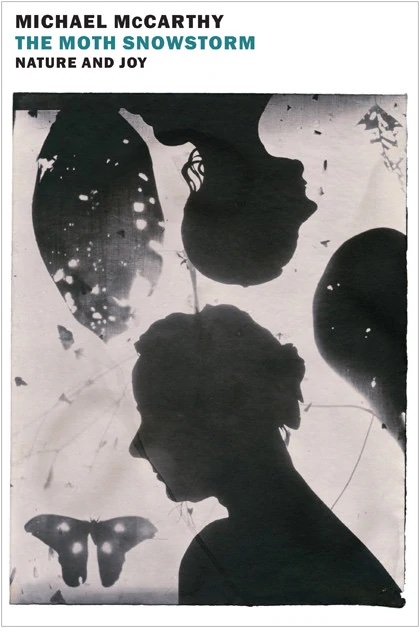
It also recalled another beautiful book I read sorrowing over the diminished abundance of the natural world: Michael McCarthy's The Moth Snowstorm. One of Gowin's photographs is on the cover.


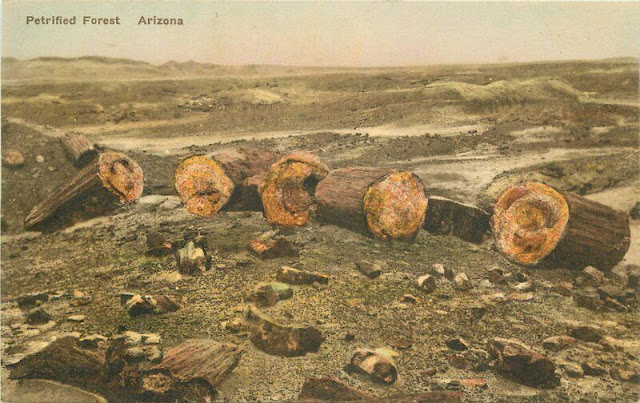
Though Félicia Atkinson's A Forest Petrifies / Diamond Feedback is somehow inspired by the millions of years it takes wood to turn to stone, this collection of story fragments feels peculiarly unsolid, a work not formed but in the process of formation. Which makes sense, maybe—apparently, it is part of a novel-in-progress. And while I encountered beautiful lines, there was not enough anchoring thought attached, so they floated right out of my mind almost as soon as they floated in.


Reacher for earthier pleasures, I reread Murder Must Advertise. It's the eighth in Dorothy Sayers' series of Lord Peter Wimsey mysteries, and in this one, the inimitable Wimsey must go undercover as a copywriter at an ad agency to determine if a murder has occurred. (Yes, of course) Dope smuggling, wild parties with Bright Young Things, fancy dress disguises, and bad copy mix in a smart confection about greed, consumerism, and the queasy tricks of professional shills (soured somewhat by a couple of unnecessary racist asides true to the time). After years of working from home and mostly alone, escaping to the bonhomie and petty irritations of an imagined office felt like a little treat, especially since I could close the book on it whenever I wanted instead of actually reporting in for work.

*

Images:

Jonathan Callan, Around the House, 2005. National Museum of Norway.

Cover of The Moth Snowstorm.

1920s Hand-colored postcard of Arizona's petrified forest.

*

Other book reports.

read lately / 1.14.2022


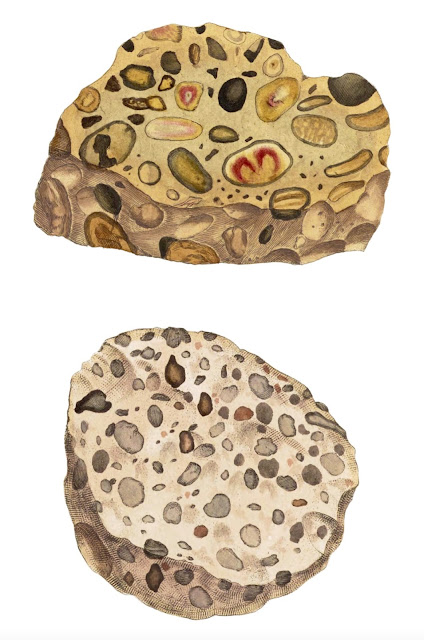
Conglomerate rock is easy to identify—it is a sedimentary rock made of up little pebbles, usually rounded though sometimes not, bound together by naturally-forming cement. It turns up on the beaches of Lake Erie, and I have a particularly nice piece—heavy and rounded, with a pleasing variety of cloudy grays and quartz glimmers—sitting on my desk.

Reading Hugh Raffles mesmeric book about rocks—The Book of Unconformities: Speculations on Lost Time—I got to thinking about how a book can be like a rock. As Raffles explains it, an unconformity, geologically speaking, is "discontinuity in the deposition of sediment." It is a visible mineral rupture in the expected geological timeline created by eruptions, collisions, or tectonic shifts—"a material sign of a break in time." Raffles describes them as "both a seam and a rupture."

A great book is an unconformity, too, a manifestation of mind that somehow takes the material surrounding us and pressures it into something else–maybe new, maybe not, but something with its own integrity that stands apart, a demarcation. And one of the greatest pleasures I find in reading is an encounter with this sense of completeness, of something (mind? thought?) fully manifest, which maybe sounds woo-woo, but reading my favorite books has a feeling I sometimes find akin to a weathered rock in the hand, whole and heavy and complete.

Anyway, as I read this book, which is organized into a series of grief-sparked encounters with rocks and minerals—marble, sandstone, gneiss, magnetite, blubberstone, iron, and muscovite—excavating the intricately connected mysteries, histories, and tragedies in northern landscapes where they are found, I was distracted by recognitions—of the trace fossils of W.G. Sebald in the long twisty sentences Raffles stacks with facts like cairns marking the path of thought; the grainy black-and-white photos that punctuate the text; the culmination in a story about the Holocaust. But Barry Lopez is here, too, in the careful attentiveness to landscapes, particularly Arctic landscapes, and the patient untwining of the multiplicity of experiences that have happened as white people moved into Indigenous places, of traumas to the land, animals, and people, and in curiosity-sparking footnotes that point to whole other books-worth of detail. These two writers shadowed my reading, making me wonder if Raffles could make their signature patterns somehow his own. In the end, he didn't, quite—the effect was conglomerate, a sort of pleasing agglomeration.


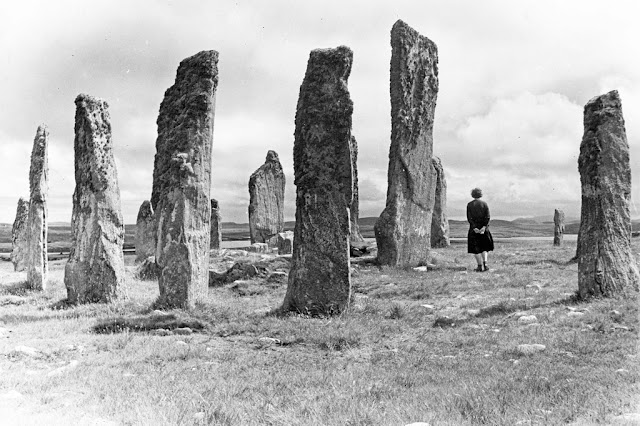
I wonder how I might have read it if I hadn't read those other authors first. In the section on gneiss, Raffles goes to the Isle of Lewis in the Outer Hebrides of Scotland to see the standing stones of Calanais. The stones used are uniquely ancient in a landscape where most rock is fifty to 300 million years old:
... the Lewiston gneiss from which the builders of the monuments at Calanais selected and quarried their sparkling monoliths with black hornblende inclusions is something close to three billion years old and started life not as muddy deposits in warm, shallow seas accreting grain by grain and organism by organism, but as churning magma dozens of miles underground in the Earth's mantle, calling, solidifying, and crystallizing into igneous granites, granodiorite, tonalities, basalts, and gabbros, then buried, reheated, sheared, and recrystallized, crushed, twisted, stretched, pressed, and folded in at least two major metamorphic, mountain-building events occurring over the next 1.5 billion years, warped and recast in such tortured ways that their original features, the defining traits of the protoliths of these islands, were thoroughly erased. These are the Lewisian gneisses, 'a rock that once seen and handled is never forgotten.'
The stones were placed around 3000 B.C.E. in a complex arrangement of rings, rows, avenues, and monoliths—likely in a pattern of astronomical significance. 

It amuses me to think that I do something similar with authors and their works, arranging them into my own inscrutable patterns of meaning and significance that depend on time and order. I like thinking of them as standing stones in my mind.

*

Besides hefty rock thoughts, I spent quite a bit of time this week reading Professor Astrocat's Human Body Odyssey. Nothing like a fact-laden kids' book to remind you of how much you have forgotten, or tell you exactly how far your DNA might stretch if laid end-to-end (to the sun and back—600 times). Right now, my six-year-old detests reading—this, despite growing up in a house full of books, with parents who read all the time and hours of daily read-aloud time from birth—but I can't blame him, given the books he has to read for school—even aggressive punctuation can't add excitement to titles like I Found a Nut! and Bed, Ben, Bed! (I hated reading, too, until I was old enough to read what interested me.) Fortunately, he still loves being read to, at least for now, so Professor Astrocat to the rescue.

*

Images:

Photo of a woman among the standing stones at Calanish by Violet Banks, ca. 1930s.
James Sowerby's illustration of Quartzose Pudding Stone, ca. 1802-1811, from Exotic Mineralogy.

odds and ends / 4.7.2021


Jacqueline Hassink, from Views, Kyoto, 2004-2014.

*

Painted wooden fire screen, early 20th century.

*

Agate fossil coral (showing small flowers), found on Reddit

*

From How to Read the Aura, Practice Psychometry, Telepathy and Clairvoyance by W. E. Butler, via stopping off place.

*

In Your Garden by Vita Sackville-West-West, 1951, first edition.

*

The greatest hibernator of all is the snail. When the weather gets cold or dry, snails first go in search of places where they feel safe, among rocks or leaf litter. There they close themselves up. The snail moves in a shell that is its dwelling, and when it wants to hibernate, it makes a covering over the entrance. This is called an epiphragm, Greek for “lid.” The snail concocts it of mucus and calcium. The lid seals in moisture and keeps the snail from drying out. Inside its damp chamber the snail sleeps and waits for rain. Sometimes it sleeps for years. No one knows if snails dream. Someone may know. 


John Jeremiah Sullivan, "Uhtceare.The Paris Review, Issue 236, Spring 2021.

*

As a poet I feel like it is my task to protect consciousness from the tech lords and the moon from Elon Musk, but I am not so delusional as to think I could lead an organized resistance to this process of enclosure. Nor do I think I can, alone, defend those poet things: the moon and love. But I also can't forget that there are people who want to own, as data, the bacteria in our intestines and the salt in our tears. I have watched people being conditioned into screen addiction and once-unimaginable interpersonal viciousness. I have lost loved ones to paranoid screen holes and conspiracies and seen even self-identified leftists align themselves fully to corporate entities. Even as I stepped away, almost entirely, from most everything online — even, for a time, giving up email — I have felt such survivor guilt about those left behind, the ones still compulsively refreshing their twitter or facebook feeds. I also know it didn't have to be like this: that the technologies developed in my life could and sometimes were used for what was beautiful and good.


Anne Boyer, "the earthly shadow of the cloud." MIRABILARY, 3/30/2021.

*

Honestly, the more I think about it, the more the internet in these novels starts to feel like that one awkward white guy who knows he can’t dance but tries to let you know that he knows it so that he can bop along in the background at the party just the same. It feels like one of White Media’s greater farces that they have deceived us into thinking that the internet as described and proscribed in these novels is a thing that is actually worth arguing over. Aesthetically. I mean, really, think about it. The huge tracts of digital life that these novels don’t touch. None of the transformative capacity or will to change that animates so much of online life for black and brown and queer people exists in these novels. For some of us, the democratic dream and the populist impulse of digital life is alive. Not perfect, no. Not entirely democratic even. But it’s still there. Singing. 


Brandon Taylor, "i read your little internet novels / it's all very gothic up in here.sweater weather, 3/23/2021. 

*

I was, unconvincingly, so many people as a teenager—a rebel, a sophisticate, a drama nerd, a go-getter, a witch. I could try on a persona for size and then return it, tags on. There was no social media then and no one wanted me on any reality series, so I never had to curate a self before I had one. But I did stupid things for love. What would I have done for likes? What would that have made me?


Alexis Sokolski, "'Kid 90' and the Days When Even Wild TV Teens Had Privacy." NYT, 3/26/2021. 

*

Whatever this mode of production is, that it eats brains as well as bodies seems key to how it works, and how it is made. Capital extracts the energy out of the laboring body and makes it over as a thing apart, as capital in the form of the machine, which subordinates living labor to it. This other, more recent mode of production extracts information from bodies, and makes of it a thing apart, forms of artificial intelligence, over and against the thinking, feeling body.


McKenzie Wark, interviewed by Jessica Caroline at filthy dreams, 10/14/2019.

*

Books, like vacuum cleaners, are increasingly judged on their ability to deliver what they appear to offer. They are consumer products. The customer has paid and must get what he wants. Pity the writer who falls foul of the vacuum cleaner purchaser. 


Alice Jolly, "In Praise of Boring Books." 3:AM Magazine, 3/22/2021.

*
And it’s this question of “the business of reading,” of how we read, why we read, and what reading does for and to us, that I keep turning over in my mind.


Yaa Gyasi, "White people, black authors are not your medicine." The Guardian, 3/20/2021.

He was trying to persuade someone, anyone, to go with him, and only after everyone else had refused did he ask me.

Barbara Greene, quoted by Lucy Scholes in a review of Greene's book Too Late to Turn Back about traveling in Africa with her cousin, Graham (he wrote about their trip in Journey without Maps.)

*

 A deep dive.

*

Dandelion paperweights.

*

A sonic atlas of phantom islands.