Showing posts with label sailing. Show all posts

odds and ends / 5.9.23


*

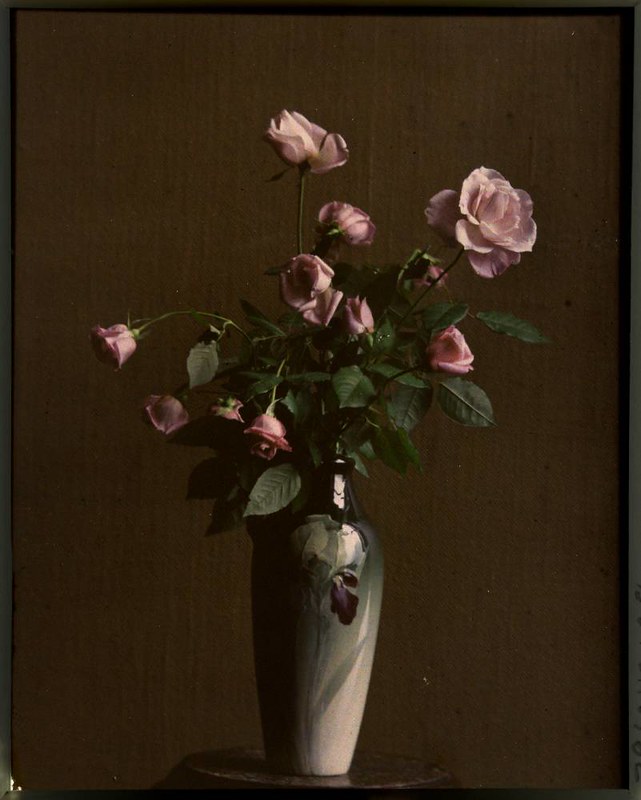
G.W. O'Grady, "Pink roses in vase," ca. 1915. George Eastman House Collection.

*

Maria La Rosa pendant socks.

*

“Ice Music” by Jim McWilliams, performed by Charlotte Moorman for the International Carnival of Experimental Sound, London in 1972, via fluxusgram.

*

A Japanese mother of pearl-inlaid lacquer box and cover. Meiji period, late 19th century, via Freeman's.

*

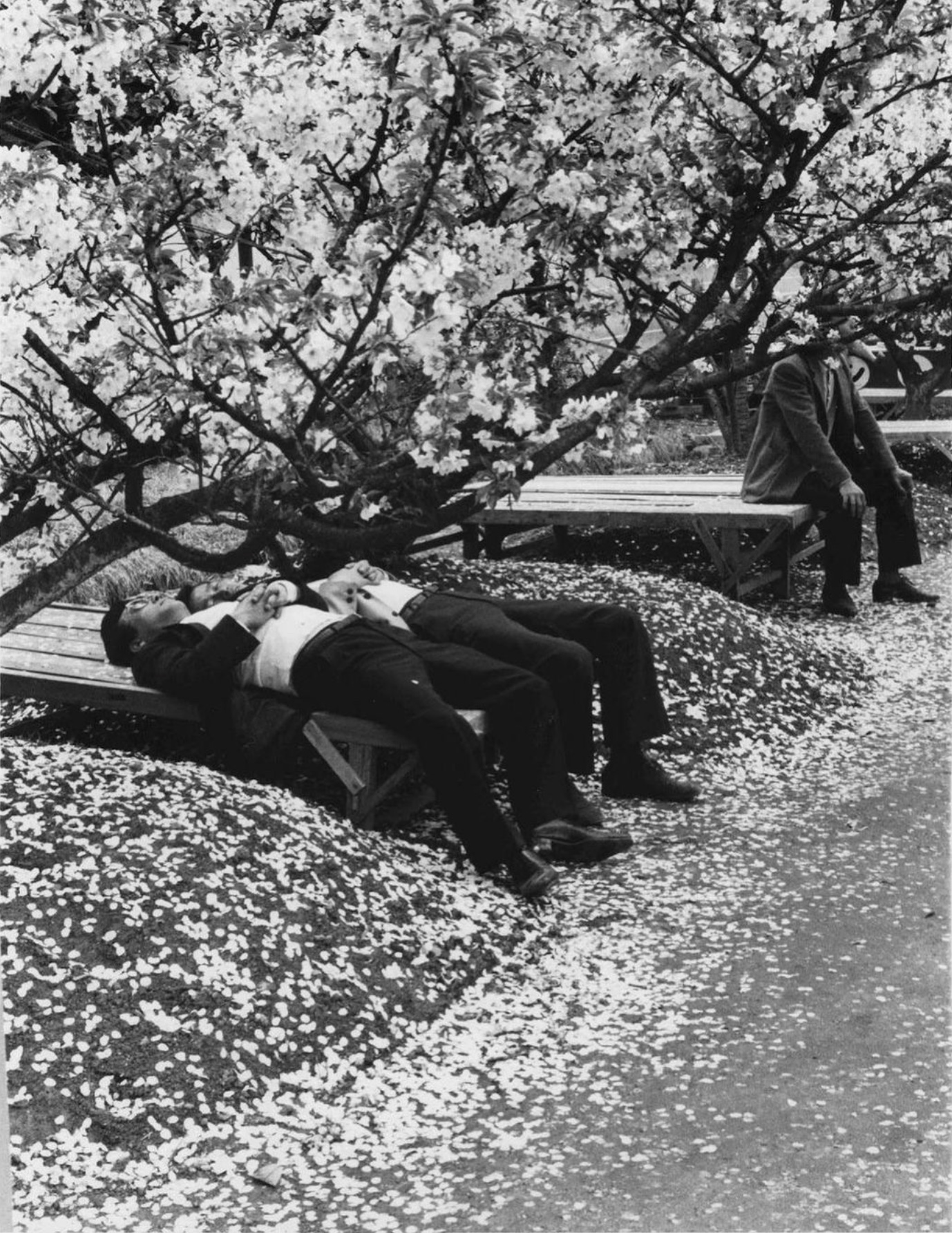
Seiryu Inoue, "Men lying under cherry blossoms." From Kyo no miyako, 1960/1970, via la jardin robo.

*
We live in undeniably ugly times. Architecture, industrial design, cinematography, probiotic soda branding—many of the defining features of the visual field aren’t sending their best. Despite more advanced manufacturing and design technologies than have existed in human history, our built environment tends overwhelmingly toward the insubstantial, the flat, and the gray, punctuated here and there by the occasional childish squiggle. This drab sublime unites flat-pack furniture and home electronics, municipal infrastructure and commercial graphic design: an ocean of stuff so homogenous and underthought that the world it has inundated can feel like a digital rendering—of a slightly duller, worse world.

"Why is Everything So Ugly?" n+1, Issue 44 "Middlemen," Winter 2023.

*
When [Brendon] Babenzien’s first J. Crew collection débuted to great acclaim, last July, [Derek[ Guy noted that the designs were virtually indistinguishable from more expensive, fetishized brands, such as Margaret Howell, Drake’s, Aimé Leon Dore, or Beams Plus. "If your purchases at ‘edgy’ brands like our legacy and visvim are limited to boxy tees and ever-so-slightly different jeans . . . you also look like you’re wearing j crew,” he wrote in a Twitter post. “Everyone is in jcrew. this is the reality.”

Hua Hsu, "J. Crew and the Paradoxes of Prep.The New Yorker, 3/27/2023. 

*

All the sailors get depressed when they’re becalmed. The mood of Kirsten’s calls into headquarters has varied wildly, depending on whether she has wind. No stranger to adventure—she cycled alone from Europe to South Africa when she was twenty-two—she is the kind of person who, when not racing, likes to swim away from the boat “just to get that feeling of vastness, that sense of eternity, that if the boat did sail away, it would be, basically, eternity. And it is a scary thought…but it’s also kind of intriguing…to get that little bit of distance from yourself and the boat in the middle of the ocean.” ... In the last few days she seemed to think she was heading for certain defeat, having been stuck in the Atlantic doldrums for almost a month: “I don’t know how I’m supposed to feel…. I guess I’d be more excited if I knew I had a chance of getting there first.” Assured that fans will be waiting to welcome her, she starts to sound a bit like Moitessier, the French sailor who declined to return to normal life back in 1969: “It would almost be better to disappear onto some mysterious piece of land and vanish, and, you know, not have to go through the whole…”—she trails off.

Jé Wilson, "Swimming Away from the Boat." NYR, 4/27/2023. 

*
Fuzzy interfaces present users with complex, artful scenarios that must be learned and mastered—a novel departure from the unconsciously simple, spoon-fed manner in which interface design has become accustomed, toward a craft-like engagement in which the skill and mastery of an object must be acquired slowly, over time. Another advantage of fuzzy interactions is that they slow us down, creating what Ezio Manzini refers to as ‘islands of slowness’ that allow us to think, experience, and re-evaluate. The relationship between subject and object becomes evolutionary, as the subtle exchange of feed-forward and inherent feedback creates the illusion of mutual growth. Of course, fuzzy interaction is not for everyone, nor is it universally applicable. […] Nevertheless, alternative modes of interaction serve to remind us that perhaps the streaming of endeavors of modern times has inadvertently stripped the world of all its charm.

John Chapman, quoted by Derek Guy in "On Emotional Durability" at Die, Workwear, found via Lin

*
The academic and psychotherapist Lisa Baraitser has argued for a definition of “maternal time” as a temporality specifically related to the repetition of maintenance labour and the “tenuous processes of maintaining familial relations across and between generations”: to do so, she draws on Denise Riley’s work on maternal grief. In Riley’s account of the way loss can create a kind of “suspended time” in her book Time Lived, Without Its Flow, a gestational temporality is identified in which the future literally unfolds within the present over the nine months of pregnancy, and then unspools in both parties forever, reaching backwards and forwards simultaneously. “My time is your time,” the mother says to the child, and vice versa. 

Helen Charman, "The Eternal Daughter." Another Gaze, 2/26/2023.

*
The photographs may have a disembodied hand reaching out to steady an infant propped up in a chair, or the edge of a mother’s body may be visible as she crouches (mostly out of sight). In other less subtle photos, a child will be seated on her mother’s lap while the mother is entirely covered with a large cloth draped over her head and body. Perhaps the most unnerving of the Hidden Mother photographs are the ones in which the mother’s face was visible in the final photograph– and was then scratched out and obliterated. 
*
I was a girl then, in Morris County, New Jersey. My favorite day of the week was Thursday, when I had piano lessons in Florham Park, not because I loved the piano especially, but because we always had time to kill between school and my lesson, time my mother used instead to take me to the Frelinghuysen Arboretum, where we’d walk through the woodlands and meadows. What I liked about those afternoons was that it was just us and the flowers. After my lesson, we’d circle back to the library across the street from the arboretum, and I would check out as many books as I could carry. Flowers, music, books, all within the same circumference, which I now recognize as a gift my mother gave me. She took me by the hand and introduced me to beauty, and while I put it off later in search of knowledge, I’ve come around to seeing that the two are related, that beauty is indispensable, and that books are the reproductive proof of it.

Susan Barba, from the introduction to American Wildflowers: A Literary Field Guide.

*

*

"What more do you want?"


imaginary outfit: sailing in central park


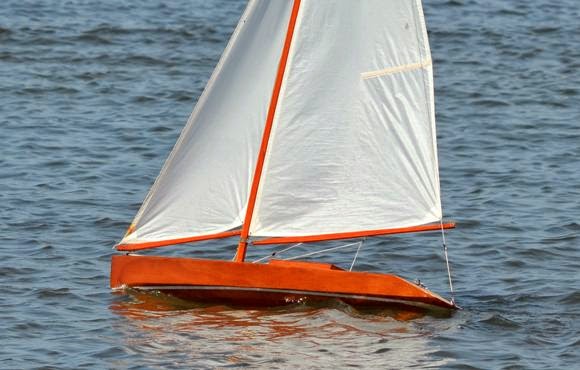
This summer, we've been on the watch for wind. When the weather's right and the time is our own, we walk across the park, curving to the south of the Great Lawn and hanging a right, heading south until Alice comes into view. Sean and I spare a handful of minutes to peer inside the Kerbs Boat House at the rows of model sailboats, marveling at tiny brass fittings and planked teak decks and deciding which one we most wish was ours. A lucky handful of folks get permits to store their treasures there, but in all New York things we're renters, not owners, so we step over to hire a boat ($11 for 30 minutes). The radio controller adjusts the sail and the rudder, but there is no motor except the breeze and getting the boat to go takes trial and error for newbies like us. Once our half hour is up, we walk west, with a detour for lobster rolls and ginger beers. It's the perfect way to spend an afternoon in the city. It has me dreaming of shipbuilding.

'more like a chess match than child's play'

On a beautiful autumn day in New York City's Central Park, two groups of folksingers are performing near the Sheep Meadow. On the walkways there are joggers, cyclists, yuppies and their puppies. And at Conservatory Pond—like football coaches on a sideline—stand nine men with radio transmitters solemnly piloting their model sailboats by remote control ... 
Until 1972 the boats in Central Park raced on the vane system—that is, on autopilot—from one side of the pond to the other, with skippers pushing their boats off with bamboo poles and hoping for the best once their boats had been launched. Nowadays, with much of the guesswork lost to radio control, model racing is more like a chess match than child's play. The boats are made of fiberglass and are roughly 50 inches long, with 1,500 square inches of sail. Classic modelists—still a large part of the club—like to call them disco boats because they sport shiny Mylar sails and tend to tack all at once, like dancers doing the hustle.

N. Brooks Clark, "Central Park's Sailors Remain On Shore But Are Awash In Enthusiasm." Sports Illustrated, 11 November 1985.

setting sail


Two young girls wading in the water at Laurelhurst Park and reaching for a toy sailboat, Seattle, Washington, ca. 1929-1932. Photo credit: Vern C. Gorst/University of Washington Libraries, via History by Zim.

the fire of drift-wood

Devereaux Farm, near Marblehead


We sat within the farm-house old, 

Whose windows, looking o'er the bay, 

Gave to the sea-breeze, damp and cold, 

 An easy entrance, night and day.

Not far away we saw the port, 

The strange, old-fashioned, silent town, 

The lighthouse, the dismantled fort, 

The wooden houses, quaint and brown.

We sat and talked until the night, 

Descending, filled the little room; 

Our faces faded from the sight, 

Our voices only broke the gloom.

We spake of many a vanished scene, 

Of what we once had thought and said,

Of what had been, and might have been, 

And who was changed, and who was dead;

And all that fills the hearts of friends, 

When first they feel, with secret pain, 

Their lives thenceforth have separate ends, 

And never can be one again;

The first slight swerving of the heart, 

That words are powerless to express,

And leave it still unsaid in part, 

Or say it in too great excess.

The very tones in which we spake 

Had something strange, I could but mark; 

The leaves of memory seemed to make 

A mournful rustling in the dark.

Oft died the words upon our lips, 

As suddenly, from out the fire 

Built of the wreck of stranded ships, 

The flames would leap and then expire.

And, as their splendor flashed and failed, 

We thought of wrecks upon the main, 

Of ships dismasted, that were hailed 

And sent no answer back again.

The windows, rattling in their frames, 

The ocean, roaring up the beach, 

The gusty blast, the bickering flames, 

All mingled vaguely in our speech.

Until they made themselves a part 

Of fancies floating through the brain, 

The long-lost ventures of the heart, 

That send no answers back again.

O flames that glowed!  O hearts that yearned! 

They were indeed too much akin, 

The drift-wood fire without that burned, 

The thoughts that burned and glowed within.

Henry Wadsworth Longfellow

this week


Following the wind and welcoming October. Also:
Photo from 2headedsnake. Happy weekend.


Jon Contino.

home again

Head the ship for England !
Shake out every sail !
Blithe leap the billows,
Merry sings the gale.
Captain, work the reck'ning ;
How many knots a day ? -
Round the world and home again,
That's the sailor's way !

We've traded with the Yankees,
Brazilians, and Chinese ;
We've laugh'd with dusky beauties
In shade of tall palm trees ;
Across the Line and Gulf-stream -
Round by Table Bay -
Everywhere and home again,
That's the sailor's way !

Nightly stands the North Star
Higher on our bow ;
Straight we run for England ;
Our thoughts are in it now.
Jolly time with friends ashore,
When we've drawn our pay ! -
All about and home again,
That's the sailor's way !

Tom will to his parents,
Jack will to his dear,
Joe to wife and children,
Bob to pipes and beer ;
Dicky to the dancing-room,
To hear the fiddles play ; -
Round the world and home again,
That's the sailor's way !

William Allingham

(I love that Gene Wilder quotes this in the old Willy Wonka.)

taken by the cruel seas


Ring in memory of one who went to sea. Gold, rock crystal and textile, 1592. The inscription on the inside of the band reads 'The cruel seas, remember, took him in November.'

Found in the NYT.

discovery file 143/76

When Bas Jan Ader's boat, Ocean Wave, was found unmanned and partially submerged 150 miles off the coast of Ireland by a Spanish fishing vessel in 1976, it was taken to La Coruña for investigation. Days later, the boat was stolen and the cult of Ader, whose body was never recovered, and who was thought by many to have staged this incident, was truly cemented. In this volume, Marion van Wijk and Koos Dalstra, who spent 10 years investigating this unsolved mystery, reproduce the entire police report in facsimile. They also include many pages of eerie written documentation and transcriptions of interviews they conducted during their decade of intensive sleuthing: 'The report has 74 pages. It begins on April 27, 1976 and ends on February 1, 1977. It relates the history of the Ocean Wave from the moment Don Alferan speaks about his discovery to the authorities until nine months later, when the case is closed. The reason: the authorities cannot find the stolen boat that disappeared from San Diego harbor in Coruña between May 18 and June 7, 1976.'
At Artbook.

in search of the miraculous


Oh my soul, do not aspire to immortal life, but exhaust the limits of the possible. 
Pindar
**** 
Did Ader feel protected because he was making a work of art? Protected in his pursuit of the sublime, which suspends all truth and postpones the realisation that we are, in fact, dully mortal? More than anyone, he played with this engagement  - laid himself open to the possibility of death. Taunted it. Provoked it. Fell for it. Sadly we can only glimpse at the enormity of Bas Jan Ader’s  feat because he failed...
 
It is perhaps the most unsettling fact of all to learn that The Strange Last Voyage of Donald Crowhurst was found in Ader’s faculty locker in Irvine some time after he had disappeared. We have to suppose he read it. We have to suppose he imagined Crowhurst’s anguished journey in the light of his own incipient one, even if it was only to dismiss it. We have to suppose he knew, as he set out, that there were many ways to fail as there were many ways to succeed. 

Icarus, blinded by the elation of his ascent, failed and fell: fell to fail. His was a journey up that came down. Crowhurst’s was a journey along: flat, doomed and sorrily human. His fall was wretched, unimagined, unannounced and wholly practical. But for Bas Jan Ader to fall was to make a work of art. Whatever we believe or whatever we imagine, on a deep deep level, not to have fallen would have meant failure.

Tacita Dean, And he fell into the sea.


Ader's other falls

Beautiful post here about Ader + Amos.

You do not ask a tame seagull why it needs to disappear from time to time toward the open sea. It goes, that's all.
Bernard Moitessier.

(Interestingly enough, last week's NY Magazine had an article about a man who just completed the longest continuous sailing voyage that used this Moitessier quote.)

'he sailed over the horizon and into ... oblivion'


You can watch this in parts on YouTube. Completely, completely gripping.

t & i


Tacita Dean: T & I. 2006. Photogravure on twenty-five sheets.

From MoMA:
Through drawings and films, Dean makes work that is frequently characterized by a poetic sensibility and fragmented narratives exploring past and present, fact and fiction. In this monumental printed work, she addresses themes of collective memory and lost history by combining the romantic legend of ill-fated medieval lovers Tristan and Isolde (whose initials give this piece its title) with the real-life tragedy of British sailor Donald Crowhurst. Dean often uses the sea and other maritime themes in her work, including the tale of Crowhurst, which has appeared in several of her projects.

In 1968 Crowhurst sailed from England for a solo, round-the-world yacht race and never returned. In T & I Dean connects the tale of this lost sailor to the story of Tristan and Isolde—whose tragic love story also hinges on sea voyages—through her majestic depiction of a barren, rocky coastline looking seaward. This work, based on a found postcard, includes the white, cryptic notes that Dean often scribbles on her prints and drawings. Here the musings include "start" and "stage 4," clear theatrical directions, as well as fragments of a poem by "WSG" about an artist killed in an accident. The twenty-five-sheet composition suggests a cinematic narrative sequence, while reading it as a unified image has a breathtaking, visionary impact. The rich velvety texture of the photogravure medium contributes a nineteenth-century patina that is ideally suited to the intensity and foreboding melancholy of the subject.

© 2010 Tacita Dean

sunday tune: the grateful dead - jack-a-roe


This was one of my favorite songs when I was a little girl. Disguised as a man and sailing off to war in search of her lost love, the heroine says to the ship's mate:

'I know my waist is slender, my fingers they are small
but it would not make me tremble to see ten thousand fall ...'

voyager


lilliebe (who has sailed a paper boat in the Scottish sea).