Showing posts with label books. Show all posts

silvered flowers, beehive bonbons, and a deck of rainbows/gifts some mothers may enjoy


The Shenandoah Mansions linen robe (and/or the matching pajamas and eye mask) by Desmond & Dempsey and Ash Hotels.

Beehive bonbons from Shane's Confectionery filled with honey and black sesame praline.

[A] series of obscure and eccentric English garden-makers who, between the early seventeenth and early twentieth centuries, created intensely personal and idiosyncratic gardens. They include such fascinating characters as the superstitious antiquary William Stukeley and the animal- and bird-loving Lady Read, as well as the celebrated master of Vauxhall Gardens, Jonathan Tyers, who created ... one of the gloomiest and most perverse anti-pleasure gardens in Georgian England. Others built miniature mountains, shaped topiaries, displayed exotic animals, excavated caves, and assembled architectural fragments and fossils to realise their gardens ...


A snail sketch print by Annette Messager, "Locus Solus XIII," because, snail-like, mothers have the power to carry home with them.

An album worth blasting on the way to and from pick-up.

Bienamé hand creams that smell like life in bloom, the color red, or happy days.

Peaceful girl with fist charm by Leith Clark x Catbird (I like to think she is catching a star).


*

Related posts: choosing motherhood / what's possible / true colors

Other gifts some mothers may enjoy: 2017 / 2018 / 2019 / 2020 / 2021 / 2022 / 2023 / 2024 / 2025

odds and ends / 4.10.2026


*

1980s British Telecom Picturephone at wertwerk.kr, via Mildew.

*

Ah, pray, make no mistake, we are not shy
We're very wide awake, the Moon and I
*

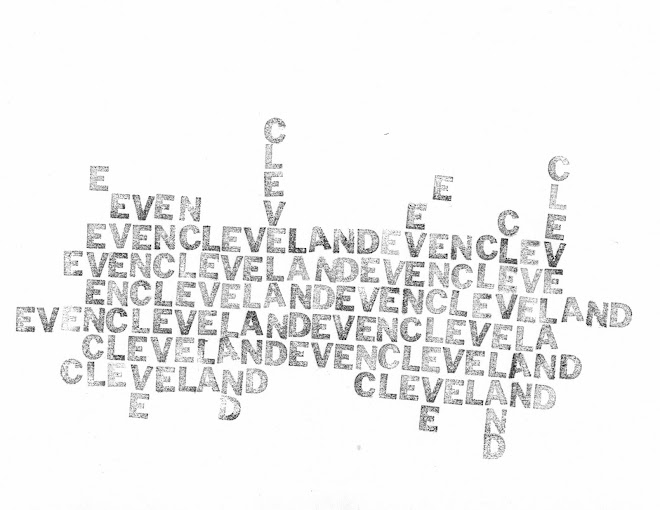
Ray Johnson's "Evaporations" book stamp, via the London Centre for Book Arts:
Johnson had his "Evaporations by Ray Johnson" rubber stamp made after a May 1970 Artforum article by Robert Pincus-Witten that mused on the legacy of Pop art and dismissed Johnson, along with "Wesselman, Indiana, Marisol,…[and] so many others" as “evaporations” who had "fall[en] away to nothingness."
*
People today, especially younger people, have to go out of their way to know literature qua literature—to understand it as a living thing separate from trade publishing as presented to them by mainstream reviews and Goodreads. They live in a world in which people are happily (always happily) "creative"; they understand an activity called "creative writing"; they might even know that there are many professional writers spread across the land like peppercorns spilled across a hardwood floor, teaching at universities and community colleges while paying off debts to Home Depot and Subaru, watching Netflix, and checking their retirement accounts. They understand, at every level from pillow design to haute cuisine to wet-sand sculpture, the whole idea of "art"; but what is meant by "literature," in the sense that Howard deploys it throughout his study of [Malcom] Cowley, has largely passed from view. The idea that a small number of people belonging to each generation have thrown themselves at literature, have tried to become part of it and pound it and reshape it and alter its history—that they have risked their chances of satisfactory, comfortable lives for it—all of that is becoming increasingly difficult to explain.


*
What people click—and what they think they like—is largely a matter of what is available to them. Publics are made and maintained, not discovered preformed, like rock formations. It is a sign of a fatally limited imagination to assume that we can only ever desire the pittance to which we are currently reconciled. It is par for the course that, in a woefully limp statement on the carnage, the [Washington] Post’s executive editor, Matt Murray, referred to the paper’s subscribers not as “readers” but as “consumers.” A consumer is a person whose preexisting tastes you strive to satisfy over and over; a reader is someone you hope to change, convince, and surprise. ... The prospect of a paper that flatters its readers by regurgitating what they already click is familiar and depressing. It puts me in mind of [Jeff] Bezos’s other marquee product, another service that dealt a disastrous blow to books. On Amazon, the glorious inconvenience of browsing shelves or combing through piles has been eliminated. There is no occasion to pick up an unfamiliar book out of sheer curiosity. Every book that the site’s algorithm recommends is similar to one that you have purchased already. In this way, you encounter nothing but iterations of yourself forever. It is a world in which the customer is always right. But if you didn’t want to be proved wrong, if you didn’t want to be altered or antagonized in ways that you could never predict, why would you read at all?

Becca Rothfield, "The Death of Book World," The New Yorker, February 10, 2026. 


*
"The Learner must be led always from familiar objects toward the unfamiliar, guided along, as it were, a chain of flowers into the mysteries of life."


*
"I had a transcendent experience three or four years ago when I decided I was going to finally dust my books, and had to take all of them down by hand," he said. "It was sublime. I couldn’t restrain myself from going through each book. Every one had a whole story for me."

Richard Hell, describing his apartment in the New York Times, March 4, 2026 (gift link)

*


odds and ends / 2.27.2026


*
Maurice Denis, Avril ou Les anémones, 1891.
*
Glimpses into Plant Life by Eliza Brightwen, in the collection of the Thomas Fisher Rare Book Library, University of Toronto.

As described in the catalog of Honey and Wax Books
"First edition of Glimpses into Plant Life (1897) by eccentric English naturalist Eliza Brightwen, in a publisher’s binding depicting a skeleton leaf. Born in 1830, Brightwen spent most of her life as an invalid, homebound and depressed at her country house, The Grove. After her husband’s death in 1883, however, Brightwen rallied. Her nephew recalled: 'As her physical strength increased she ventured to explore her lawns and shrubberies; she dared still further, into her woods and meadows; she wandered around her lake, and even, in a broad boat, upon it; she actually quitted her domain and explored the densely-wooded common that hemmed it in upon two sides. She discovered in herself a remarkable gift of natural magic.'"
*

Arnold Friedman, Still Life with White Vase, ca. 1942-1946. Via Peter Shear.

*


*

Beaded maple-leaf coin purse, "suitable for your credit cards and identity documents."

*
A clear, crispy day—dry and breezy air, full of oxygen. Out of the sane, silent, beauteous miracles that envelop and fuse me—trees, water, grass, sunlight, and early frost—the one I am looking at most today is the sky. It has that delicate, transparent blue, and the only clouds are little or larger white ones, giving their still and spiritual motion to the great concave. All through the earlier day (say from seven to eleven) it keeps a pure yet vivid blue. But as noon approaches, the color gets lighter, quite gray for two or three hours—then still paler for a spell, till sundown—which last I watch dazzling through the interstices of a knoll of big trees—darts of fire and a gorgeous show of light yellow, liver-color, and red, with a vast silver glaze askance on the water—the transparent shadows, shafts, sparkle, and vivid colors beyond all the paintings ever made.

I don’t know what or how, but it seems to me mostly owing to these skies (every now and then I think, while I have of course seen them every day of my life, I never really saw the skies before), have had this autumn some wondrously contented hours—may I not say perfectly happy ones? As I have read, Byron just before his death told a friend that he had known but three happy hours during his whole existence. Then there is the old German legend of the king’s bell, to the same point. While I was out there by the wood, that beautiful sunset through the trees, I thought of Byron’s and the bell story, and the notion started in me that I was having a happy hour. (Though perhaps my best moments I never jot down; when they come I cannot afford to break the charm by inditing memoranda. I just abandon myself to the mood and let it float on, carrying me in its placid ecstasy.)

What is happiness, anyhow? Is this one of its hours, or the like of it?—so impalpable—a mere breath, an evanescent tinge? I am not sure—so let me give myself the benefit of the doubt.

Walt Whitman, Specimen Days.

*
And what is Life?—An hour-glass on the run,
A mist retreating from the morning sun,
A busy, bustling, still repeated dream;
Its length?—A minute’s pause, a moment’s thought;
And happiness?—A bubble on the stream,
That in the act of seizing shrinks to nought.

John Clare, from "What is Life?"

*


*
I yearn for a serious yet creative American political writer, like the British novelist and queen of reportage Rebecca West, who could think deeply and in crazy detail about important events that were recent, imminent, or actually happening. I’m sometimes irritated at the play of her mind as too free; I want to shout at her that I’m not interested in the a complete tour of the setting in which the Cold-War-era spy William Marshall was arrested ... I’m sometimes put off by West’s emotional partisanship, almost certainly an effect of her hard-knocks youth ... But West’s dedication to work, to visiting and revisiting and going far off the beaten path, to interviewing and reading and writing and rewriting and republishing, sometimes over a span of decades when she was developing a single subject, paid off in super-large understanding.

Sarah Ruden, writing on Rebecca West for Book Post, 4/23/2025.

*


In other news: Days are getting longer.

imaginary outfit: jólabókaflóð 2025 + wish-listed books for 2026


The train snakes through the icy mountains, its steady, churning roar breaking the quiet of snow-stilled space. Inside, the traveler gazes idly out the window into the darkening world. An eight-rayed star and glittering snowflake shine from the shoulder of her structured copper cardigan, while wooden adornments dangle from her ears and circle her finger. Slouchy velvet trousers break for a gleam at the ankle, like the rare green flash of sunset, paired with a peculiarly sensible pair of soft shearling shoes. She taps one silvered nail against the glass, then reaches down into a startlingly capacious bag, crammed with things to read. She pulls out a gleaming metal book and opens a marble box of sharpened scented pencils. After ringing the buzzer for a pot of tea and a fresh pear, she turns her attention again to the bag.

Inside, there is Edmund de Waal's "book about archives that is itself archival," Bridget Penney's recreation of a book that "contained enclosures ... and that encompasses all that can be captured through the filter of the writer's gaze and mind," and writings by Jenny Erpenbeck on things that disappear. There is Paul Willem's The Cathedral of Mist, telling of "the emotionally disturbed architectural plan for a palace of emptiness; the experience of snowfall in a bed in the middle of a Finnish forest; the memory chambers that fuel the marvelous futility of the endeavor to write; the beautiful woodland church, built of warm air currents and fog, scattering in storms and taking renewed shape at dusk," and a novel by Maurguerite Young that David Shurman Wallace asserts "eschews any stable sense of reality." He described his emotions reading it:
As I waded through dense paragraphs of long, winding sentences filled with images of stars and waves and angels, of seagulls and silk and butterflies, of dreams and illusions and any other abstraction you can imagine, occasionally I felt angry—on a personal level—at what I took to be the book’s obstinacy, its willingness to reprise what it had said hundreds of times before, not to mention the seemingly endless detours that defy any obvious sense of structure. At other moments, I knew that I was immersed in something beautiful and strange, something too big to understand all at once.
There is also a rare collection of Young's essays with her 1945 piece, "The Midwest of Everywhere,"  because this is a place, too, that the traveler calls home:
For me, a plain Middle Westerner, there is no middle way. I am in love with whatever is eccentric, devious, strange, singular, unique, out of this world—and with life as an incalculable, a chaotic thing, meaningful above and beyond the necessary and elemental data of my subject ... I am told by commentators both cynical and wistful, those who have never inhabited my regionless region, that we of the Middle West have no Main Stream, no focus, no elite. 'True,' I would answer, 'the Middle West, though it may have a hidden Gulf Steam, has no Main Stream because it is oceanic'—that is, touching on all shores and limitless. There are no boundaries I know of. I have seen, on the grassy ocean, many a lurching ancient mariner—and once, in an Indiana cornfield, a dead whale in a boxcar. 
The Middle West is probably a fanatic state of mind. It is, as I see it, an unknown geographic terrain, an amorphous substance, the ghostly interplay of time with space, the cosmic, the psychic, as near to the North Pole as to the Gallup Poll.

The traveler thinks. What does she want to read? After all, it is Christmas Eve. Finally, she finds what she is looking for—a book of Yuletide hauntings.

Merry everything, friends.

*

Other jólabókaflóðs (Yule book floods).

*

books that could be good gifts, depending on who you give them to


The holiday season is careening toward culmination—candles lit, songs sung, gifts exchanged, a new calendar unwrapped—and as usual I don't feel ready.

(That's me above: the blockhead groping her way toward 2026.)

To steady myself, I like to look at my books, because they hold time differently. With stacks around me, I am rich in options: each book a door, each door a different future. And the books are patient, waiting for the moment when, for obscure reasons, I am ineluctably compelled to pick up the book a friend gave me three Christmases back or that one I bought for $.50 at a library sale, start reading, and feel my whole self electrified with thought and art.

(I tend to roll my eyes when people get breathy about BOOKS and WRITING and the POWER OF WORDS, but damn if it isn't true.)

Anyway, this is why I think books are the most exciting gifts. Here are a few I'd recommend.

For picture-book lookers, any age:

Any book by Tana Hoban, maker of the best photographic picture books. Hugh and I were particularly fond of Shapes, Shapes, Shapes, Is It Red? Is it Yellow? Is it Blue?, Is it Larger? Is It Smaller?, and Red, Blue, Yellow Shoe.

For bedtime-story listeners:

Giovanni Rodari's Telephone Tales: "Every night, at nine o’clock, wherever he is, Mr. Bianchi, an accountant who often travels for work, calls his daughter and tells her a bedtime story. Set in the 20th century era of pay phones, each story has to be told in the time that a single coin will buy."

Grace Lin's Where The Mountain Meets the Moon, the story of Minli, who leaves the Fruitless Valley to find the Old Man of the Moon.

For struggling artists:

Randall Jarrall's The Bat Poet, which Elizabeth Hardwick described as "a haunting little story, a parable of charming instruction—and of instructive charm." It tells of a bat who sees what other do not and has to learn what to do with that knowledge, gently dipping into questions of poetic meter, criticism, and craft.

Rumer Godden's An Episode of Sparrows, the story of trying to realize a creative vision and how support can make all the difference. (More about it from me here.)

For anyone longing to draw the sun:

Bruno Munari's Drawing the Sun.

For lovers of November walks among tatter-leafed trees:

In Wildness Is the Preservation of the World, excerpts from the writings of Henry David Thoreau, selected by Eliot Porter. Porter's quiet photographs of the natural world capture the stillness of ephemeral places in a way that pierces the soul. (There is a new edition by Chronicle, which is fine, but the original edition, designed by David Brower, is miles better.)


For museum wanderers:

John Berger's Portraits, a collection of essays about artists which in its scope and variety of forms is akin to wandering an expertly curated gallery of the mind.

For New Yorkers in exile:

The WPA Guide to New York City, a time-machine and teleportation device disguised as a book. Compiled and published in the 1930s as part of the New Deal effort to keep writers and artists employed, it captures the bones of the city as it was then, a skeleton still visible in many places, through capsule histories of neighborhoods, buildings, and services. (It is also how I discovered the amazing House-Number Key to Manhattan.)

For bourgeois anarchist cooks:

The transporting, mesmeric, fabulous, and maddening Honey From a Weed by Patience Gray. In her forties, the English-born Gray upended her comfortable life as a successful cookbook author to follow the sculptor Bernard Mommens to the Mediterranean. In his quest for stone, they lived in remote areas of Greece, Italy, and Spain, and Gray committed herself to rural life, absorbing and recording a dizzying array of culinary folkways. The book, published in the mid 1980s, is absolutely singular—reminisces of seasonal feasts and meetings with rare book collectors sandwich a chapter on anarchy—and crammed with a plethora of extremely specific, plainspoken recipes that range from the simple to the terrifyingly time-intensive. (One that requires poking the seeds out of grapes with a pin haunts me.) Gray's unsentimental admiration for the resourcefulness of the communities she lives in is obvious, and yet much of what she admires is a reality shaped by brutality—foraging less as a delightful diversion and more as a desperate need to make as many things as possible palatable.

Print out Angela Carter's 1987 LRB review, which digs into the uneasy question of Gray's privilege, as a side dish:
The metaphysics of authenticity are a dangerous area. When Mrs Gray opines, ‘Poverty rather than wealth gives the good things of life their true significance,’ it is tempting to suggest it is other people’s poverty, always a source of the picturesque, that does that. Even if Mrs Gray and her companion live in exactly the same circumstances as their neighbours in the Greek islands or Southern Italy, and have just as little ready money, their relation to their circumstances is the result of the greatest of all luxuries, aesthetic choice.
Offer Pulp's "Common People" as an apéritif.


For people who experience transcendence listening to Philip Glass:

The Philip Glass Piano Etudes Box Set, a printed object to treasure forever.

For solo francophiles:

French Cooking for One by Michèle Roberts, a beguiling and practical mix of memoir and microfeasts.

For women who want it all:

Family Happiness by Laurie Colwin. Polly Solo-Miller Demarest has more than enough— a loving if overworked husband, two charming children, a close (maybe too close) extended family, a fulfilling job, a fabulous apartment, access to a vacation spot. She is meeting expectations. She should be happy. She is happy. And yet ... maybe she wants something more? Colwin is so terrific at rendering humans on the page, WASP-ishly frayed collars and all, that reading this book feels like crashing a great party, and WHAT AN ENDING. I am deeply aggrieved that no female filmmaker of the 1980s or '90s made this into a movie (paging Joan Micklin Silver), because it deserved to become a repeat-watch classic.

For lovers of Victorian gossip:

Five Victorian Marriages by Phyllis Rose digs into the savory eye-popping marital foibles of Thomas and Jane Carlyle, Effie Gray and John Ruskin, Harriet Taylor and John Stuart Mill, George Eliot and George Henry Lewes, and Charles and Catherine Dickens. It is redolent with the inimitable tang of actual books-in-stacks library research, distilled through Rose's wry, subtly opinionated sensibility. 

For the handsy:

Jeux de Mains by Stephen Ellcock and Cécile Poimbœuf-Koizumi, a book that must be handled carefully, as the credits for its 100 images of hands lie hidden within the French-folded pages.
For undead grammarians:


For zombie-fanciers:

It Lasts Forever and Then It's Over by Anne de Marcken. Perhaps the only book I have ever read where the protagonist ends up decapitated and yet the narration carries on.

For death-defiers:

Elias Canetti's lifework, The Book Against Death, and Douglas Penick's retelling of the Vetala Panchavimshati,  The Oceans of Cruelty: Twenty-Five Tales of a Corpse Spirit (both discussed here).

Also Jenny Erpenbeck's The End of Days, a book where the protagonist dies again and again.

For practical gardeners:

Bill Neal's Gardener's Latin, an invaluable little volume that decodes plant tags.

For unsentimental Ohioans (and anyone who appreciates fantastic novels):

Dawn Powell's My Home is Far AwayGore Vidal, in a killer 1987 profile in the NYR, says "For decades Dawn Powell was always just on the verge of ceasing to be a cult and becoming a major religion." Reading this novel was my conversion experience. 


For unforgettable tales of murderous and mysterious boarding school life:

Our Lady of the Nile by Scholastique Mukasonga and Picnic at Hanging Rock by Joan Lindsay.

For seasonal dressers:

Fletcher's Almanac: Nature Encounters and Fashion Systems Through the Year by Kate Fletcher, a singular tying of the sartorial to the seasonal that includes advice like "use the winter months to enlarge the pockets of your clothes" and "practice seeing fashion shows and collections as imitations of breeding displays and nesting activity" and links crop tops to spider silk.

For ambitious readers with short attention spans:

Hanuman Editions, tiny works of avant-garde writing.


For the pathologically nostalgic:

The Good Old Days: They Were Terrible! by Otto L. Bettmann which cheerfully and thoroughly demolishes the notion that the past in the United States was ever, in any way, better. (More about it here.)

For puzzle freaks:

Cain's Jawbone by Edward Powys Mather, "a 100-page prose narrative with its pages arranged in the wrong order. ... To solve the puzzle, the reader must determine the correct order of the pages and also the names of the murderers and victims within the story. The pages can be arranged in 9.33×10157 possible combinations, but there is only one correct order." Only a handful of people have ever solved it.

For the ruin-minded:


For sky-gazers:

The Sphinx and the Milky Way, Selections from the Journals of Charles Burchfield, edited by Ben Estes. This arrangement of excerpts from the sprawling diaries of the artist Charles Burchfield is "the record of a man who spent much of his life looking at and considering the sky." 


*

Images, from top: 

Photograph by Tana Hoban, via looking at picture books.


Ad from the New Statesman and Nation, March 2, 1940, via The Silver Locket.

gifts for magazine-stackers, ephemera-hoarders, and other lovers of work in print


The ultimate in reading stands, by Bruno Mathsson.

Synonym, a magazine that tells immigrant stories through food.


Fornasetti's Libri magazine rack, because of the key, the butterfly, and the tasseled bookmark.

COMBO, an annual magazine "conceived as an archive of our collective dreams."

Louie Issaman Jones' sculptural bookstand, designed to display spreads.

Word Making and Taking, the 19th century's favorite word game, via Haec City / Also Books.

Maggie Umber's Sound of Snow Falling, a visual diary of great horned owls.

"A piece of glass" by Derek Sullivan: "a publication to hang in a window, a bit of wonder when conditions permit" at Paul + Wendy Projects.

Archival boxes, for keeping rare pieces.

Sounds for Focus & Productivity, a zine by Sun-Rom and AURAGRAPH that comes with a risograph-printed poster for the wall and a flexidisc for the turntable.

The Brick Journal, "a collaborative publication devoted to the visual language, social and geologic histories, and cultural production that stem from and connect to brickmaking and brick work."

Alan Sobrino's epistolary novel sent by mail, via five handwritten letters imagining the sexy correspondence Valmont and M. Merteuil of Les Liaisons Dangereuses.

Alica Nauta's Reference Library Files, a book that documents looking for images at the Toronto Reference Library. 

Jewelry for books, by Fixed Air.

Bundle Theory, an essay by Romy Day Winkel published by OUTLINE on "collecting, or hoarding, as an aesthetic of patiences." 

Morgan Ritter's wearable poems, "curious tags [that] may be integrated into your life as plainly as the branded tags on the interior of your garments."

wheely silver Hulken bag, for schlepping finds home from library sales and art book fairs. (I have this and love it so, so much.)

Not pictured: Gift certificates to a magazine/zine-focused store, like Chess Club  or The City Reader in Portland, Oregon, Periodicals in Detroit, Paper + Dirt in Pittsburgh, Hi Desert Times in Twentynine Palms, the Heath Newsstand in San Francisco, Tomo in Austin, Quimby or Inga in Chicago, and in New York City, Bungee SpaceCasa, Head HiIconicMagazine Cafe, and Printed Matter. Alternatively, a subscription to Stack, Steven Watson's marvelous magazine subscription service, which delivers a different independent magazine from around the world each month.

Finally (though truly, this list could go on forever): Marcell Mars' manifesto:
In the 1990s, activist, independent scholar, and artist Marcell Mars founded Memory of the World / Public Library amidst the ruins of the former Yugoslavia, with the aim of resisting the privatization of knowledge and encouraging everyone to freely share books online.

B09k’s poster work is a re-enactment of Mars’s Public Library manifesto,

“When everyone is a librarian, the library is everywhere,” inviting everyone to participate and become part of the world’s memory.

Okay, one more idea/shameless plug: magazines about sound and emotion, mushrooms (1 + 2), and cats, edited by yours truly.