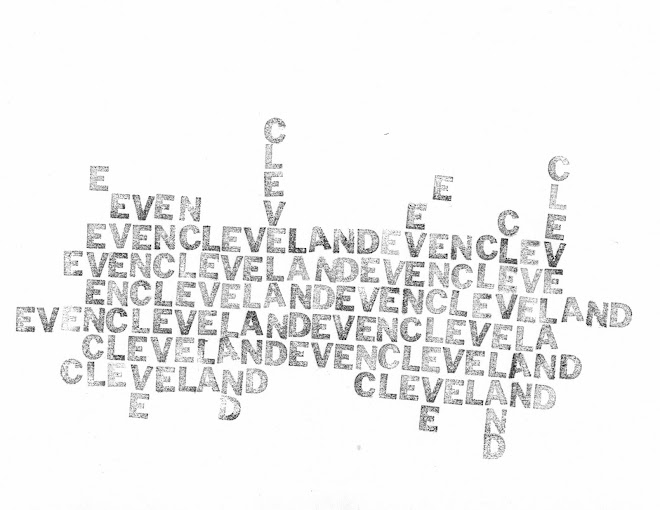


Margaret Barker, Any Morning. The Tate.
*
"So I to thee" sun and flower carnelian Georgian-era signet ring at Erica Weiner.
*
Detail from Laurent de La Hyre's Allegory of Grammar, 1650. The National Gallery (UK).
*
*
I love the cakes Terry Glover makes for The London Review of Books Cakeshop. (see also: swans, dancing ladies).
*
Repost from stand still like a hummingbird:
Bird pins (brooches) made out of scrap materials by Japanese Americans held in internment camps during World War II. From The Art of Gaman: Arts & Crafts from the Japanese American Internment Camps 1942-1946 by Delphine Hirasuna (Ten Speed Press, 2005).
Gaman is a Japanese term of Zen Buddhist origin which means “enduring the seemingly unbearable with patience and dignity”.
Related: the story of Yoneguma and Kiyoka Takahashi.
*
My five-year-old daughter often says to me, “Tell me a story about something that was going to be bad but then it turned out good.” (She makes this request on the way to the doctor.) Or, “Tell me a story of something that was going to be good but then it went badly and you were sad.” (She makes this request on the way to school.) Or even, “Tell me about something that was going to be bad but then it was good, but then it was bad, but then it was good, but then it was bad . . . And,” reluctantly, “then it was good.” I find these assignments very difficult, even though she considers losing a favorite sock and then finding it (then losing it again, but then finding it) to be a perfectly acceptable plot. It’s the emotion that is difficult. I find myself longing for something like “It was nice and nothing changed.”
Rivka Galchen, "William Goldman's Strange, Sad, Captivating Children's Book About a Girl and Her Blanket." The New Yorker, 1/31/2019.
*
"But if there was a bubble big enough, I’d move there in a second.” Everyone gets very quiet. “Tell me where the bubble is. Where’s the bubble?”
Sabrina Orah Mark, "On Pinocchio and raising boys." The Paris Review Daily, 1/3/2019.
*
I am seeing around me ... the performance of wokeness and the idea that being woke is a destination. It seems to me that some people think it’s literally a plane trip and you’re in another land and then you are woke and from that land you can criticize the land you used to be in and all people that remain in it. I just find that such a load of shit. I think there is only ever waking, right? There’s only ever going to be waking.
Mira Jacob, interviewed by Naomi Elias. Longreads, March 2019. Jacob's new book: Good Talk.
*
On the morality of home cooking: “I’m going to do the best I can but I don’t have to be perfect, and actually there’s a lot of conflicting advice out there.”
*
'What is gained – or lost – when everyone has a Dorito tailored for them?'
*
'What is gained – or lost – when everyone has a Dorito tailored for them?'
*
The Fearless Tryer, a Trader Joe's zine.
*
Chris Lintott, London Review of Books blog, 1/2/2019.
*
Wilderness Babel, an online exhibition:
Russian birds saved centuries-old documents in their nests; wasps built nests using colored paper.
*
People are stacking too many stones.
*
In the early hours of New Year’s Day, billions of miles from any Earthly celebrations, the New Horizons space probe swung by a small and extremely distant lump of ice and rock. It’s known to cataloguers as (486958) 2014 MU69, but the New Horizons team call it ‘Ultima Thule’ after the ancient expression for a place at the edge of the known world.
Chris Lintott, London Review of Books blog, 1/2/2019.
*
Wilderness Babel, an online exhibition:
If one wishes to save wilderness, or sets out to recreate or rewild it, what does this mean in places where people predominantly speak Dutch or Finnish or Greek or Nez Percé, and where wilderness does not exist—cannot exist—at least by the same name? What does it mean to protect or bring back any of the following … Wildernis, erämaa, ερημιά or titoqanót wétes?
This exhibit collects wilderness-equivalent terms and describes them in a few short paragraphs, discussing how they may be similar to or different from the wilderness that native English speakers know and admire. The subtleties of meanings encompassed by the above terms, say, between human presence or absence, or between love and fear for the wild regions, is what we hope to explore. Our focus in these webpages is less the history of wilderness than the linguistics of wilderness, even though word meanings have their own histories. Even across the English-speaking countries, a reference to “wilderness” may evoke different feelings, images, and sounds.*
Russian birds saved centuries-old documents in their nests; wasps built nests using colored paper.
*
People are stacking too many stones.


