Showing posts with label models. Show all posts

gifts to fill idle hours


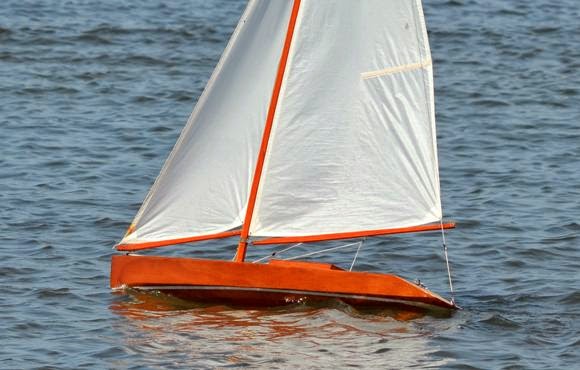
Build a pond yacht for miniature regattas.

Dye hand-pieced linen napkins with last summer's flowers.

Carve a stone, a spoon, or a bowl with kits from Melanie Abrantes.

Add color to the day with handmade watercolors by MCY Goods, or encourage someone to pick up a brush with Beam Paints' clever travel card.

String a strand of glimmering gems.

Revive epistolary practices using a passel of posh postcards or sign up for a stationery club, and then practice perfecting obsolete forms of beautiful penmanship.

Thrum a pair of cloud-soft slippers.

Print celestial cyanotypes (or make your own photopolymer stamps).

Stitch stars on a handmade quilt.

Get unblocked with Brian Eno's Oblique Strategies, a set of 100 cards, each with "a suggestion of a course of action or thinking to assist in creative situations."

gifts for mycophiles (all ages)


Mushroom puzzle by Mirus Toys.
The Mushroom at the End of the World by Anna Lowenhaupt Tsing:
'Here, we witness the varied and peculiar worlds of matsutake commerce: the worlds of Japanese gourmets, capitalist traders, Hmong jungle fighters, industrial forests, Yi Chinese goat herders, Finnish nature guides, and more. These companions also lead us into fungal ecologies and forest histories to better understand the promise of cohabitation in a time of massive human destruction.'
Foraging basket for toting snacks, magnifiers, and field guides (available in kid size, too).
Vintage mushroom teaching models.
Iris Hantverk mushroom brush.
YMC Poacher jacket (pockets are handy in the field).
Angled, telescoping mirror (invaluable for peeking under mushroom caps to check for pores, gills, or spikes.)
Chocorooms! (A safe snack choice.)
Gabriella Kiss shelf fungus earrings (see also: this stunner with mushrooms, sterling slugs, and labrodorite dewdrops.)
Midcentury Swedish vase.
John Derian x Arts and Science scarf with mushrooms.
The Mushroom Fan Club by Elise Gravel (the book that sparked a full-bore mycological obsession in my family this fall, leading to many epic mushroom walks and countless discussions about the dangers of various Amanitas).

'more like a chess match than child's play'

On a beautiful autumn day in New York City's Central Park, two groups of folksingers are performing near the Sheep Meadow. On the walkways there are joggers, cyclists, yuppies and their puppies. And at Conservatory Pond—like football coaches on a sideline—stand nine men with radio transmitters solemnly piloting their model sailboats by remote control ... 
Until 1972 the boats in Central Park raced on the vane system—that is, on autopilot—from one side of the pond to the other, with skippers pushing their boats off with bamboo poles and hoping for the best once their boats had been launched. Nowadays, with much of the guesswork lost to radio control, model racing is more like a chess match than child's play. The boats are made of fiberglass and are roughly 50 inches long, with 1,500 square inches of sail. Classic modelists—still a large part of the club—like to call them disco boats because they sport shiny Mylar sails and tend to tack all at once, like dancers doing the hustle.

N. Brooks Clark, "Central Park's Sailors Remain On Shore But Are Awash In Enthusiasm." Sports Illustrated, 11 November 1985.

setting sail


Two young girls wading in the water at Laurelhurst Park and reaching for a toy sailboat, Seattle, Washington, ca. 1929-1932. Photo credit: Vern C. Gorst/University of Washington Libraries, via History by Zim.

small cathedrals


This must be how it feels to be a god. The 28 tiny, stunningly detailed and impossible fragile models of European cathedrals sit in glass domes on shelves ... looking so lifelike that a deity watching from above might, depending on his mood, applaud the effort made in his name, or smash them to smithereens without a second thought... The models ... were made by William Gorringe between 1840 and 1850 for Sir Herbert Oakeley, a composer of church music ... Gorringe's cathedrals ... are made of cardboard and glue. A fine knife has been used to score the roofs to lend them the texture of lead or slate. Slivers of mica have been used to represent glazed windows. Edifices bristle with tiny statues, often just millimetres high. You need to crouch and push your face close to the glass case to fully appreciate the extraordinary detail.
The bulk of the models are of English cathedrals - including St Paul's, York Minster, Lincoln, Canterbury, Westminster Abbey and Durham - with five European cathedrals chosen for comparative significance. Gorringe almost produced these exquisite European miniatures without seeing the originals, instead making careful study of Oakeley's paintings and engravings to ensure he captured the craggy Gothic adornments of Strasbourg and Cologne.

*
Gorringe was known to have made other models, but they have disappeared to time. The cathedral models were built at a scale of 60 feet to 1 inch. They were later used to illustrate Sir Bannister Fletcher's A History of Architecture

I would love to see these one day. In the meantime, I have my eye on the exhibition catalog.

William Gorringe model of Salisbury cathedral, photographed for World of Interiors. More here + here.

gasp

This is the best holiday craft project/product I have seen.

Studio Violet Clothespeg Church at Bloesem.