Showing posts with label shakespeare. Show all posts

dragonish

Sometime we see a cloud that's dragonish
A vapour sometime like a bear or lion,
A tower'd citadel, a pendant rock,
A forked Mountain, or blue Promontory,
With Trees upon't, that nod unto the World
And mock our Eyes with Air. 
William Shakespeare, Anthony and Cleopatra: Act IV, scene 14.

narcissus


Daffodils,
That come before the swallow dares, and take
The winds of March with beauty.

William Shakespeare, The Winter’s TaleAct IV, scene 3, line 138.

Zhao Mengjian (1199–1267): detail from Narcissus. Handscroll; ink on paper.

an early present


Brain Cox teaches Hamlet to a small child. Found at The Missouri Review, via Lapham's Quarterly.

my soul is in the sky


2. Gustave Le Gray (1820-1884): Seascape, study of clouds. Albumen print from a collodion glass negative, ca. 1857.

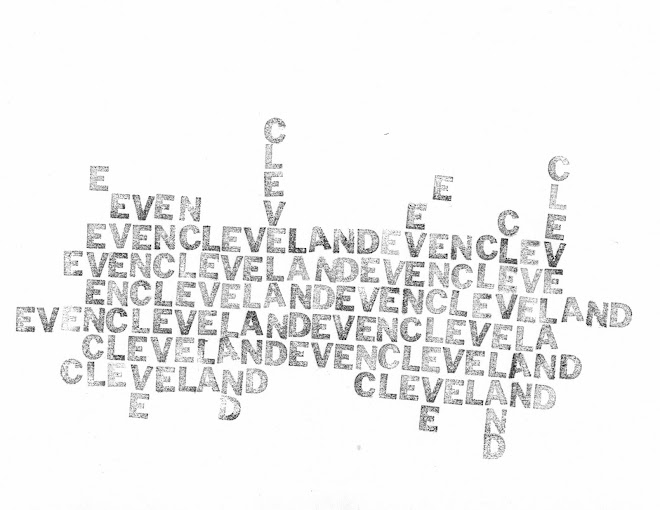
hero and leander


Leander,
he would have lived many a fair year, though Hero
had turned nun, if it had not been for a hot
midsummer night; for, good youth, he went but
forth to wash him in the Hellespont and, being
taken with the cramp, was drowned and the foolish
coroners of that age found it was 'Hero of Sestos.'
But these are all lies: men have died from time to
time and worms have eaten them, but not for love.
William Shakespeare, As You Like It, Act IV, Scene 1.

***
Leander of Abytos died on a stormy night while trying to swim across the Hellespont (the Dardanelles) to meet Hero, the priestess of Aphrodite in Sestos. Hero drowned herself after her lover's body washed ashore.

th' fire i' the blood

Look, thou be true; do not give dalliance
Too much the rein: the strongest oaths are straw
To th' fire i' the blood: be more abstemious,
Or else good night your vow!
Prospero, The Tempest, Act IV, scene i.

25 october 1415 (this story shall the good man teach his son)

St. Crispin's Day is today, October 25. On this day in 1415 the Battle of Agincourt was fought. From Henry V:

He that shall live this day, and see old age,
Will yearly on the vigil feast his neighbours,
And say 'To-morrow is Saint Crispian.'
Then will he strip his sleeve and show his scars,
And say 'These wounds I had on Crispian's day.'
Old men forget; yet all shall be forgot,
But he'll remember, with advantages,
What feats he did that day. Then shall our names,
Familiar in his mouth as household words-
Harry the King, Bedford and Exeter,
Warwick and Talbot, Salisbury and Gloucester-
Be in their flowing cups freshly rememb'red.
This story shall the good man teach his son;
And Crispin Crispian shall ne'er go by,
From this day to the ending of the world,
But we in it shall be remembered-
We few, we happy few, we band of brothers;
For he to-day that sheds his blood with me
Shall be my brother; be he ne'er so vile,
This day shall gentle his condition;
And gentlemen in England now-a-bed
Shall think themselves accurs'd they were not here,
And hold their manhoods cheap whiles any speaks
That fought with us upon Saint Crispin's day.

Ay, but yet
Let us be keen and rather cut a little,
Than fall, and bruise to death.

Measure for Measure, Act II, Scene I.

sea change

Sea-change or seachange is a poetic or informal term meaning a gradual transformation in which the form is retained but the substance is replaced, as with petrification. The expression is Shakespeare's, taken from the song in The Tempest, when Ariel sings:

Full fathom five thy father lies;
Of his bones are coral made;
Those are pearls that were his eyes:
Nothing of him that doth fade
But doth suffer a sea-change
Into something rich and strange.
Per Wikipedia. Image from Jon Estward's Flickr.