

*
*
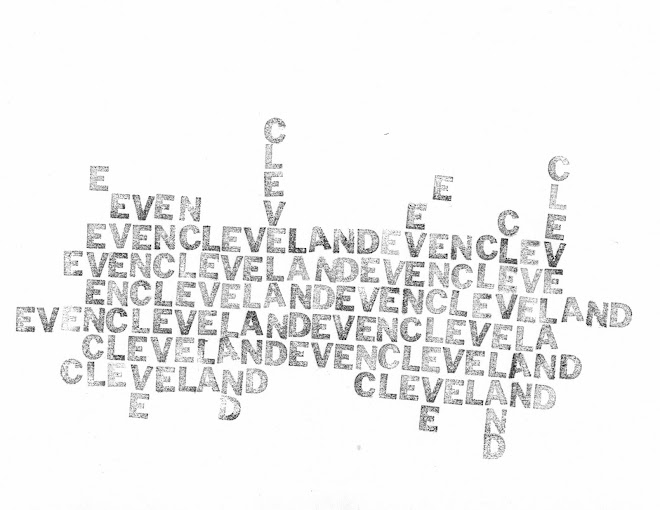
Melissa Catanese, Figures #6, 2021.
*
Still from Himali Singh Soin's "The Spiral," via Ignota Books.
*
It has long been the task of the humane left to reject the line of reasoning that would sacrifice civilians on the altar of 'historical inevitability,' whether in its Stalinist or Third Worldist guise—to protest the idea that untold innocents must die in the service of some grand telos. The humane left insists instead on the possibility, on the moral imperative, of bending what others take to be history’s iron tracks. The humane left’s north star is no flag or banner but the unflinching belief in the inherent, even divine, worth of every human life.
After all, it is this same belief out of which the humane left stands in steadfast opposition to Israel’s occupation of the West Bank and siege of the Gaza Strip, that drives our opposition to Israel’s ongoing bombardment of Gaza, our protests against the injustices of apartheid, our demands for a long-term and equal resolution to this conflict. Just as the humane left abhors Hamas’s attack and demands the immediate release of the hostages, the humane left rejects with all its force the exterminationist logic now promulgated by officials in Netanyahu’s government and right-wing politicians in the United States. There is no contradiction here. The left must be humane, or it is no left at all.
Joshua Leifer, "Toward a Humane Left: To hold everyone's humanity—that is the task of the hour." Dissent, October 12, 2023.
*
Related: "It's so hard to have humanity here."
*
On December 15, 1811, the London Statesman issued a warning about the state of the stocking industry in Nottingham. Twenty thousand textile workers had lost their jobs because of the incursion of automated machinery. Knitting machines known as lace frames allowed one employee to do the work of many without the skill set usually required. In protest, the beleaguered workers had begun breaking into factories to smash the machines. “Nine Hundred Lace Frames have been broken,” the newspaper reported. In response, the government had garrisoned six regiments of soldiers in the town, in a domestic invasion that became a kind of slow-burning civil war of factory owners, supported by the state, against workers. The article was apocalyptic: 'God only knows what will be the end of it; nothing but ruin.'
Kyle Chayka, "Rethinking the Luddites in the Age of A.I." The New Yorker, 9/26/2002.
*
The knitting machines which provoked the first Luddite disturbances had been putting people out of work for well over two centuries. Everybody saw this happening—it became part of daily life. They also saw the machines coming more and more to be the property of men who did not work, only owned and hired. It took no German philosopher, then or later, to point out what this did, had been doing, to wages and jobs. Public feeling about the machines could never have been simple unreasoning horror, but likely something more complex: the love/hate that grows up between humans and machinery—especially when it's been around for a while—not to mention serious resentment toward at least two multiplications of effect that were seen as unfair and threatening. One was the concentration of capital that each machine represented, and the other was the ability of each machine to put a certain number of humans out of work—to be ''worth'' that many human souls. What gave King Ludd his special Bad charisma, took him from local hero to nationwide public enemy, was that he went up against these amplified, multiplied, more than human opponents and prevailed. When times are hard, and we feel at the mercy of forces many times more powerful, don't we, in seeking some equalizer, turn, if only in imagination, in wish, to the Badass—the djinn, the golem, the hulk, the superhero—who will resist what otherwise would overwhelm us? Of course, the real or secular frame-bashing was still being done by everyday folks, trade unionists ahead of their time, using the night, and their own solidarity and discipline, to achieve their multiplications of effect.
It was open-eyed class war.
Thomas Pynchon, "Is It O.K. to be a Luddite?" The New York Times, October 28, 1984.
*
At this crisis certain inventions in machinery were introduced into the staple manufactures of the North which, greatly reducing the number of hands necessary to be employed, threw thousands out of work and left them without legitimate means of sustaining life. A bad harvest supervened. Distress reached its climax. Endurance, overgoaded, stretched the hand of fraternity to sedition. The throes of a sort of moral earthquake were felt heaving under the hills of the northern counties. But as is usual in such cases, nobody took much notice.
Charlotte Bronte, Shirley.
*
This movie deals with the epidemic of the way we live now.
What an inane card player. And the age may support it.
Each time the rumble of the age
Is an anthill in the distance.
As he slides the first rumpled card
Out of his dirty ruffled shirtfront the cartoon
Of the new age has begun its ascent
Around all of us like a gauze spiral staircase in which
Some stars have been imbedded.
John Ashbery, "This Configuration." The Paris Review, Issue 79, Spring 1981.
*


