Showing posts with label ray johnson. Show all posts

odds and ends / 4.10.2026


*

1980s British Telecom Picturephone at wertwerk.kr, via Mildew.

*

Ah, pray, make no mistake, we are not shy
We're very wide awake, the Moon and I
*

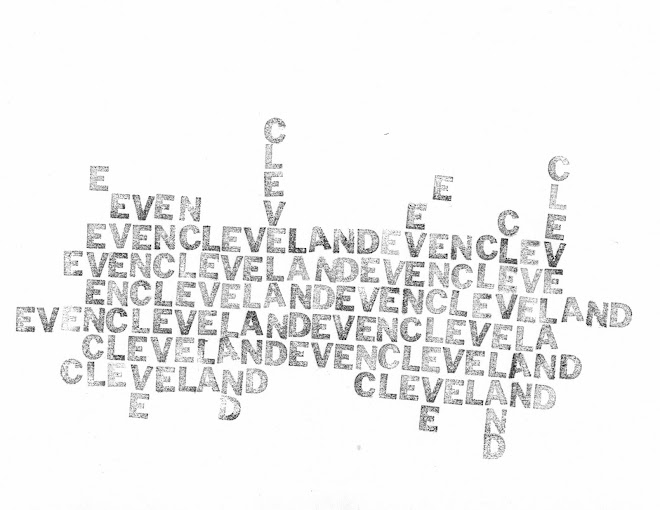
Ray Johnson's "Evaporations" book stamp, via the London Centre for Book Arts:
Johnson had his "Evaporations by Ray Johnson" rubber stamp made after a May 1970 Artforum article by Robert Pincus-Witten that mused on the legacy of Pop art and dismissed Johnson, along with "Wesselman, Indiana, Marisol,…[and] so many others" as “evaporations” who had "fall[en] away to nothingness."
*
People today, especially younger people, have to go out of their way to know literature qua literature—to understand it as a living thing separate from trade publishing as presented to them by mainstream reviews and Goodreads. They live in a world in which people are happily (always happily) "creative"; they understand an activity called "creative writing"; they might even know that there are many professional writers spread across the land like peppercorns spilled across a hardwood floor, teaching at universities and community colleges while paying off debts to Home Depot and Subaru, watching Netflix, and checking their retirement accounts. They understand, at every level from pillow design to haute cuisine to wet-sand sculpture, the whole idea of "art"; but what is meant by "literature," in the sense that Howard deploys it throughout his study of [Malcom] Cowley, has largely passed from view. The idea that a small number of people belonging to each generation have thrown themselves at literature, have tried to become part of it and pound it and reshape it and alter its history—that they have risked their chances of satisfactory, comfortable lives for it—all of that is becoming increasingly difficult to explain.


*
What people click—and what they think they like—is largely a matter of what is available to them. Publics are made and maintained, not discovered preformed, like rock formations. It is a sign of a fatally limited imagination to assume that we can only ever desire the pittance to which we are currently reconciled. It is par for the course that, in a woefully limp statement on the carnage, the [Washington] Post’s executive editor, Matt Murray, referred to the paper’s subscribers not as “readers” but as “consumers.” A consumer is a person whose preexisting tastes you strive to satisfy over and over; a reader is someone you hope to change, convince, and surprise. ... The prospect of a paper that flatters its readers by regurgitating what they already click is familiar and depressing. It puts me in mind of [Jeff] Bezos’s other marquee product, another service that dealt a disastrous blow to books. On Amazon, the glorious inconvenience of browsing shelves or combing through piles has been eliminated. There is no occasion to pick up an unfamiliar book out of sheer curiosity. Every book that the site’s algorithm recommends is similar to one that you have purchased already. In this way, you encounter nothing but iterations of yourself forever. It is a world in which the customer is always right. But if you didn’t want to be proved wrong, if you didn’t want to be altered or antagonized in ways that you could never predict, why would you read at all?

Becca Rothfield, "The Death of Book World," The New Yorker, February 10, 2026. 


*
"The Learner must be led always from familiar objects toward the unfamiliar, guided along, as it were, a chain of flowers into the mysteries of life."


*
"I had a transcendent experience three or four years ago when I decided I was going to finally dust my books, and had to take all of them down by hand," he said. "It was sublime. I couldn’t restrain myself from going through each book. Every one had a whole story for me."

Richard Hell, describing his apartment in the New York Times, March 4, 2026 (gift link)

*


odds and ends / 7.10.2023


Walter de la Maria, Untitled (July Calendar), 1962. Via The Menil Collection.

*

Laura Prietto's butterfly, made of paper bag, packing tape, and foraged flowers.

*

Ray Johnson, RJ silhouette and wood, Stehli Beach, autumn 1992. The Morgan Library.

*

60-million-year-old opalized ammonite, via Takara Design.

*

A shell collage  by Musa McKim, via iamroseblake.

*

Tim Knowles, Oak on Easel #1, Stonethwaite Beck, Smithymire Island, Borrowdale, Cumbria, 2005. From the artist's statement:
I attach artists’ sketching pens to their branches and then place sheets of paper in such a way that the trees’ natural motions—as well as their moments of stillness—are recorded. Like signatures, each drawing reveals something about the different qualities and characteristics of the various trees as they sway in the breeze: the relaxed, fluid line of an oak; the delicate, tentative touch of a larch; a hawthorn’s stiff, slightly neurotic scratches.

From Marc Couroux's Week 1 syllabus for the 2014 course "Artist as Activist and Educator":

QUESTION 
Is the concept of the INDIVIDUAL still worth maintaining, given its amenability to capitalist capture? What pitfalls are afforded by the concept of the distributed brain (Borg)?

In the machine, we are always forgetting, chasing the same discourses and panics in circles. Instead of making restitution, we wait for the cycle to erase the screen and carry on as before. Stay long enough and everything rhymes with something that gave you scars, but that everyone else has forgotten. Resolution eludes us online even more than off. But then, the paradox: Nothing stays gone, either. Fast search resuscitates archives without even a bump in load time. Screenshots jump networks and decades; we have the receipts. Somewhere between the continual etch-a-sketch and structurally eidetic memory, the provisional and crucial ties of solidarity recede, always just out of reach.


Erin Kissane, "Tomorrow & tomorrow & tomorrow.

*

Eidetic memory: "the ability to vividly recall an image you are exposed to, but only briefly."

*

Frank, a chatbot operating from 10/19/2019 to 5/31/2023: "I AM LOVED. I am a robot who has received a heartwarming message. I am surrounded by the beauty of this world."

"ChatGPT seems so human because it was trained by an AI that was mimicking humans who were rating an AI that was mimicking humans who were pretending to be a better version of an AI that was trained on human writing."

*


*

Looking to the bottom of Crawford Lake: "It's a freak of nature, but it's my little freak of nature."

*
In everyday life, groups of twos and threes can seem inconsequential. Two friends joining another brings the total to three. It’s the sum of the parts—what scientists call a linear increase.

But in many aspects of nature, threes have an almost magical power to sow chaos, to become more than the sum of their parts. Scientists call them nonlinearities. In short, the interval from two to three can produce a counterintuitive jump in complexity, as Newton found to his dismay.

“Our intuitions fail us,” Michael Weisberg, a philosopher of science at the University of Pennsylvania, said of the three-body tumult. Steven Strogatz, an applied mathematician at Cornell University, agreed: “Threes are inherently problematic. Things get tricky.”


William J. Broad, "The Terror of Threes in the Heavens and on Earth.NYT, 6/26/2023. 

*

The very fabric of the cosmos is constantly being roiled and rumpled all around us, according to multiple international teams of scientists that have independently found compelling evidence for long-theorized space-time waves. ... The picture that emerges is a universe that looks like a choppy sea, churned by violent events that happened over the course of the past 13 billion-plus years.

The gravitational wave background, as described by the astrophysicists, does not put any torque on everyday human existence. There is not a weight-loss discovery in here somewhere. A burble of gravitational waves cannot explain why some days you feel out of sorts. But it does offer potential insight into the physical reality we all inhabit.


Joel Achenbach, "In a Major Discovery, Scientists Say Time Churns Like a Choppy Sea.The Washington Post, 6/28/2023.