Showing posts with label butterflies. Show all posts

odds and ends / 6.23.2021


Migishi KōtarōButterflies Flying above Clouds, 1934.

*

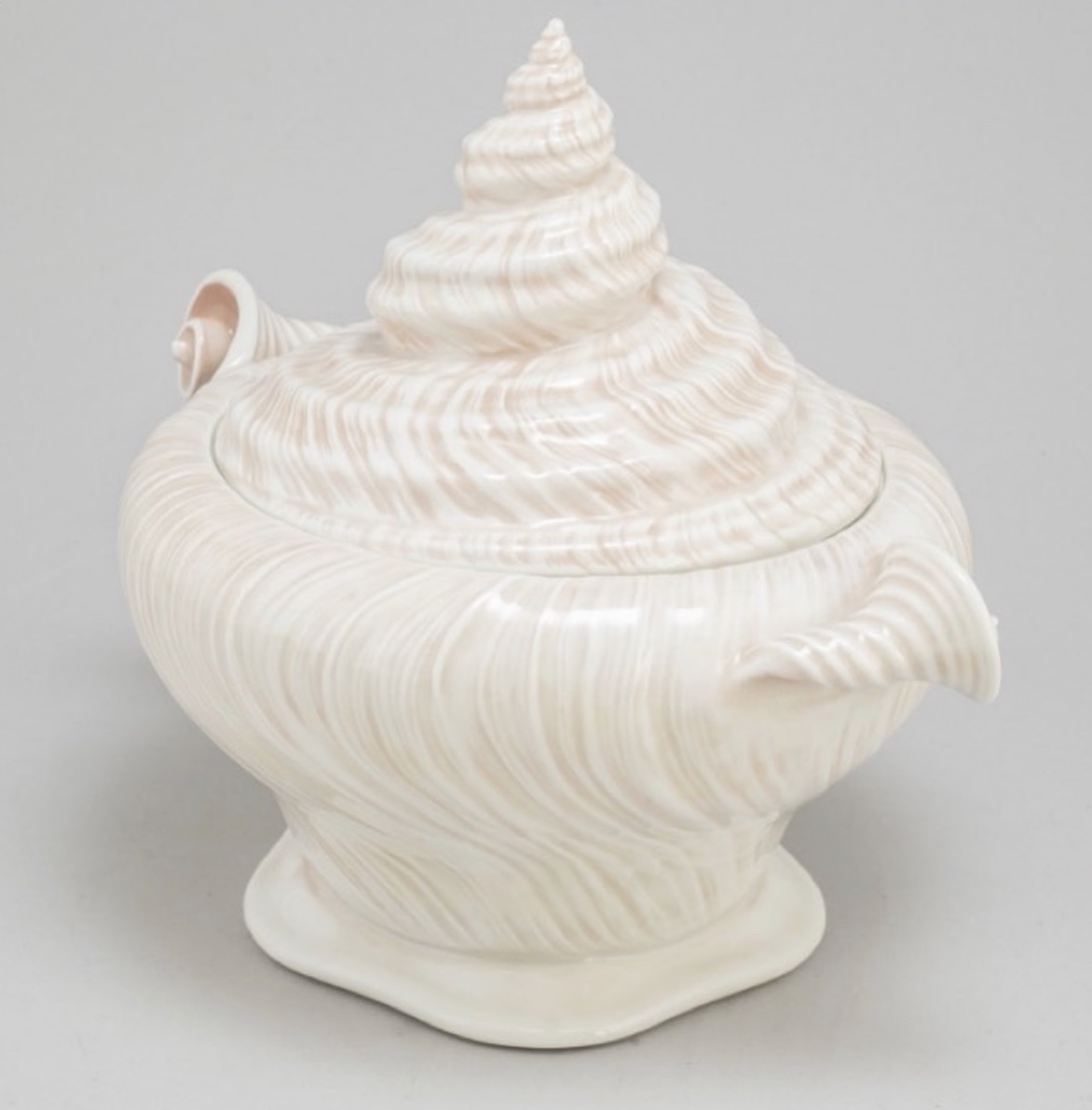
Arje Griegst for Royal Copenhagen shell tureen, via ssseemsss.

*

Kid Cudi, performing on SNL 4/10/2021 (I love seeing men in flowers).

*


*

Worn Dephinula lapel pin at Rennes.

*
Detail from The Hug by Leslie Simpson, 1990. Found thanks to stopping off place.

*

When I was going through some of my photographs last night, I saw one of [civil rights activist] Dorothy Height. I looked her up, and found this quote of hers, which is exactly how I feel about everything: ‘I am the product of many lives that have touched mine, from famous, distinguished and powerful to the little known and the poor.’

Ming Smith, interviewed by Zoe Whitely for The White Review, March 2021.

*
I believe that one reason I began writing essays—a form without a form, until you make it—was this: you didn’t have to borrow from an emotionally and visually upsetting past, as one did in fiction, apparently, to write your story. In an essay, your story could include your actual story and even more stories; you could collapse time and chronology and introduce other voices. In short, the essay is not about the empirical “I” but about the collective—all the voices that made your “I.”


Hilton Als, from Alice Neel, Uptown, quoted in an interview in The Creative Independent, 10/16/2020.

*

As the novel progresses, Katharina flees Leonberg to avoid arrest. Before she’s dragged back to prison, the accused visits a doctor and former executioner’s assistant who works out of the baths at Ulm. She wishes to get a second opinion as to whether or not she is a witch. “I didn’t really think I was a witch,” Katharina qualifies, “but I have never been one to be afraid of increasing my knowledge.” The doctor turns out to be just another peddler of personal intuition. “I was asked once to look at an extra nipple. There was no way to verify if it was or wasn’t used to suckle a devil,” he admits. “I have a strong sense of people. Of their true selves. That’s all I have to offer.”


Hannah Gold, "I Put a Spell on You." The Baffler, 6/17/2021.

*

Steven Shapin’s previous book, A Social History of Truth, was about the sense in which—during the period covered by this new book, the late 16th and the 17th century—what people knew depended on who they knew. And who they knew, of course, and how they knew them, were largely functions of social class. In that book he set out to show ‘the ineradicable role of what others tell us and ... how reliance upon testimony achieves invisibility in certain intellectual practices.’ If all knowledge is more or less sophisticated gossip then what we believe depends on what we are in a position to hear and overhear. 


Adam Phillips, "You Have To Be Educated To Be Educated." London Review of Books,  Vol. 19, No. 7, April 3, 1997.

*

What the sentimental and the gothic have in common is that they are both at root children’s literature, delineating good and evil, marching away from ambiguity. Something is missing from each of these narratives: irony.

Christian Lorentzen, "Between the Sentimental, the Gothic, and the Ironic." Bookforum, Summer 2021.

*

"The film’s lack of a release is only one of its own historical tragedies—the other is that Davis hasn’t had the chance to make another feature film."

*

[T]he usual response I hear when I tell someone not to use personality tests is, “oh, but it sounds so accurate, and it helped me discover who I am!” There’s actually a term for this: the Barnum effect, which is a phenomenon wherein people tend to perceive vague, abstract personality statements to be highly accurate and personally relevant, despite a lack of scientific evidence.


Stephen Zhou, "Three Warning Signs to Consider Before Using a Personality Test.Fast Company, 6/7/2021. 

*

And yet what partly doomed Ethel was her perceived lack of femininity. Her refusal to court the press or the public and her stony-faced stoicism throughout the trial were taken as signs of her coldness, even masculinity. No one understood that this was, at least in part, her only protection against the onslaught she felt to her fragile being. President Eisenhower, to whom she appealed for clemency, worried about sending a young mother to the electric chair, but then absolved himself because “in this instance it is the woman who is the strong and recalcitrant character, the man is the weak one.” Is there a more revealing example of the straitjacket of postwar femininity than this outrageous comment, which helped to seal Ethel Rosenberg’s fate?


Joseph Dorman, "How Ethel Rosenberg Offered Her Own Life as a Sacrifice." NYT, 6/8/2021.

*

In the evening, the three of them had long conversations. Genrikovna was amazed at the girls’ wisdom and forgiveness. “These are not ordinary children,” she liked to say, making the sign of the cross over their beds.

The two underage grandmothers slept and dreamed of finding the magical ointment for their beloved Genrikovna.

Ludmilla Petrushevskaya, "Two Sisters."

*
Your father,” said Saunders, “is a lost cause. He thinks those boys are great and he’s never going to think you’re anything, because you’re a girl.” 

“Well,” said Goldin, “I can’t change that.” 

“No, but you can stop wanting him to change,” said Saunders. 

Emma felt like the top of her head would fly off. Saunders got it, the whole thing. “That’s what I mean,” said Emma loudly. “That’s just what I’m talking about. We have to stop waiting around for them to love us!”


Louise Fitzhugh,  Nobody's Family Is Going to Change, quoted by Sarah Blackwood in "Children's Lib!The New York Review, 5/13/2021.

*

"I have reached the heart of a word itself."
odds and ends / 3.7.2021


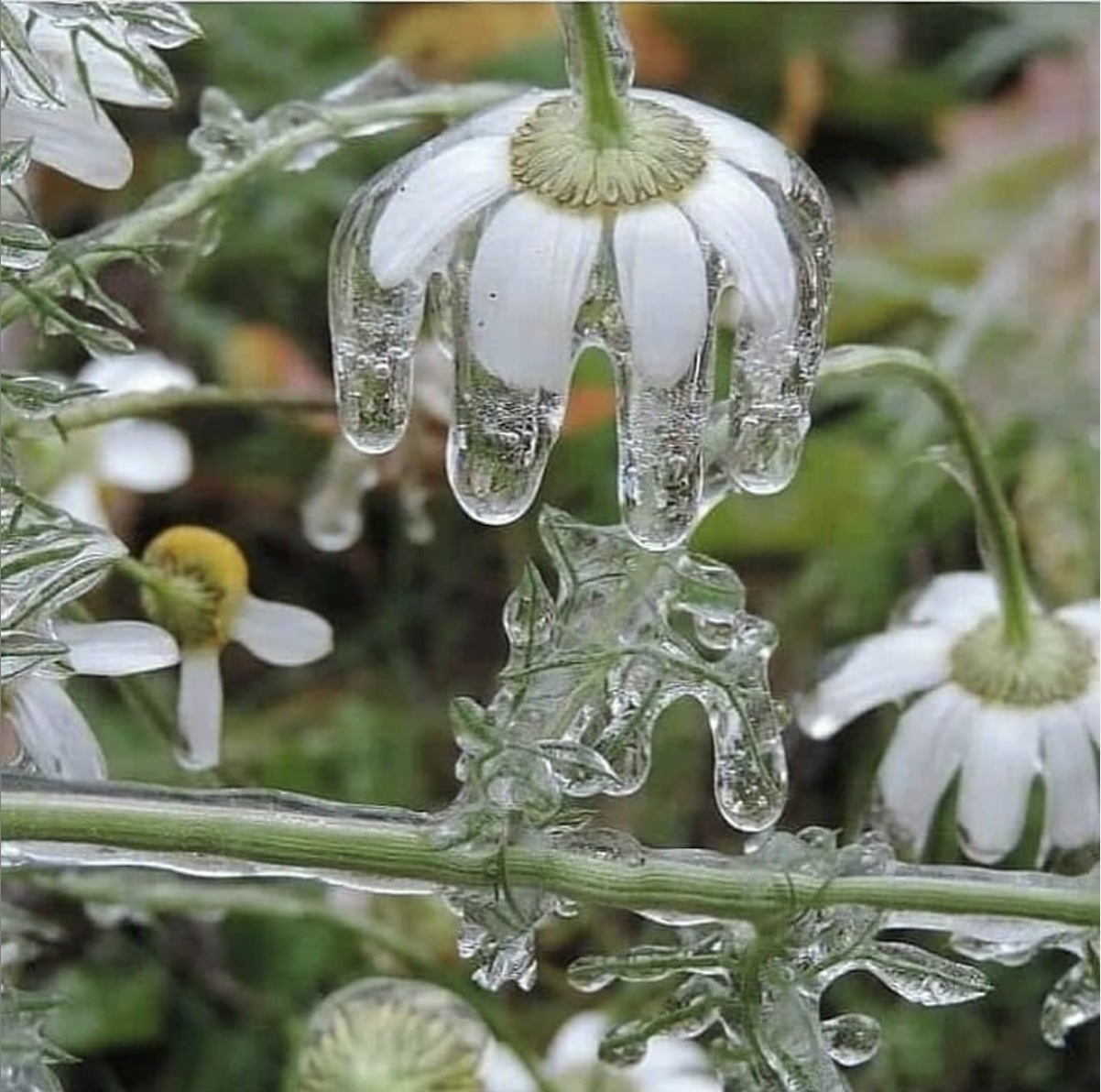
Photo of a frozen daisy, found here.

Maria Sybilla Merian, drawings of two moths from Merian's Drawings of Surinam Insects &c, ca. 1701-1705. The British Museum.

*

Quilted Robe à la Francaise, ca. 1750. In the collection of The Metropolitan Museum of Art. (Rennes stocks a covetable modern version of the luxury quilted housedress by Maku.)

*

Unknown artist, lover's eye ring, ca. 1890. The Metropolitan Museum of Art. (Other eyes.)

*

Judy Kensley McKie, Butterfly chest, 1993. 

*
We live on a wild planet, a wobbly, erupting, ocean-sloshed orb that careens around a giant thermonuclear explosion in the void. Big rocks whiz by overhead, and here on the Earth’s surface, whole continents crash together, rip apart, and occasionally turn inside out, killing nearly everything. Our planet is fickle. When the unseen tug of celestial bodies points Earth toward a new North Star, for instance, the shift in sunlight can dry up the Sahara, or fill it with hippopotamuses. Of more immediate interest today, a variation in the composition of the Earth’s atmosphere of as little as 0.1 percent has meant the difference between sweltering Arctic rainforests and a half mile of ice atop Boston.


Peter Brannen, "The Terrifying Warning Lurking in the Earth's Ancient Rock Record." The Atlantic, 3/2021.
*

Life with an obsessive, often absent, geologist must have been hard. In one recollection Mary Ann is described as 'an eccentric little round-faced woman,' oddly dressed, with rouged cheeks and black curls, often seen walking a few paces behind Smith, 'who plodded steadily on his way, apparently too much immersed in his geological meditations to give a thought to her who followed behind.' Occasionally she had tantrums. Smith never argued but walked quietly out of the room, locking the door behind him. More than once she was known—and who could blame her—'to dash some object through the window of her temporary prison as he passed outside of it.' In February 1842 she was sent to York Lunatic Asylum, where she died two years later. Hers is a story that asks to be written.


Jenny Uglow, "The Reader of Rocks." The New York Review of Books, 3/11/2021. 

*

For rock hunters: A jazz musician explains how to find micrometeorites.

*

She has freed me from the nagging worry about relevance, because, reading her, I know I am entirely irrelevant, nearly extinct or saved from extinction by some kind conservationists who allow me to graze on austere pastures.

Mary Gordon, "Beatifying Patricial Lockwood." LitHub, 2/24/2021. 

*
Everything is too long these days, isn’t it? Every series is at least two episodes too long, podcasts go on for hours, you have to scroll through pages of someone’s barely disguised eating disorder mania to get to the recipe on their blog, and every documentary on Netflix is four hours long, forcing me to go to Wikipedia halfway through just to finally find out what happened ...


Jessa Crispin, "Why I Am Obsessed with this Podcast's Merciless Little Romps." The Spectator, 2/27/2021. 

*
This notion of oneself as a kind of continuing career—something to work at, work on, “make an effort” for and subject to an hour a day of emotional Nautilus training, all in the interests not of attaining grace but of improving one’s “relationships”—is fairly recent in the world, at least in the world not inhabited entirely by adolescents.

Joan Didion, "Letter from 'Manhattan.'" The New York Review of Books, 8/16/1979.

*
Yes, writing is very hard, and no book really lives up to its aspirations, but once you’re an adult you can’t be writing bad books all over the place. People might read them! It’s not your right to be a writer. It’s not your right to be read. It’s not your right to be a public figure. A just society is one where everyone has a home, food, healthcare, an education, and vacation for four weeks a year. A just society does not mean everybody gets to be a celebrated writer if they want to be. 


Lauren Oyler, interviewed at The End of the World Review

*


*


*
The blues are both a feeling and a situation, [Angela] Davis writes. America is in the blues now, and the blues are in our history. The United States isn’t occupied by Nazi Germans, it’s occupied by the same people it has been occupied by since it was colonized. “Occupied territory is occupied territory,” James Baldwin wrote in 1966, “even though it be found in that New World which the Europeans conquered, and it is axiomatic, in occupied territory, that any act of resistance, even though it be executed by a child, be answered at once, and with the full weight of the occupying forces.”


Eula Biss, "The Resistance." The Paris Review, 2/23/2021. 


*


*
I have striven hard to be pleased with my new situation. The country, the house, and the grounds are, as I have said, divine. But, alack-a-day! There is such a thing as seeing all beautiful around you—pleasant woods, winding white paths, green lawns, and blue sunshiny sky—and not having a free moment or a free thought left to enjoy them in. The children are constantly with me, and more riotous, perverse, unmanageable cubs never grew. As for correcting them, I soon quickly found that was entirely out of the question: they are to do as they like.

Charlotte Brontë, writing to her sister Emily in 1839, via Lapham's Quarterly Vol. IV, No. 2, Spring 2011.

*

"One person is the hider, and the other person is also the hider."

*


gifts for schlegel sisters


A smart topper for social calls: Caron Callahan Bea coat.

Swirly, colorful cups by Balefire.


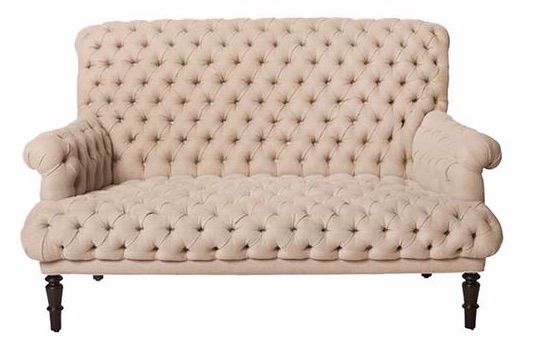
Extravagantly tufted seating, for quirky brothers with chronic hay fever to recline upon: John Derian Bachelor sofa.

Music inspired by painting (specifically, the paintings of Clyfford Still) to inspire discussion: James Romig's Still, performed by Ashley Mack.


Plinths for displaying treasures, or any of the other marvelous objects from Parvum Opus.

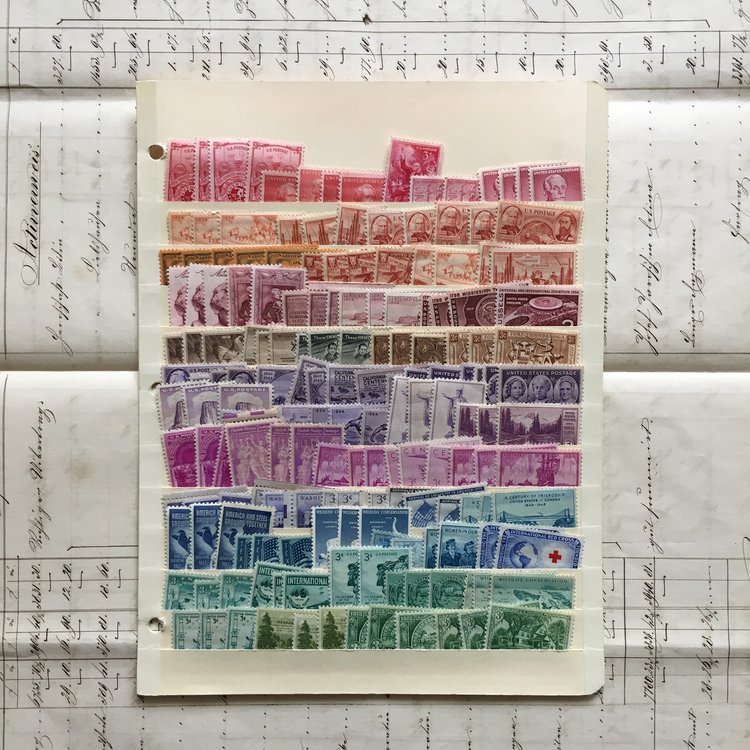
Single-color three-cent stamps to post handwritten correspondence from one sister to another.

A (swanky) place to stash errant, life-altering umbrellas (Fornasetti farfalle umbrella stand).

A family home you could keep forever.


Clerkenwell Blue bone china with sharp-nosed foxes and long-eared rabbits by Mira Santo

And, of course, a first edition of Howard's End.

gifts for jigsaw puzzlers


A ha-ha funny one: Piecework Puzzles Meta 1,000 piece puzzle.

Akihiro Woodworks Jin cup for sustaining sips of something warm close at hand.

Keen Hsu's LED lantern speaker, to shine a little extra light and gently amplify the soothing voices of podcasters.

Akron St. Ko low table—paired with meditation cushions or floor pillows, the tray top makes it perfect for puzzle work.

One for collectors: Liberty Puzzles "Flutter By," 290 pieces with assorted whimsies (pieces cut out in the shapes of recognizable things, like caterpillars and dancers).

A puzzle disguised as a novel/a novel disguised as a puzzle: a first edition of Julio Cortázar's Hopscotch.
Shearling moccasin clogs (fuzzy slippers are always useful).

An enamelware bake set that doubles as sorting strays for puzzle pieces (or some less-costly butcher tray palettes).

Bode quilt jacket (each one is a wearable, covetable work of art).

The gift of infinite options: a puzzle without end—"no fixed shape, no starting point, and no edges."

odds and ends / 6.13.2019


Ruth Clark, Simple Group Dances for Use in Schools, via The Second Shelf.

*

Madeline Weinrib quilt, ca. 2012.

*

William B. Closson, Butterflies, ca. 1887.
*

Pimlico House kitchen designed by Rose Uniacke.

*

The Corleck head, a three-faced stone carving. Ireland, 1st-2nd century A.D.

*
She describes herself as a messy reader, and a messy thinker, and she is stylishly disheveled, with a preference for comfy, colorful clothing with pockets and Birkenstocks with socks.
As a procession of speeches and toasts lauded her life’s work, Dr. Uhlenbeck stood to the side of the lectern and listened, eyes mostly closed. When it finally came time to make her own remarks (unprepared), she began by simply agreeing: “From the perspective of my late seventies, I find myself as a young mathematician sort of impressive, too.”

She went on to note that, for lack of mathematical candidates, her role model had been the chef Julia Child. “She knew how to pick the turkey up off the floor and serve it,” Dr. Uhlenbeck said.

Siobhan Roberts, "In Bubbles, She Sees a Mathematical Universe." NYT, 4/8/2019. A profile of Karen Uhlenbeck, winner of the Abel Prize.

*

Also: 'Astrophysicists have long postulated, if only symbolically, that galaxy clusters have a soapsuds structure.'

*

'She weighed about ninety pounds without her jewels, and when I met her she was ninety years old.'

*

The children's book coverage in the New Yorker's Page-Turner is a platter of delicious treats: Jia Tolentino on Ellen Raskin's The Westing GameRivka Galchen on Curious GeorgeSarah Blackwood on Amelia BedeliaRumaan Alam on William Steig.

*

Lyz Lenz attends Mom 2.0: 'We are preparing ourselves to perform motherhood with a hashtag.'

Related: a 14-year-old on her mom and sister's social media accounts: 'For my generation, being anonymous is no longer an option. For many of us, the decisions about our online presence are made before we can even speak.'

*
Once the queue nears baggage control, despondent submission to contemporary travel proceedings gives way to a fluster of semi-autonomous acts that demonstrate to the persons behind you in the queue the ability to stay calm while efficiently slinging your suitcase into the grey tray and stuffing your hand luggage in another, along with your coat, your cardigan, your shoes, your belt, your mobile phone, your earplugs, your tablet, your battery, your keys, your wallet, your external hard drive, your umbrella, your loose change and your passport – in short, all the belongings that make you you barring your inner organs, crammed into these plastic open caskets that roll into the X-ray machine as into a furnace, ready to be incinerated. Surely, to travel should not cause such fear of discovery?

Astrid Albin, 'Eighteen Seconds to Impact.' The Times Literary Supplement, 3/27/2019.

*

Speaking of bags for travel: I saw some totes by Epperson Mountaineering at Seven Sisters in Portland, Oregon, and am now coveting their backpacks.

*

Strawberry dumpling (easy and delicious).

*

Ordinary sex.


eyespots


Via A London Salmagundi: 'Peacock butterfly flashing its eyespots to scare off predators.'

glasswings


Spotted on My Modern Met: the marvelous glasswinged butterfly. They have a slew of gorgeous shots, but this one is my favorite.

Photo by farrukh.

vegetation's juggler

The mushroom is the elf of plants
At evening it is not;
At morning in a truffled hut
It stops upon a spot

As if it tarried always;
And yet its whole career
Is shorter than a snake's delay,
And fleeter than a tare.

'T is vegetation's juggler,
The germ of alibi;
Doth like a bubble antedate,
And like a bubble hie.

I feel as if the grass were pleased
To have it intermit;
The surreptitious scion
Of summer's circumspect.

Had nature any outcast face,
Could she a son contemn,
Had nature an Iscariot,
That mushroom,—it is him.


wings and webs


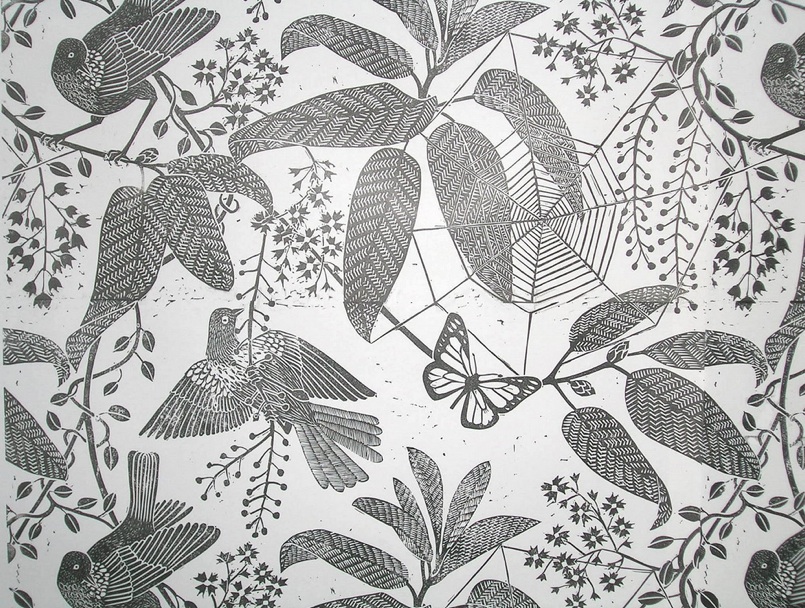
Marthe Armitage's 'Jungle Birds' wallpaper, hand printed for Hamilton Weston.

If I ever have a house with more than two rooms where I can have wallpaper, I want this and her 'Manor House' and 'Island' patterns somewhere.

Discovered via Katy Elliott.