Showing posts with label furniture. Show all posts

odds and ends / 7.21.2026


Still from "Clotheslines," directed by Roberta Cantow, 1982.

*

Sawyer Made split-step stool, for Walker Street Market, photographed by Winnie Yang via The Secret Strategist.

*

"Ideal Hollow" by Nichola Manning, via drifting lament.

*

Shell buttons, via slow roads.

*

Detail of "an exquisite, finest muslin early 1800s French hand embroidered shawl," sold by starchedandcrumpled.

*

Photo of H.D. and a child on a beach in California, collections of the Beinecke Library.

*

Overlapping in a complex network, each line of garments reads as a household census noting: age, family size, and social status. Bed sheets, undergarments, and women’s hosiery on thin strings allude to bodies not present. Starched white shirts dangle neck-down on tiny tightropes stories high above a precipice of filth-black alleys. A warm summer breeze could bring each garment to life with the weightlessness of guardian angels overlooking the city.

Lissa Rivera, "A Fine Line: The Art of the Clothesline," Museum of the City of New York Blog, 8/7/2012.

*
[Clotheslines] were useful in many ways besides drying laundry: for running messages and cups of sugar from one apartment to another, or—stretched diagonally down to the ground—for conveying groceries to the elderly infirm or growlers of beer up to the corner saloon. They were characteristic of a life stretched by necessity, out of interiors of apartments as far as possible into the public space beyond.


*
She felt contempt for her environment. ‘Women, yech!’ she’d say. ‘Clotheslines and gossip,’ she’d say. She knew there was another world—the world—and sometimes she thought she wanted that world. Bad. She’d stop dead in the middle of a task, staring for long minutes at a time at the sink, the floor, the stove. But where? how? what?

Vivian Gornick, Fierce Attachments

*
I think the idea of comfort generally, even when you asked me if I’m comfortable, is a rich thing. These are concepts. If you ask somebody how they grew up, they won’t tell you rich. They’ll say, “We were comfortable.” I’d never heard the word growing up. Comfortable? What? We’re not comfortable. Nobody is comfortable! There are roaches in the sink. The snow has come through the window, and I’ve got to put cellophane on it. Nobody is comfortable, and we’re very comfortable being uncomfortable. But the rich are not. And they dictate what is comfortable and what isn’t. They are uncomfortable often.


*

"Suffering and enjoyment as sources of knowledge."

gifts for somewhat practical aesthetes


An efficient all-in-one hat and scarf by Xenia Telunts, available at Folk

tree curtain by random clichés, for greenery that never needs watering.

Fleurs D'Hiver herbal tea lollipops, for a particularly lovely cup of tea.

An aluminum coffee pot by knindustrie, to add flourish to a daily ritual.

Kumihimo silk-braided eyewear straps by Noriko Yuki, for keeping readers close.

A minimalist cookie zine
 with just four recipes, each inspired by an artist: Halva af Klint, Sonia Dough-lanay, Anise Albers, and Almond Thomas.

paper fan that recalls a sunlit forest canopy, for lo-fi a/c.

spiraled basket made of coppiced willow by Rachel Bower Baskets, for corralling a collection of handmade wooden spoons.


An easy-to-find-at-the-bottom-of-bags Caro pen by Craighill, and an Ina Seifert lanyard to keep it (and keys) handy.

chair by Cultivation Objects that recalls telephone seats, for texting and word games.

A cherry wood cable wrap by Naoto Yoshida, for keeping cords neat.

Miriam Murri's dog-waste bag dispenser for Alessi, for putting a little shine on a most unpleasant chore. 

A cheery and sturdy Hender Scheme tissue case, because tissue manufacturers seem driven to choose THE WORST patterns for tissue boxes. Why?!!!!

odds and ends / 1.29.2024


Edvard Munch, "Winter Landscape, Thüringen," 1906. Kunstmuseum Bergen.

*

Garnet and rose quartz necklaces by Marie-Hélène de Taillac, via Twist.


*

Guglielmo Veronesi, “Perla” chair, ca. 1952. Via Commune Design.

*

Calendar watch made in 1650 by Thomas Alcock that indicates "the time of tides (presumably at London bridge), mean solar time, the age of the moon in its monthly cycle, and the day of the month." Alcock lost a similar watch in 1661 and advertised for it in the February 1661 issue of Kingdoms Intelligencer. In the collection of The Metropolitan Museum of Art.

*

Child's creamware cup, ca. 1830s, via oldasadam.

*

Snow monster
 (or, how I feel by January's end).

*
In interviews collected in the book Starting Point: 1979-1996, Miyazaki referred to a universal “yearning for a lost world” he refused to call nostalgia, since even children experience it. We long not for what we remember, but what we’ve never experienced at all, only sensed beneath reality’s surface.

Alissa Wilkinson, "'The Boy and the Heron' Review: Hayao Miyazaki Has a Question for You." NYT, 11/21/2023.

We seemed to be developing a brittle incapacity to accept, let alone honor, the tender, tragic feeling that had always lain beneath the ordinary person’s experience of nostalgia. In his once famous essay “Old China,” Charles Lamb located nostalgia in “the hope that youth brings” and which time extinguishes. What we are always most nostalgic for is, in fact, the future, the one we imagined only to see it turn into the past. The actress Helen Hayes used to tell a story of how her young prospective husband poured some peanuts into her hand and said, “I wish they were emeralds.” Years later, when he was actually able to give her a little bag of emeralds, he did so saying, “I wish they were peanuts”—which, with whatever excess of sweetness, about sums it up. Nostalgia is built into us ...

Thomas Mallon, "Nostalgia Isn't what it Used to Be." The New Yorker, 11/20/2023. 

*
*
I subscribe to Vittles online magazine, because reading evocative writing about food I’m too lazy and incompetent to prepare or seek out is one of my favourite hobbies, and because I always learn something. In a recent edition, I discovered a captivating Korean suffix. “There are no thoughts, just meong, the suffix in Korean used for activities of staring into stillness, like bull meong—staring into the fire,” wrote the author, Songsoo Kim, in a beautiful article with recipes about preparing a feast that I would dearly love to eat, but absolutely will not cook.

As a black belt starer into stillness—it’s my other favourite hobby—this spoke to me deeply. I asked Kim about it and she explained meong (also written mung) is colloquially used to describe zoning out, but without a negative connotation. This, she explained, was 'an organic linguistic development, as more and more people started mentioning how staring at the fire at campsites or fireplaces together is rather healing.' There are also forest, foliage and water versions of quiet, empty staring and cafes where you can 'hit mung.' 'It’s a moment we all need,' Kim said.

Emma Beddington, "Is this the year of meong—a wellbeing trend I can actually master?The Guardian, 1/22/2024. 

*
A turtle staggered from the waves, wearily dug a shallow hole, and commenced to drop her lovely eggs. Amber had no wish to witness this; she could no longer bear to watch struggling nature. She shut her eyes, feeling that the very act of not looking was helping the turtle out in some way.

Joy Williams, "The Beach House." The New Yorker, 1/15/2024.

*
I’m not sure that I have the qualifications to give people advice about reasons to live. My daily affective state is one of great despair about the incredible destructive forces at work in this world—not only at the level of climate. What has been going on in the Middle East just adds to this feeling of destructive forces completely out of control. The situation in the world, as far as I can tell, is incredibly bleak. So how do we live with what we know about the climate crisis? Sometimes I think that the meaning of life is to not give up, to keep the resistance going even though the forces stacked against you are overwhelmingly strong. 

Andreas Malm, interviewed by David Marchese in the NYT, 1/16/2024. 

Mitchell is one of a new breed of biologists who espouse a complex-systems perspective as an antidote to reductionism. He aims to reclaim from the philosophers words like purpose, reason, and meaning, which scientists often avoid as being unquantifiable. He mostly eschews jargon. This is a plainspoken book. It gets mildly technical in matters of biology and neuroscience, but it builds an argument that is methodical and crisp, and it cuts through years of disputation like a knife through cotton candy. This is what you are, Mitchell asserts: “You are the type of thing that can take action, that can make decisions, that can be a causal force in the world: you are an agent.”

If the denial of free will has been an error, it has not been a harmless one. Its message is grim and etiolating. It drains purpose and dignity from our sense of ourselves and, for that matter, of our fellow living creatures. It releases us from responsibility and treats us as passive objects, like billiard balls or falling leaves.

James Glieck, "The Fate of Free Will." The New York Review, 1/18/2024. 

*
The “how” is just as important as the “what,” if not more so. It turns out that the how actually is the what—or at least cannot be separated from it. They share one nervous system, and that oneness is what allows style to matter.

David Salle, "Follow the Light.The New York Review, 1/18/2024. 

*
Guy Davenport ... credited his critical acumen to a childhood spent treasure hunting. Sundays after church, his dad took him to scour fields throughout the South for arrowheads:

What lives brightest in the memory of these outings is a Thoreauvian feeling of looking at things—earth, plants, rocks, textures, animal tracks, all the secret places of the out-of-doors that seem not ever to have been looked at before, a hidden patch of moss with a Dutchman’s Breeches stoutly in its midst, aromatic stands of rabbit tobacco, beggar’s lice, lizards, the inevitable mute snake, always just leaving as you come upon him, hawks, buzzards, abandoned orchards rich in apples, peaches or plums … The search was the thing, the pleasure of looking … My sense of place, of occasion, even of doing anything at all, was shaped by those afternoons.

That’s vintage Davenport. Effortlessly, unabashedly learned; tender beneath its professorial carapace; vaguely excessive. John Jeremiah Sullivan ... writes, “He once defined ‘despair’ as the sensation that you’ve run out of ideas.” I wonder how that sensation registered to “the man who noticed that ‘in all of Balthus’ one finds no clocks.”

Dan Piepenbring, "New Books.Harpers, January 2024. (Sold me on this.)

*

beastly gifts


A set of three Gustavsberg ceramic owls, to wink knowingly.

A Couperier Coursolle rabbit pocket-knife.

Jim Nollman's experiments in interspecies communication, featuring "300 turkeys, 12 wolves, [and] 20 orca whales."

A deck of cards adorned with a menagerie of extinct animals.

A stainless steel fish flask, for drinks to go.

House of Hackney's tigerish loveseat (or, somewhat less grandly but still extravagantly, a tasseled tiger pillow).

A swan pencil-sharpener, for serene sharpening.

Winona Irene's black kitty, to claw back stray tresses, and Catnip, a magazine for cat lovers edited by a person allergic to them (me!).

Brass snail knobs, for gastropodic gleam.

Socks with squirrels, in every size.

The Golden Mole, a "lavishly illustrated collection of the lives of some of the Earth's most astounding animals" by Katherine Rundell. (I'll read anything she writes—an amazing writer.)

One of Alexis Stiteler's creaturely hand-drawn sweatshirts (next drop Sunday, December 10 at 4:00 pm ET.)

A vintage cast-iron monkey hook, for hanging around.

Mosaic scarab ring, because beetles are gem-like beauties.

Natalie Lete's fish belt bag, made to swallow phones and keys.

British Colour Standard's wolf's head candle, for light with bite. 

Cactus Shop's license-plate tribute to slime mold, because being a mammal isn't everything.

*

One more indulgence: These funny gift guides are an annual delight to compile for all of you anonymous folks out there. I don't make any money from them—no affiliate links, no placements, nada! I'm an online renegade!—but if they have brought you joy or amusement, please consider making a donation to Doctors Without Borders. I'm donating what I can, too, and holding the people of Palestine, Ukraine, and Sudan in my heart. Thank you.

gifts for colorful characters


Emma Mierop's ruffled linen scarf for a non-boring neutral.


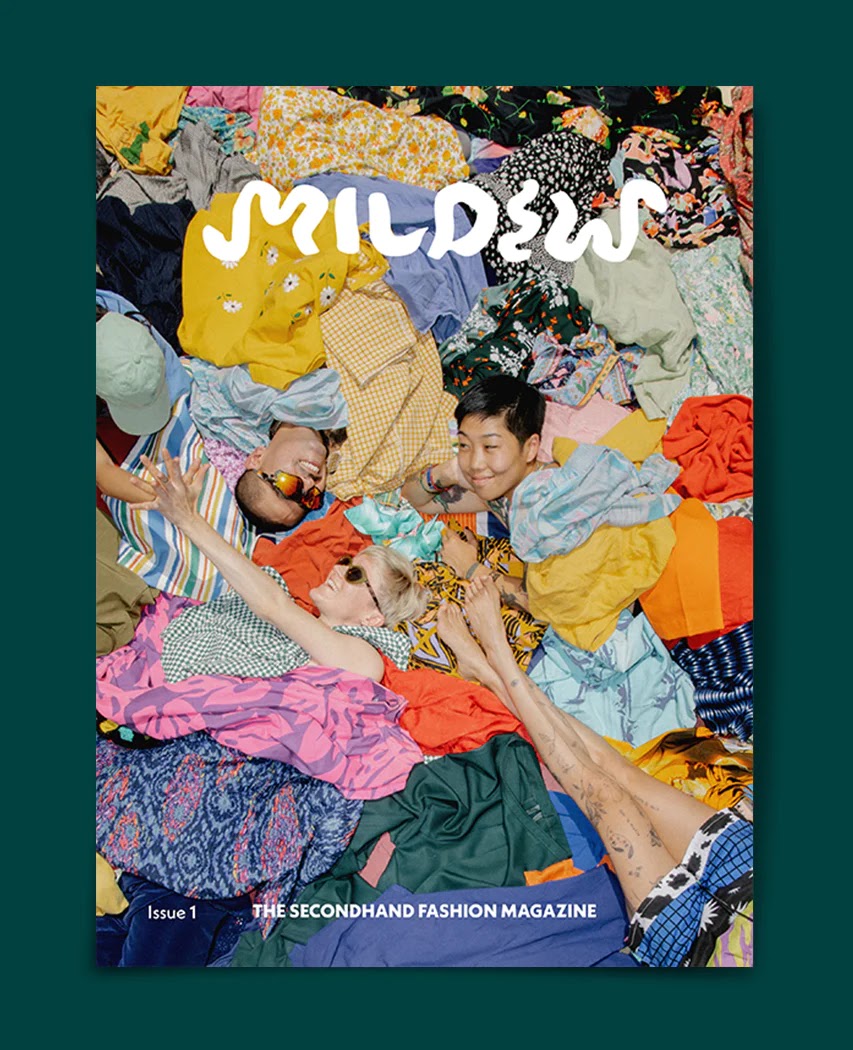
A must-read magazine about thrifting glories for anyone who loves clothes and a vintage couch from Obsolete to sprawl out on while you read it.

Laila Gohar's particularly pleasing bean pot for Hay.

A hand-crocheted balaclava and a Taion puffer to liven up grey days. (This purple one is a steal.)

Cinnamon-and-cayenne Viper Balm, to get the blood flowing.

Tiny (and tasty) Italian jujubes in bright polka-dotted wrappers stuffed in a vintage crystal apple or a Helle Mardahl bonbon dish.

Marina Abramovic playing cards, for a little performance art every day.


Pleasing pleats in a handy tote.

Coco & Wolf Liberty silk pillowcase to encourage pleasantly trippy dreams.

And a tree from space—specifically, a sycamore moon seedling grown from a seed astronaut Stuart Roosa carried to the moon in 1971 on the Apollo 14 mission.