Showing posts with label valentines. Show all posts

a small valentine


*
Detail of an American red moiré silk dress, ca. 1837. The Metropolitan Museum of Art.
During the nineteenth century, women's periodicals specified the types of dress appropriate for the variety of evening activities. In 1832, The Ladies' Cabinet alerted its readers, "Moiré is coming much into favour for dinners of ceremony or evening parties." The modest neckline, long sleeves, and subtle moiré textile suggest that this is a dinner or evening party dress.

*

Acquaintance card from the collection of Alan Mays.

*

Found flower arranging image via Camille Brown.


*
Mouth-to-mouth contact occurs across the animal kingdom, including in many, but not all, human societies. Such contact is commonly referred to as “kissing,” which we more formally define as a non-agonistic interaction involving directed, intraspecific, oral-oral contact with some movement of the lips/mouthparts and no food transfer. ... Kissing poses an evolutionary problem, since it does not appear to aid survival or reproduction in an obvious way, while the potential costs of disease transfer are high. What is its benefit or adaptive function?


Matilda Brindle, Catherine F. Talbot, and Stuart West , "A comparative approach to the evolution of kissing." Evolution and Human Behavior, November 19, 2025.

*
Though researchers found evidence of kissing in several species, they narrowed the focus of the study mostly to the behavior of large apes, like gorillas, orangutans and baboons.

But the vast use of the practice surprised Dr. Brindle. She said she had expected examples of kissing among apes and humans, but was surprised to see the gentle behavior shared between bugs, albatrosses and polar bears.

pretty pink things / a billet-doux


*

Heart cockles, via the Natural History Museum, London.


Sam Gilliam, "Blue Edge," 1971, acrylic on canvas, The Baltimore Museum of Art via David Kordansky Gallery.

*

A Rudolph Steiner interior in Dornoch, Switzerland. Photo by Deidi von Schaewen, via Commune.

*

Victorain shell cameo, ca. 1850, via Sian Harlow Antiques.

*

An 1817 "cobweb" valentine, featured in "Victorian Romance: The Art of Cobweb Valentines." The recipient would gently pull the string in the center to reveal a hidden image.

*

Nacreous cloud formation, photographed over Kingston Upon Hull, United Kingdom, via The Cloud Appreciation Society.

*
Slight unpremeditated Words are borne
By every common Wind into the Air;
Carelessly utter’d, die as soon as born,
And in one instant give both Hope and Fear:
Breathing all Contraries with the same Wind
According to the Caprice of the Mind.

But Billetdoux are constant Witnesses,
Substantial Records to Eternity;
Just Evidences, who the Truth confess,
On which the Lover safely may rely;
They’re serious Thoughts, digested and resolv’d;
And last, when Words are into Clouds devolv’d.

Aphra Behn, "Love's Witness." 

all heart


*

The "Heart of Space" meteorite, a 4.5 billion-year-old fragment of a star that fell to earth in 1947: "A mind-boggling series of occurrences and accidents were necessary to make a meteorite of this rare shape," says James Hyslop, Christie's science and natural history specialist. "And what makes it even more endearing is the fact that this piece would have come from the very core of its initial protoplanetary body—it broke off from the heart of its originator."

*

Handmade valentine in the collection of tihngs.

*

Heart meadow created by Winston Howes in memory of his wife, Janet. Daffodils blossom in the center when spring arrives. 

*


*

Heart by Alexander Girard, 1961, at the Compound Restaurant, Santa Fe, New Mexico.

*

Die Freundschaft bringt Freude
Die Liebe bringt Ruh'
Erwähle sie beide
Wie glücklich bist du
Friendship brings pleasure, 
love rest to the heart; 
if both be thy treasure, 
how happy thou art.
*

Personal Message by Michael Dumontier and Neil Farber, available here.

It was a September afternoon in 1796, and Mary Wollstonecraft had one thing on her mind. “What say you,” she wrote to her lover William Godwin, “may I come to your house, about eight—to philosophize?” This use of code was typical. If she wanted him she would ask to borrow books or ink; he liked to say he needed soothing, like a sick child. In his journal Godwin used dots and dashes to log what he and Wollstonecraft had done, when they had done it, and where. After their third date he wrote, “chez moi, toute.”

Anahid Nersessian, "Love for Sale." The New York Review, 1/13/2022.  

*
One may care about a character on television, but one must care for a character in a video game. In fact, The Last of Us suggested that care, by definition, means choosing to have no choice, holding onto another person so tightly their survival becomes an inescapable necessity. ... [T]he point is not that a video game, like other art forms, can show us something about love, but that love, at its most monstrous, can have the unyielding structure of a video game. 

Andrea Long-Chu, "The Last of Us Is Not a Video-Game Adaptation." Vulture, 2/9/2023. 

*

“We’re not beginning to . . . to . . . mean something?"

micro-moments of positivity resonance


Link


Bernard Perlin, The Lovers. 1946. MoMA.

*

Reliquary Arm of St. Valentine. Swiss. 14th century. Silver, partial gilt, sapphire. On view in Gallery 306 of The Met. 

*

Algorithmic love letter generated by a computer program created by Christopher Strachey in 1952. ("M.U.C." is "Manchester University Computer.")

*

Hans Holbein the Younger, Simon George of Cornwall, ca. 1535–40.

*

The language of flowers, via stopping off place.

*

Jan Boon, Carnations

*

Victorian gold heart token with a line from Keats' Endymion: "On every morrow we are wreathing a flowery band to bind us to the earth."

*

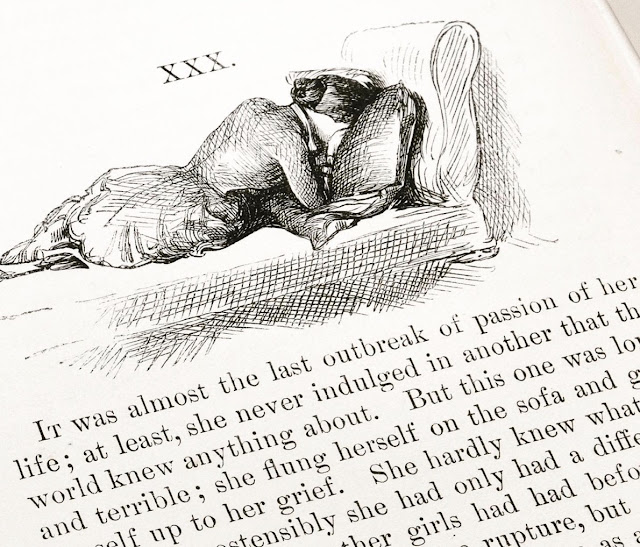
Page from a first-edition copy of Washington Square by Henry James, via Honey and Wax Books.

*
There are the lover and the beloved, but these two come from different countries. Often the beloved is only a stimulus for all the stored-up love which has lain quiet within the lover for a long time hitherto. And somehow every lover knows this. He feels in his soul that his love is a solitary thing. He comes to know a new, strange loneliness and it is this knowledge which makes him suffer. So there is only one thing for the lover to do. He must house his love within himself as best he can; he must create for himself a whole new inward world—a world intense and strange, complete in himself. 

Carson McCullers, The Ballad of the Sad Cafe.

*
Loretta, I love you. Not like they told you love is, and I didn't know this either—but love don't make things nice. It ruins everything. It breaks your heart. It makes things a mess. We aren't here to make things perfect. The snowflakes are perfect. The stars are perfect. Not us. Not us! We are here to ruin ourselves, and to break our hearts, and love the wrong people, and die. The storybooks are bullshit! Now I want you to come upstairs with me and get in my bed!

Ronny Cammareri, talking to Loretta Castorini in Moonstruck (1987). Written by John Patrick Shanley.

*
According to the nineteenth-century American zoologist Louis Agassiz, the snail is “a very model lover” that “will spend hours…paying attentions the most assiduous to the object of [its] affections.” But there is a sting in the tail of snail romance, for as explained by another nineteenth-century observer, the courtship of snails “realises the Pagan fable of Cupid’s arrows, for, previous to their union, each snail throws a winged dart or arrow at its partner.”

Tim Flannery, "Tigers, Humans, Snails." NYRB Volume 58, No. 2, February 10, 2011.

*
The German artist and theorist David Link, in his book Archaeology of Algorithmic Artefacts, observes that Strachey’s program was the first experiment in text-generating software, predating by thirteen years the M.I.T. chatbot ELIZA, which offered interactive psychotherapy. “Ultimately the software is based on a reductionist position vis-à-vis love and its expression,” Link writes. “Love is regarded as a recombinatory procedure with recurring elements.”


Siobhan Roberts, "Christopher Strachey's Nineteen-Fifties Love Machine." The New Yorker, 2/14/2017. 

*

In her new book Love 2.0: How Our Supreme Emotion Affects Everything We Feel, Think, Do, and Become, the psychologist Barbara Fredrickson offers a radically new conception of love ...  it is what she calls a "micro-moment of positivity resonance." She means that love is a connection, characterized by a flood of positive emotions, which you share with another person—any other person—whom you happen to connect with in the course of your day. You can experience these micro-moments with your romantic partner, child, or close friend. But you can also fall in love, however momentarily, with less likely candidates, like a stranger on the street, a colleague at work, or an attendant at a grocery store. 

Emily Esfahani Smith, "There's No Such Thing as Everlasting Love (According to Science).The Atlantic 1/24/2013

*

Wishing you recombinatory procedures with recurring elements and micro-moments of positivity resonance.


odds and ends / 2.15.2021


*


*

Salvador Dalí: Rosa papillonacea (Butterfly Rose), 1968.

*


*

Unknown artist: Heart-and-Hand Love Token, ca. 1840-1860. American Folk Art Museum.

*

Endpapers for the Faber edition of Klara and the Sun, the new Kazuo Ishiguro novel.

*

Guda Koster: Houseman, 2016.

*
'I love you,' Daniel told his mother, 'but with your inundation of fake news, you have created a reality for yourself that doesn’t exist, and by doing so, you are actively distancing yourself from your family. It is making it harder for us to connect with you because, unfortunately, we feel that you are just not living in the world that we live in, and it’s frightening for us.' 

His mom’s response laid bare the degree to which QAnon had warped her worldview: 'Oh, honey,' she said. 'That’s how I feel about you.'


*
Originally home meant the center of the world—not in a geographical, but in an ontological sense. Mircea Eliade has demonstrated how the home was the place from which the world could be founded. A home was established, as he says, "at the heart of the real." In traditional societies, everything that made sense of the world was real; the surrounding chaos existed and was threatening, but it was threatening because it was unreal. Without a home at the center of the real, one was not only shelterless but also lost in nonbeing, in unreality. Without a home everything was fragmentation.​

 
John Berger, "The Meaning of Home." 

*

Robert, in coat and tie, took to the podium. In recent years, he explained, he and Suzanne had turned their attention to the prophetic visions that a number of experiencers have undergone during, and sometimes after, their NDEs [near-death experiences]. While the visions themselves were invariably apocalyptic, the Mayses spoke of them with an almost clinical detachment. Their work encompassed several methodologies: “an extensive literature review of prior research,” surveys they had sent to twenty-two subjects, and analyses of fifteen accounts by “published NDE authors.” From this material, they had identified five categories of NDE-related prophetic visions, including “current political conflict and civil strife in the United States”; “economic and social chaos caused by widespread power failures”; “severe tsunamis, earthquakes and natural disasters.” My favorite was the fourth category, described as “reset of the Earth, millions to billions of people die: supervolcano, asteroid hit, or nuclear war.” (The fifth was “post-reset world.”) It seemed appropriate that the first interesting PowerPoint I had ever seen would augur the end of civilization.


Emily Harnett, "Back from the Afterlife." The Baffler, January 2021. 

*

Being nice ... is not a naïve denial of the darkness of life. It’s a cleareyed adaptation to it. The series recognizes that nice guys do sometimes finish last. It just argues that other things are more important than finishing first.

James Poniewozik, "'Ted Lasso,' 'The Great North' and the Art of Nice." NYT, 2/11/2021.

imaginary outfit: clichéd


Pretty pajamas, unruly flowers, diamond rings with a message, a heart-shaped box of chocolates. A funny romantic movie and a glass of something that bubbles. Utterly predictable, and completely appealing to me at this particular season of my life. Every day is so new — new teeth, new houses, new balances to strike — that the smallest familiar thing is a comfort.

To Hugh I'm stability, continuity and calm. That's the ballast that's keeping me steady; that, and Sean, our memories and plans and hopes for our life, and all the family and friends who cheer us on as we keep inching forward.

Love, love, love. So much love. And tiredness. So much tiredness. Happy Valentine's Day.

cordiform


Cordiform (heart-shaped) books. From top:

3. Livre d’heures à l’usage d’Amiens (Book of Hours used in Amiens), ca. 1500s.
4. The Heart Book. Danish, ca. 1550s. Via Daniel Mitsui.


before and after


William Hogarth: Before and After. 1732. In the collection of the Fitzwilliam Museum, Cambridge.

model lovers


According to the nineteenth-century American zoologist Louis Agassiz, the snail is “a very model lover” that “will spend hours…paying attentions the most assiduous to the object of [its] affections.” But there is a sting in the tail of snail romance, for as explained by another nineteenth-century observer, the courtship of snails “realises the Pagan fable of Cupid’s arrows, for, previous to their union, each snail throws a winged dart or arrow at its partner.”
Tim Flannery, "Tigers, Humans, Snails." NYRB Volume 58, No. 2, February 10, 2011.

Photo: Christer Strömholm - Jura, 1949.

imaginary outfit: conventional lovers


Flowers, chocolate, pink and red. A card, possibly jewelry, maybe a meal. Sometimes lingerie. These are the socially approved indicators of affection. Vary the combination, amount and cost of each element to indicate the relative level of the emotion, and repeat annually for duration.

I'm no cynic. I cry at weddings. I like making valentines. I never say no to flowers. These things have their place.  But love - being in love - is a weird-ass thing. Time doesn't make it any less weird.

To be in love with someone is summon a new world out of the void. Some are as small and dense as Asteroid B-612 and some are as vast and nebulous as gas giants. When you conjure this place, hand in hand together, you can't know what it will be. The path takes form as you walk it.  And there is a joy in being the lord of creation. At first, everything is wild and intoxicating. Over time, rules are established, taboos are set, new and further continents discovered. The rocky wastes are mapped and swamps and pits are slogged through. Occasionally strange and terrifying beasts appear and must be slain or domesticated. Sometime the world implodes. Sometimes it is abandoned. But if you are lucky and determined, you create a world you can live in for a very long time.

Into this private realm comes Valentine's Day. It is love's used car lot - a stunning thing to find plunked down in your unspoiled wilderness. Lots of models available, proven, road-tested, complete with air-bags. You don't have to do much thinking, you can just buy and drive, and the action is a relief. After all, it takes a lot to create a world, and it is a release to be given an out from perpetual discovery. So Valentine's Day has its uses. My husband and I, on our own little planet, will exchange cards, candy and flowers, and we'll laugh, because these tokens are not native to us. But we do it because the inhabitants of countless other unknowable planets are doing the same, and stuck in our place of joyful strangeness, it is nice to know that in a small way we're not alone.

loveletters

LinkRandom billet-doux generated by Christopher Strachey's 'Loveletters' computer program, originally written in 1952. A new letter appears every time you refresh the page.

Found through Rhizome.