Showing posts with label pinecones. Show all posts

odds and ends / 1.9.2025


Alice Neel, "Snow in Vermont," 1975.

*

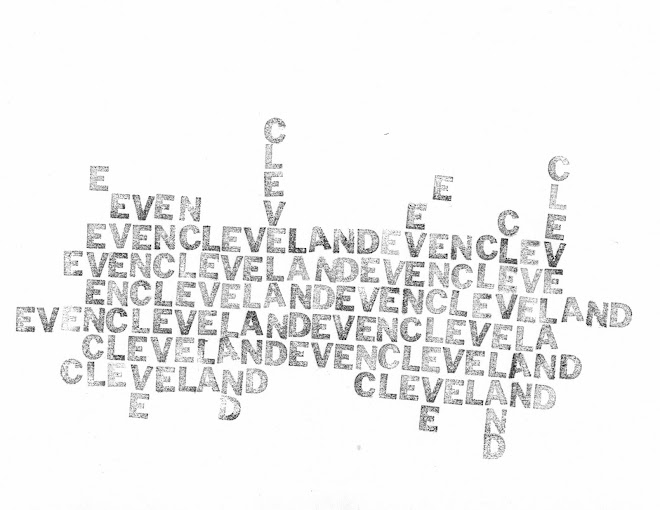
Beguiling grainy image of a pinecone mobile found on Pinterest; I can't determine the source, but I'd like to make one.

*

Garry Knox Bennett, "Granny Rietveld." Via Commune Design.

*

Ivor Cutler, "A Clock." Via stopping off place.

*

Snowy scene by Wanda Gág, captured by Claire Zarouhee Nereim. (I wish I could have seen the exhibit at the Whitney.)

*


*
It’s winter now, some months after the phoebes outside have built their nest, raised a family, and moved on. Bitter cold, snow on the ground, blue jays crowding the feeders clownishly while the little birds—chickadees and nuthatches and tufted titmice, downy woodpeckers and yellow-bellied sapsuckers—wait anxiously for the bullies to leave so they can begin their own meal. You might think you know something about me now from the highly redacted scraps of personal anecdote I started with—but really, I could have written anything, shaped those glimpses however I wanted, and you wouldn’t know. 
You know far more about me from how I’ve been writing here ... You know what books I’ve loved and why I love them. You know I like birds, you know I watch them, you know I live in a place sufficiently rural to have trees and phoebes. You know many of my days resemble one another, and that I have a house, and that I must not be commuting daily to a job—which in turn suggests I have some other way to make an income. You know I have enough free time to look outside and note down what I see, and that I value both actions. 
And beyond those relatively simple facts, you have a sense of my sensibility: my emotional makeup, my responses to the world, my obdurate insistence on revising and revising again. What I notice, what I pay attention to.

Andrea Barrett, "Energy of Delusion," excerpted from Dust and Light: On the Art of Fact and Fiction in Harpers, January 2025. 

The inside covers of the notebooks were used to save a substantial collection of news clippings, an off-beat record of the world through those years of writing the book. There are pressed leaves, wildflowers, feathers of owls and colourful parrots and lorikeets, swans, finches, cockatoos, picked up on walks, hundreds of walks, of walking alone while deep in thought, that in the end, amounted to much of what went into creating this book. The feathers alone form a catalogue of walking through many seasons in different parts of the country.

You will find in these notebooks: broken wings of butterflies, such as the brown forest butterflies found in the summer months when the woods were abundant with their dance; travelling beetles crawling in their hundreds in the leaf litter. This collection was a part of much more. All these objects were studied and, if not intentionally, were thought about as works of scale as were the patterns on a butterfly wing which are composed of millions of scales, grandiose designs developed over aeons of time. All of these collected objects were a reminder of being grounded while facing the realities as we have done in the past, and will do so in the future in dealing with other major concerns which hold no beauty, nor added comfort to our combined humanity.

Alexis Wright, "Dream Geographies." HEAT, Series 3, number 16, September 2024.

*
Friends have begun to call, and tell us they’ve lost their homes. One said he had forgotten his passport, but he had the family dog, and he’d managed to save his child’s beloved stuffed walrus (named “Walrus”). They’d rebuild with that, he told me.

*

Looking out the window into the snow and thinking of Los Angeles. 

glad tidings


Streeter Blair, Pasture in Winter, 1960. Hirshhorn Museum and Sculpture Garden.

*

Detail from Is This You? by Ruth Krauss and Crockett Johnson, via Mac Barnett.

*


*


*

Vanessa Bell, hand-painted calendar for friends from 1951.


Milton Avery, Pinecones, ca. 1940. The Phillips Collection.

*

Robert Watts, Xmas Event, 1962. 

*

Detail from a Christmas card in the collection of Robert E. Jackson.

*


*
'What Josephine said,' explained Robert, 'was simply that it would be pretty to put candles on one of the growing trees, instead of having a Christmas-tree indoors'.... 
Soon they were busy round a prickly fir-tree at the end of the lawn. Jim stood in the background vaguely staring. The bicycle lamp sent a beam of strong white light deep into the uncanny foliage, heads clustered and hands worked. The night above was silent, dim. There was no wind. In the near distance they could hear the panting of some engine at the colliery. 
'Shall we light them as we fix them,' asked Robert, 'or save them for one grand rocket at the end?' 
'Oh, as we do them,' said Cyril Scott, who had lacerated his fingers and wanted to see some reward. 
A match spluttered. One naked little flame sprang alight among the dark foliage. The candle burned tremulously, naked. They all were silent. 
'We ought to do a ritual dance! We ought to worship the tree,' sang Julia, in her high voice. 
'Hold on a minute. We'll have a little more illumination,' said Robert. 
'Why yes. We want more than one candle,' said Josephine. 
But Julia had dropped the cloak in which she was huddled, and with arms slung asunder was sliding, waving, crouching in a pas seul before the tree, looking like an animated bough herself. 
Jim, who was hugging his pipe in the background, broke into a short, harsh, cackling laugh.
'Aren't we fools! he cried. 'What? Oh, God's love, aren't we fools!'

D.H. Lawrence, Aaron's Rod.

*
On Christmas Eve, we build a fire, then snuff it out with an old wet towel, realizing, fearfully, that we haven’t cleaned the flue in five years. Then the boiler breaks down. We plug in the space heaters. We order takeout Chinese. Only then, when almost all is lost and I am feeling so unexpectedly sad, do I realize what a sucker I am for the beautiful fake Christmas that German-American commerce concocted for us years ago. A boon for the economy and a pernicious sweet for the mind. But it moves me. My heart is a chump. I actually like the shopping, the gift wrap, the carols—even the tinkling store music. I like the invented holiday miracles, the unexpected kindnesses and transformations—at least, as they are portrayed on the TV specials! And, looking out the window and seeing only sleet, I realize that I even like the snow. Where, now, is that lovely perfect Christmas? On whose open fire are those goddam chestnuts roasting? I have a fiction writer’s weakness for fiction. It’s an occupational hazard. A business thing.

Lorrie Moore, "Chop-Suey Xmas."

*
Well, why anything? Why do we? Come every year sure as the solstice to carol these antiquities that if you listened to the words would break your heart. Silence, darkness, Jesus, angels. Better, I suppose, to sing than to listen.


John Updike, "The Carol Sing."

 
*
Despite the forecast's promise,
It didn't snow that night;
But in the morning, flakes began
To glide all right.
Not enough to cover roads
Or even hide the grass;
But enough to change the light.

Bernard O'Donoghue, 'Christmas.'

*


*

Merry everything, friends.

clam shells, pinecones, and dinosaur bones


The last time I walked through the Hall of Gems at the American Museum of Natural History, three particular opals caught my eye. Their shape was familiar but I couldn't place it, so I looked closer, and discovered that they were fossilized clams. After I snapped a picture, I went home to do a bit of research.

According to the Australian Opal Center:
Opal forms in cavities within rocks. If a cavity has formed because a bone, shell or pinecone was buried in the sand or clay that later became the rock, and conditions are right for opal formation, then the opal forms a fossil replica of the original object that was buried.
In 1987, a miner found a near-complete opalized pliosaur fossil, which is in the collection of the Australian Museum. The Addyman Plesiosaur, another near-complete opalized fossil, is on display at the South Australian Museum.  There don't seem to be any great photos of either specimen online, but just knowing that such a thing exists is amazing. Just imagine: a glimmering, iridescent, meters-long opal skeleton.

Not to mention opal pine cones and sea shells.


From top:

More opal fossils to look at here