Showing posts with label the moon. Show all posts

odds and ends / 4.10.2026


*

1980s British Telecom Picturephone at wertwerk.kr, via Mildew.

*

Ah, pray, make no mistake, we are not shy
We're very wide awake, the Moon and I
*

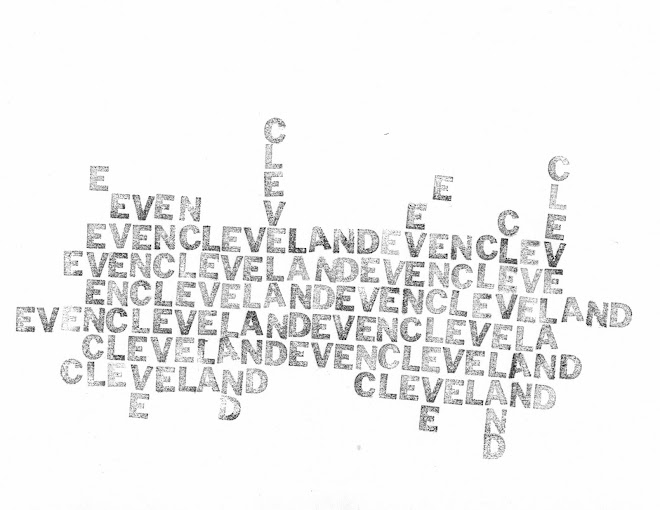
Ray Johnson's "Evaporations" book stamp, via the London Centre for Book Arts:
Johnson had his "Evaporations by Ray Johnson" rubber stamp made after a May 1970 Artforum article by Robert Pincus-Witten that mused on the legacy of Pop art and dismissed Johnson, along with "Wesselman, Indiana, Marisol,…[and] so many others" as “evaporations” who had "fall[en] away to nothingness."
*
People today, especially younger people, have to go out of their way to know literature qua literature—to understand it as a living thing separate from trade publishing as presented to them by mainstream reviews and Goodreads. They live in a world in which people are happily (always happily) "creative"; they understand an activity called "creative writing"; they might even know that there are many professional writers spread across the land like peppercorns spilled across a hardwood floor, teaching at universities and community colleges while paying off debts to Home Depot and Subaru, watching Netflix, and checking their retirement accounts. They understand, at every level from pillow design to haute cuisine to wet-sand sculpture, the whole idea of "art"; but what is meant by "literature," in the sense that Howard deploys it throughout his study of [Malcom] Cowley, has largely passed from view. The idea that a small number of people belonging to each generation have thrown themselves at literature, have tried to become part of it and pound it and reshape it and alter its history—that they have risked their chances of satisfactory, comfortable lives for it—all of that is becoming increasingly difficult to explain.


*
What people click—and what they think they like—is largely a matter of what is available to them. Publics are made and maintained, not discovered preformed, like rock formations. It is a sign of a fatally limited imagination to assume that we can only ever desire the pittance to which we are currently reconciled. It is par for the course that, in a woefully limp statement on the carnage, the [Washington] Post’s executive editor, Matt Murray, referred to the paper’s subscribers not as “readers” but as “consumers.” A consumer is a person whose preexisting tastes you strive to satisfy over and over; a reader is someone you hope to change, convince, and surprise. ... The prospect of a paper that flatters its readers by regurgitating what they already click is familiar and depressing. It puts me in mind of [Jeff] Bezos’s other marquee product, another service that dealt a disastrous blow to books. On Amazon, the glorious inconvenience of browsing shelves or combing through piles has been eliminated. There is no occasion to pick up an unfamiliar book out of sheer curiosity. Every book that the site’s algorithm recommends is similar to one that you have purchased already. In this way, you encounter nothing but iterations of yourself forever. It is a world in which the customer is always right. But if you didn’t want to be proved wrong, if you didn’t want to be altered or antagonized in ways that you could never predict, why would you read at all?

Becca Rothfield, "The Death of Book World," The New Yorker, February 10, 2026. 


*
"The Learner must be led always from familiar objects toward the unfamiliar, guided along, as it were, a chain of flowers into the mysteries of life."


*
"I had a transcendent experience three or four years ago when I decided I was going to finally dust my books, and had to take all of them down by hand," he said. "It was sublime. I couldn’t restrain myself from going through each book. Every one had a whole story for me."

Richard Hell, describing his apartment in the New York Times, March 4, 2026 (gift link)

*


gifts for the spaced-out


A glassy glimpse of celestial bodies by ilikoiart, for extraterrestrial gazing.

An eclipse viewer made for the total solar eclipse of January 4, 1925: "Of all the wonders of astronomy, there is no spectacle more fascinating than the total eclipse of the sun."

One solar system for suspending (Tour D'Horizon solar system mobile) and another one for wearing (Kapital Universe gabbeh scarf).

A bottle of ink the color of moon dust—Jacques Herbin Pouissiere de Lune

A Keplerian solar telescope, for spotting sunspots.

A dish of stars, by Astier de Villatte.


The 2025 Sora daily calendar, for keeping track of lunar phases.

A top made of vintage Japanese embroidered silk Obi that shimmers like starlight, from Stitch and Tickle.

Marking Time by Chris McCraw, for seeing the mark of the sun, or this book by Emily Sheffer, for seeing the mark of the moon.

An Astroblaster, for demonstrating gravitational rebound (and understanding supernovas).

fragrance based on a scent NASA developed "to train astronauts on how Outer Space actually smells."

Dendera's double-layered shifting maze, for navigating ancient constellations.

A card by Noat that tells it like it is. (There are stars inside.)

various suns / midwinter day


Donald Baxter MacMillan, "The last row of suns," 1913-1917. Taken on the Crocker Expedition.

*

Erich Fried, "Toys," translated by George Rapp. Via Drifting Lament.

*


*

Rylands Medieval Collection, Latin MS 53, f. 58v. Christianus Prolianus and Joachinus de Gigantibus (?), Astronomia, 1478: "Comparative view of the magnitudes of the Sun (a large disc of burnished gold), the Moon (silver), Mars (gold), Venus (gold), Mercury (gold) and Earth (pale)." Found at Demonagerie, via A London Salmagundi.

*

Jan Luyken, "Vrouw houdt bij het kijken naar de zon haar hand voor de ogen (The woman holds her hands ovr her eyes while looking at the sun)," 1687. The Rijksmuseum.

*

Bernadette Mayer, from Midwinter's Day, 1978.

gifts for colorful characters


Emma Mierop's ruffled linen scarf for a non-boring neutral.


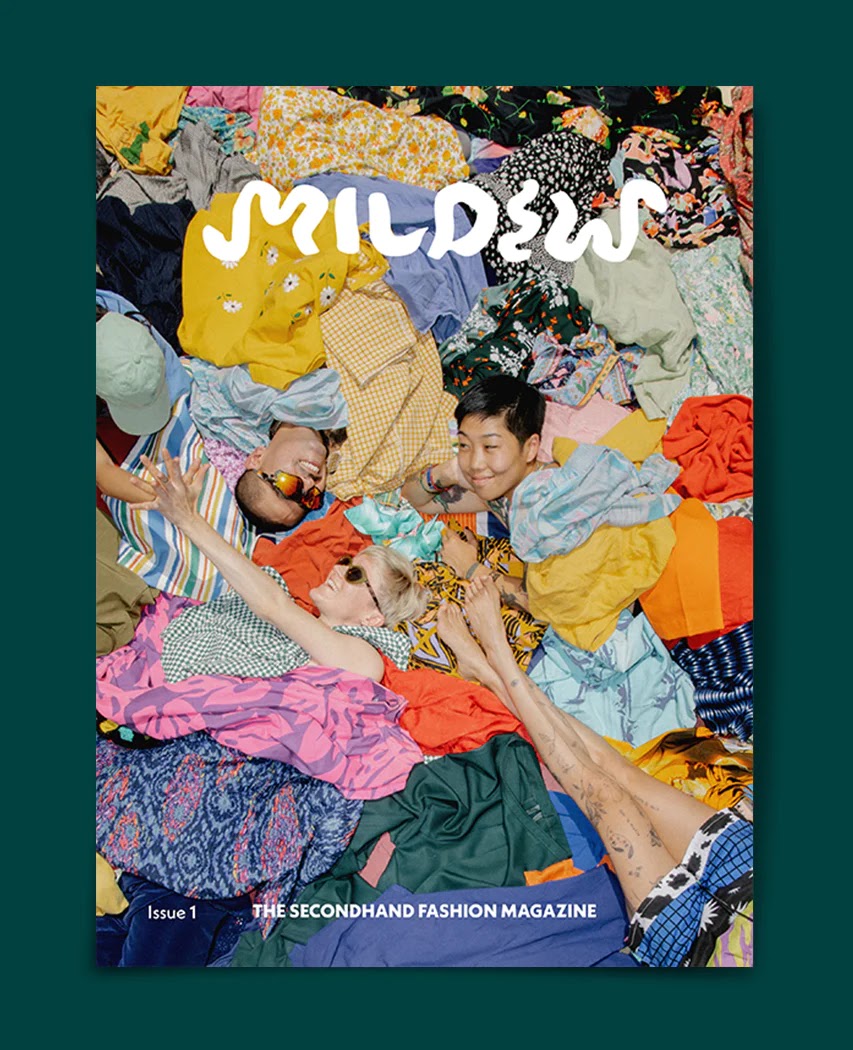
A must-read magazine about thrifting glories for anyone who loves clothes and a vintage couch from Obsolete to sprawl out on while you read it.

Laila Gohar's particularly pleasing bean pot for Hay.

A hand-crocheted balaclava and a Taion puffer to liven up grey days. (This purple one is a steal.)

Cinnamon-and-cayenne Viper Balm, to get the blood flowing.

Tiny (and tasty) Italian jujubes in bright polka-dotted wrappers stuffed in a vintage crystal apple or a Helle Mardahl bonbon dish.

Marina Abramovic playing cards, for a little performance art every day.


Pleasing pleats in a handy tote.

Coco & Wolf Liberty silk pillowcase to encourage pleasantly trippy dreams.

And a tree from space—specifically, a sycamore moon seedling grown from a seed astronaut Stuart Roosa carried to the moon in 1971 on the Apollo 14 mission. 

'when the white stars talk together like sisters'


I went out at night alone;
The young blood flowing beyond the sea
Seemed to have drenched my spirit’s wings—
I bore my sorrow heavily. 
But when I lifted up my head
From shadows shaken on the snow,
I saw Orion in the east
Burn steadily as long ago. 
From windows in my father’s house,
Dreaming my dreams on winter nights,
I watched Orion as a girl
Above another city’s lights. 
Years go, dreams go, and youth goes too,
The world’s heart breaks beneath its wars,
All things are changed, save in the east
The faithful beauty of the stars.

Sara Teasdale, 1884-1933. From Flame and Shadow, 1920.

*

Charles Burchfield:

Winter Moonlight, 1951. Watercolor on paper. 40 x 33 in. Wichita Art Museum, Wichita, Kansas.
Orion in December, 1959. Watercolor and pencil on paper. 39 7/8 x 32 7/8 in. Smithsonian American Art Museum.

*

Post title: from Thomas Merton's 'A Christmas Card.' Originally posted 12/27/2010.

gifts empyrean and edenic


A comet-strewn tea towel celebrating Caroline Herschel, from a design by Judy Chicago.

Nested trees for desktop edens.

Paradisiacal apples (more specifically, the tree to grow your own).

A book of Leonora Carrington's otherworldly visions.


A scarf dyed with the colors of the world.

Celestial objects, suspended in alignment

A tempting serpent (Sheila Metzner's Hand With Snake, 1994, available on 1stDibs).