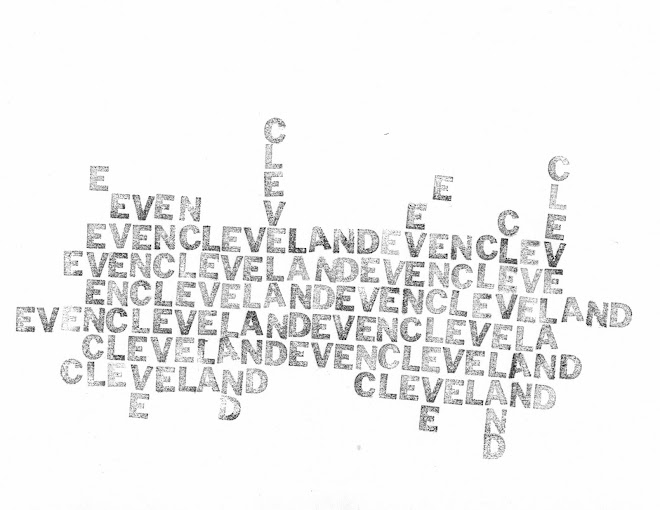

What to do with too many thoughts. I could try and pop some. I could let others float away. If I wait too long, they'll shrivel, and that's no good. Nothing's sadder than an old balloon (proof: Fat Charlie the Archangel). Old balloons linger, ghosts of celebration, lofted by invisible drafts, skittering under couches and beds, softening, wrinkling, shrinking to strange proportions. My thoughts aren't too different. They swell to a temporary glory, then fade into flabbiness before I manage to do anything with them. Some hold on, halfheartedly bouncing around in corridors and vestibules.
Time for a purge. Random thoughts:
The Gormenghast Trilogy is one of the strangest and most wonderful things I've ever read, but I can't recommend it. It's too strange and massive to impose that way; it's a book you have to choose on your own. I don't know anyone else who has read it, so it might be the loneliest thing I've ever read, too; after nearly 1000 pages, it felt like I'd climbed a mountain where I saw strange and marvelous things I'll never be able to share or describe. (All books are like this more or less; this skewed to the far end of more.) The first volume is essentially a prelude, setting in place all the pieces for the second, which splinters at the end after a series of climaxes. The third volume is a literal stepping out of one story into another, with a central character who is aware and suffering at the displacement. The imagery is like a beautiful hallucination: a castle city impossible and vast, crumbling into decay; rubies like a lumps of anger; a monolithic countess with an army of birds perched at her shoulder and a sea of white cats frothing at her feet; terrifying twin sisters of small and single mind; horrifying dinners; a brutally brilliant cocktail party. The plot unwinds at its own pace; events other authors might pressure together spool out in unpredictable ways. It's not perfect - Peake's life ended in tragedy and the series is unfinished - but it is absolutely singular. I want to read it again.
The little John Chamberlain sculptures at the Guggenheim took me by surprise: so delightful I wanted to steal one.
I read Roland Barthes A Lover's Discourse. From the back cover copy: 'A Lover's Discourse artfully draws a portrait in which readers will recognize themselves' — man, I hope not. I've never read anything that has less to do with love; it's beautifully thought out, tortured surface. As he painfully delineated his 'fragments of discourse', I kept imagining a neurotic skater trying to trace precise shapes on the ice as a way to understand water. Following on, I read Goethe's The Sorrows of Young Werther. André Gide said he wanted to push Werther right into the grave; I would have lent a hand.
150 pages into The Recognitions, and I can't tell if I love it or hate. I'm leaning towards love; we'll see.