

*
Saul Steinberg, watching TV in September 1976. Saul Steinberg Papers, Beinecke Library.
*Shell House in Polperro, Cornwall: "The shells were placed there by a Mr. Samuel Puckey over five years, starting in 1937. Puckey was a retired sailor and used his collection of shells from around the world to decorate this 19th-century cottage."
*
Linen chest painted by Duncan Grant, via The World of Interiors.
Society of Wanderers apple-check sheet.
*
Horace Pippin, Two Pink Roses. 1940.
*
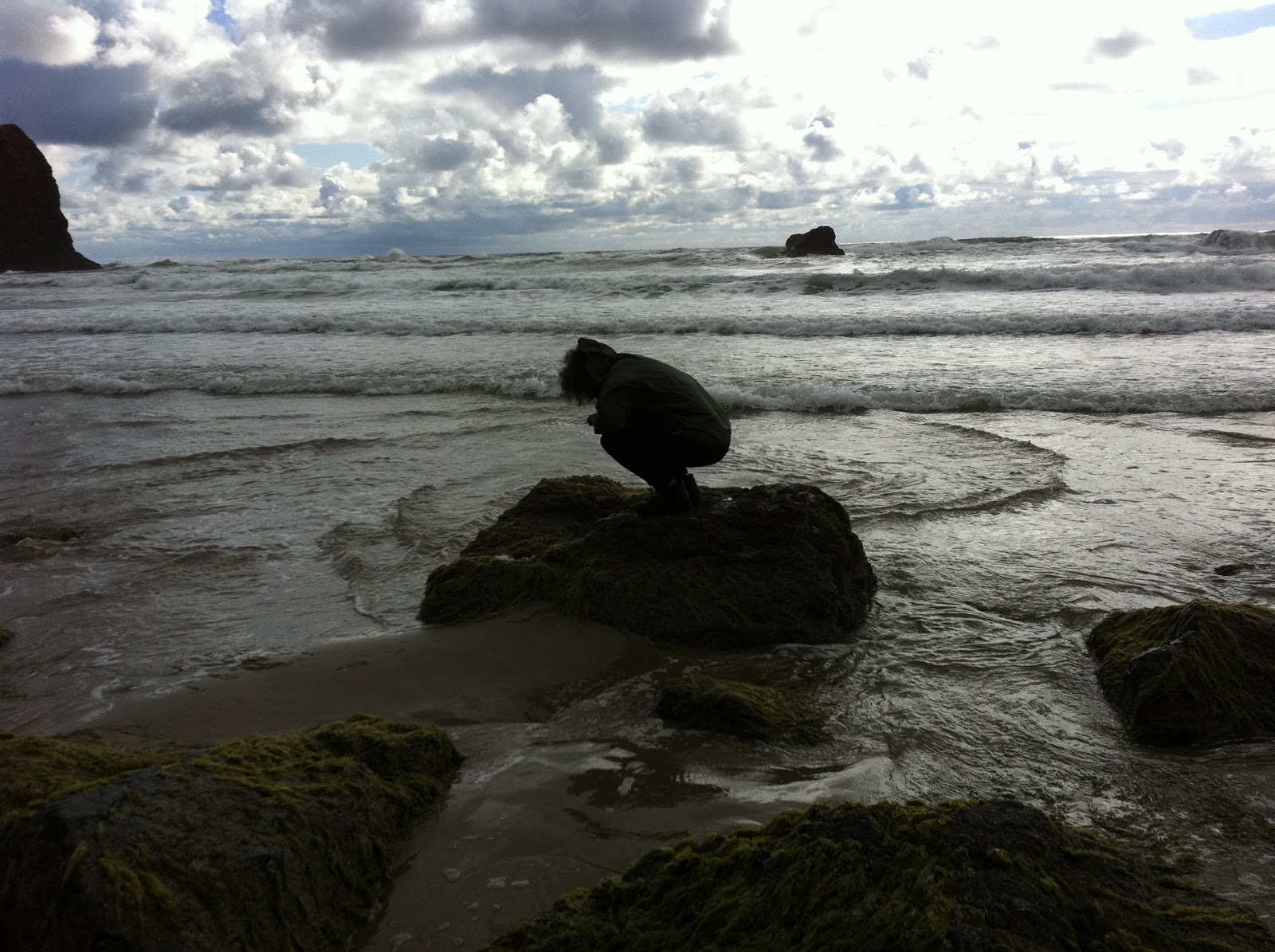
I see in everyone emerging from lockdown a touch of the Ancient Mariner arriving at the wedding-feast, stepping into the party with his glittering eye, seizing people’s arms and murmuring: “There was a ship…”
Trouble is, there was a ship, for all of us, this last year and a half, so the bars and cafés and streets are full of glittering-eyed people seizing and murmuring, and the weddings have to wait. Or perhaps each of us was our own ship.
*
We accordingly pressed on, and found ourselves in the presence of an old man and a younger one, who were working hard at a plot of ground and watering it by a channel from the spring. We stood still, divided between fear and delight. They were standing speechless, no doubt with much the same feelings. At length the old man spoke: “What are you strangers? Are you spirits of the sea, or unfortunate mortals like ourselves? As for us, we are men, bred on land; but now we have suffered a sea change, and swim about in this containing monster, scarce knowing how to describe our state; reason tells us we are dead, but instinct that we live.” This loosed my tongue in turn. “We too, father,” I said, “are men, just arrived; it is but a day or two since we were swallowed with our ship. And now we have come forth to explore the forest; for we saw that it was vast and dense. I think some heavenly guide has brought us to the sight of you, to the knowledge that we are not imprisoned all alone in this monster. I pray you, let us know your tale, who you are, and how you entered.” Then he said that, before he asked or answered questions, he must give us such entertainment as he could; so saying, he brought us to his house—a sufficient dwelling furnished with beds and what else he might need—and set before us greenstuff and nuts and fish, with wine for drink. When we had eaten our fill, he asked for our story. I told him all as it had passed, the storm, the island, the airy voyage, the war, and so to our descent into the whale.
*
"Let's be very clear : there is no divine purpose in suffering whatsoever."
*
Experience teaches, but its lessons
may be useless. I could have done without
a few whose only by-product is grief,
which, as waste, in its final form,
isn’t good for anything.
In Jessi Jezewska Stevens’s The Exhibition of Persephone Q (2020) ... an encounter with the art world prompts the narrator, Percy—recently married, newly pregnant, ambivalent about both, as with most things in her life—to reckon with the extent of her own alienation. Having established Percy as “the sort of person who accepted rather than shaped her circumstances,” Stevens sets the plot in motion with the arrival of an unmarked package at her doorstep: the catalogue for an exhibition by a long-gone ex-fiancé, now a celebrated artist, revolving around a photograph of a nude woman facing away from the camera. Mulling over the exhibition text, with its authoritative assertions about what the woman thinks, feels, and represents, Percy suddenly realizes that the picture is of her, a revelation inspired only by the nagging familiarity of the objects in the room. Worse, no one believes her: “Sorry, but I don’t usually take pictures of Americans,” the artist obnoxiously offers by way of a denial; when she visits the gallery, an employee coolly declares that “it just isn’t the sort of thing the artist would do.” Percy’s estranged sense of self is surreally doubled by the art establishment’s insistence that she is necessarily wrong because the work’s narrative won’t allow it, the artwork’s identity presumed to be more internally coherent than her own.
Rachel Weltzer, "The Art of the Con." Art in America, 7/14/2021.
*
Well, so you have the apparent face, the apple, hiding the visible but hidden, the face of the person. It's something that happens constantly. Everything we see hides another thing, we always want to see what is hidden by what we see. There is an interest in that which is hidden and which the visible does not show us. This interest can take the form of a quite intense feeling, a sort of conflict, one might say, between the visible that is hidden and the visible that is present.
René Magritte, discussing his painting The Son of Man.
*
Speaking to Penthouse magazine in 1978, Purdy said being published was like 'throwing a party for friends and all these coarse wicked people come instead, and break the furniture and vomit all over the house.' He added that, in order to protect oneself, 'a writer needs to be completely unavailable.'
*
"The literary industry is just not much fun."
*
Giant wave TV. (This was made for me!)Of my complaints about the present, one is its limited palette of miracles. Or more likely, the miracles are many and often and everywhere but as we are trained in seeing patterns, we lack adequate perception to catch the one-off, except perhaps in the periphery of our vision, after a long day and too tired to discipline ourselves. If angels show up at all, it is fleetingly and in the corners of our eyes.
Anne Boyer, "each homer of naught." M I R A B I L A R Y, 7/5/2021.
*
It is true that on bright days we are happy. This is true because the sun on the eyelids effects a chemical change in the body. The sun also diminishes the pupils to pinpricks, letting the light in less. When we can hardly see we are most likely to fall in love. Nothing is commoner in summer than love and I hesitate to tell you of the commonplace but I have only one story and this is it.
Jeanette Winterson, "The Lives of Saints." The Paris Review, Fall 1993.
*
A guide to laughter meditation with Laraaji.