Showing posts with label embroidery. Show all posts

gifts for chionophiles


chionophile: any animal that thrives in winter conditions, especially one that thrives in snow.

*

Nancy Campbell, The Library of Ice.
Fogo Island Shop ice mallet: 'Remember, there’s no use for an ice cube tray when there’s a perfectly good 10,000-year-old iceberg bobbing in the backyard.'
Dries van Noten embroidered wool coat (the pattern makes me think of frost on a windowpane).
Serge Lutens L'eau Froide (cold water) eau de parfum.
Yuki snow pencils— the shavings look like snowflakes.
Scottish lace baby blanket (like a small drift of snow).
Maison Louis Marie candle No.06 — Neige de Printemps (spring snow).

stories left behind


From top:

1. Agnes Richter's jacket, in the collection of the Prinzhorn Collection at the Universitaetsklinik Heidelbergdiscovered via #WOMENSART

Richter, a seamstress, was confined to an Austrian asylum in the 1800s. She made the jacket from the materials available there, and embroidered it with her story. Per Wikipedia, '[f]ragments of text from Richter's jacket have been deciphered though their significance and meaning remains unclear (e.g., I am not big, I wish to read, I plunge headlong into disaster).' I wasn't able to find anything online that felt reliable and human (save me from anyone who finds phallic significance in the act of sewing) but this paper mentions that Richter made sure her patient number appeared on the garment, so that it could be traced to her. It also has sweatmarks, so presumably she wore it.

This blog post connects it to a contemporary piece made by Rosalind Wyatt using an 18th century silk bodice and text from 19th century love letters from her husband's family, who were active at that time as reformers advocating for the humane treatment of the mentally ill.

2. A page from Olga Ranitskaya's diary. The left-hand title is in Latin, and reads “Free us from love.' Photo by James Hill for The New York Times.

Ranitskaya was arrested in Stalin's Great Purge of 1937, falsely accused of spying for Poland. She drew cartoons of a character called the "Little Weather Devil" that obliquely recorded her experience of being imprisoned in the gulag; it's believed to be the only diary kept inside the camps to survive (if she'd been caught, she could have been executed). The New York Times ran a piece on the story of how the diary was preserved, how Ranitskaya was identified after years of research, and the outline of the sorrows that shaped her life. 

3. Textile heart left with a foundling as a memento, mid-eighteenth century, in the collection of The Foundling Museum, London. 
... a small heart, carefully woven in red thread ... one of the tokens left by mothers who handed their children over to the Foundling Hospital in the mid-eighteenth century: a swatch of material, a coin, a piece of jewelry—mementos to identify a foundling if relatives changed their mind. Originally these objects were attached to the admission papers, but in the mid-nineteenth century the Secretary, John Brownlow, removed them to put them on display and raise funds, thus separating the token from the child. Painstaking research has linked many together again, but the baby whose mother left the little heart has never been identified—just a child without a name.

Jenny Uglow, 'The Art of the Abandoned.' NYRB Daily, 6/4/2016.
a nice set


Tennis memorabilia from Manfred Schotten Antiques on 1stdibs. From top:

A History of Tennis by E. B. Noel and J. O. M. Clark, Oxford University Press, London. 1924.
Detail from A History of Tennis.
Birmal all metal lawn tennis racket, ca. 1920.
Eton presentation racket with engraving: "W. Burns, winner of single racquets, Eton 1889."
Thomas Stevens of Coventry: late 19th century woven silk "Stevengraph" of a tennis match.

hammerhead


Embroidered panel from The Oxburgh Hangings. Probably Sheffield, ca. 1570. Linen canvas, embroidered with gold, silver and silk in cross stitch. Part of a group of embroideries made by Mary, Queen of Scots, and her attendants during her long imprisonment.

In the V&A.

stitchwork


Some details from a couple of embroidered quilts. The first was covered in a fantastical assortment of bearded men, dour ladies, exotic birds, butterflies, flowers and unidentifiable mammals. The second was a field of disembodied children's hand prints with names and ages embroidered inside, none older than about 3, and some as small as 3 months.

winter dress


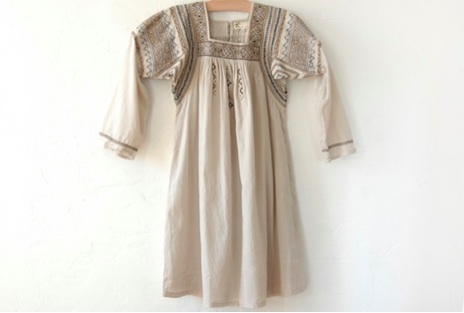
My idea of holiday wear. Embroidered dress by Local at lost + found.

tree of life

 
From top:
English work bag, crewel wool and chain stitch embroidery on a linen and cotton ground, 1701-1702.
Pierced and engraved brass candle sconces by Ernest William Gimson, 1910.
Tree of Life earthenware dish made by Bernard Leach, 1923.

All from the Victoria & Albert Museum. Copyright: © V&A Images

winter flowers


Vintage embroidered Edwardian silk stockings on Etsy. Found via I'm Revolting, who has quite the eye.

home (ii)

Ellen Harding Baker's solar system quilt, dated 1876. She made it and used it as a visual aid for her lectures on astronomy.

Wool, wool-fabric applique, wool braid, and wool and silk embroidery. In the Smithsonian's collection.

Details:


home (i)


Artist unidentified (possibly Otisfield, Maine) c. 1840. Wool appliqué, gauze, and embroidery on wool. 29 x 53 in. At the American Folk Art Museum.