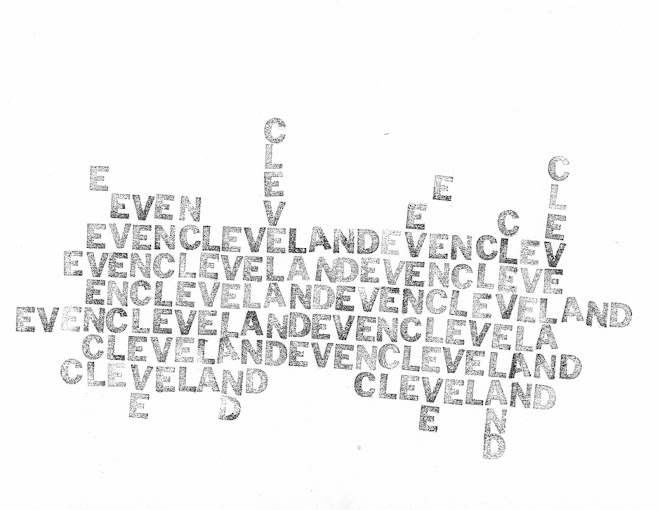
Posted way back on 4/10/2011, again on 7/3/2018, and again today.
Showing posts with label mottos. Show all posts
Showing posts with label mottos. Show all posts
odds and ends / 10.6.2020


Max Hauschild, A View Through a Window, with Vine Leaves, ca. 1810-1895.
*
*
Excerpt from They Thought They Were Free by Milton Mayer, a collection of interviews with ten ordinary Germans who became Nazis. At Popula, found thanks to The End of the World Review.
*
Octopus hidden in shells; screengrab from My Octopus Teacher.
*
Porcelain box in Brussels’s Royal Museum of Art and History, photgraphed by Charlotte Edwards.
*
*
These self-conscious times have furnished us with a new fallacy. Call it the reflexivity trap. This is the implicit, and sometimes explicit, idea that professing awareness of a fault absolves you of that fault—that lip service equals resistance. The problem with such signalling is that it rarely resolves the anxieties that seem to prompt it. Mocking your emotions, or expressing doubt or shame about them, doesn’t negate those emotions; castigating yourself for hypocrisy, cowardice, or racism won’t necessarily make you less hypocritical, cowardly, or racist. As the cracks in our systems become increasingly visible, the reflexivity trap casts self-awareness as a finish line, not a starting point. To the extent that this discourages further action, oblivion might be preferable.
Katy Waldman, "Has Self-Awareness Gone Too Far in Fiction?" The New Yorker, 8/19/2020.
*
I sometimes struggle to find evidence in contemporary literature and the conversations around it of one of the most basic material facts of our era: in order to live, the vast majority of people have to sell the hours of their lives at work. Or some others: nearly everything around us is owned, and almost everything owned was built (by people and out of something), or that all of this is threatening to fully deplete our common home, the earth. How strange that we live in the epoch of hour-selling, in a made world in which we do not acknowledge the makers, in an arrangement of space in which trespass threatens every step, in a world in which no extractable goes unextracted, and yet much of the most lauded literature locks this up like a secret inside itself. The structure of reality becomes, in our books, a hidden chamber unlocked only with the question, “but who made this world?” The books themselves hardly ever seem to ask it.
For example, I am not sure that beyond the work of radical poets, I’ve ever seen much mention in literature that a car requires gas, that the gas requires the oil industry, the oil industry requires imperialist war, etc. Instead, people in books move via invisible fuel in machines that are visible only as reflections of character, like a Ford Fiesta is not a material fact but a mere symbol of selfhood, running on biographical oil. I sometimes imagine some alien reader picking up a contemporary novel and thinking that everything about our species in our time and place was feelings, self-identification, self-interest, self-fulfillment, self-determination, that humans were made from the inside out, instead of the outside in, and that the only relation to objects we had was our curation of them.
Anne Boyer, in conversation with Sam Jaffe Goldstein for The End of the World Review, 9/15/2020.
*
Most members of the bourgeoisie experience history as they do their heartbeats: they know it’s there but only become aware of its presence when something goes wrong. Neither I nor my peers in the “creative class” of that faux-meritocratic New York understood that the Obama years were precisely that — years, an era among others, a period with a beginning and an end.
Nicolás Medina Mora, "An American Education." N+1, Winter 2020 Issue 36.
*
Just after the publication of The Hobbit, but before he began writing The Lord of the Rings, J.R.F. Tolkien wrote an essay arguing that fairytales gave us three things: recovery, escape, and consolation. His earnestness jolts, in a very agreeable way. He didn’t think much of modern society, thought we had broken off relations with the natural world, and argued that fantasy was our way of trying to heal the breach, to learn how “to converse with other living things.” The unhappiness of the world, as he saw it, was not something to be trivialized. It was not a bad thing to want to escape it, as a prisoner rather than a deserter (which was the difference to him between escape and escapism). Because our world was as oppressive as it was, a happy ending was not trite, or easy. He termed the word “eucatastrophe” to express the intensity of such an event, of experiencing joy “beyond the walls of this world, poignant as grief.” Happiness that cuts like a knife: He wanted his readers changed when they returned from his world; to make decisions differently, expect a different outcome. For him, fantasy was radical, profound.
Jenni Quilter, "Fish Tossing." (It's an essay about the Muppets.) Avidly/LARB, 8/19/2020.
*
*
2020 is not a lost year. It’s a chance for parents and children to watch and listen to one another, to turn the weekday scramble into an occasion to experiment and think about what it takes to make a free human being — one whose freedom comes from truly knowing something about the world, and about herself.
Molly Whorton, "When You Get Into Unschooling, It's Almost Like a Religion." NYT, 9/25/2020. (I'm unschooling my kid this year, and it's ... kinda awesome?)
*
Snack: cinnamon-sugar scones.
*
Doyle Lane's "ravishingly seductive" weed pots: "Some are smooth as river rocks; others are cracked or lumpen, like overripe fruit from otherworldly trees."*
If you want to stop fascism, the efficient mission is not to attack the opposing side. It is, rather, to be the opposite of Donald Trump: a defiantly open heart who protects and bolsters valid information systems required for people to truly decide for themselves about all that he and his movement represent.
Sarah Smarsh, "How is Arguing with Trump Voters Working for You?" The Guardian, 9/17/2020.
*
‘Florida and Ohio, man,’ the barista at the local café said to my husband, when he asked about the tourist trade. ‘People here at least acknowledge that it’s real. But people from Florida and Ohio don’t even seem to think it’s happening.’ Having lived in both places, I believe him: I have long had a theory that the surrealism that has overtaken the political landscape in America can be traced back to the poisoned ground of Ohio Facebook.
Patricia Lockwood, "Insane After Coronavirus?" The London Review of Books, 7/16/2020.
*
Army ants will sometimes walk in circles until they die. The workers navigate by smelling the pheromone trails of workers in front of them, while laying down pheromones for others to follow. If these trails accidentally loop back on themselves, the ants are trapped. They become a thick, swirling vortex of bodies that resembles a hurricane as viewed from space. They march endlessly until they’re felled by exhaustion or dehydration. The ants can sense no picture bigger than what’s immediately ahead. They have no coordinating force to guide them to safety. They are imprisoned by a wall of their own instincts. This phenomenon is called the death spiral. I can think of no better metaphor for the United States of America’s response to the COVID-19 pandemic.
Ed Yong, "America is Trapped in a Pandemic Spiral." The Atlantic, 9/13/2020.
*
Maisy Card: "The idea that there is a beginning and an end, a single leader and a single traitor to a movement, is an illusion."
'it's always the man looking through the lens'
“You know what?” she says. “I’m not that into images. This is like a major problem for me, lifelong. But I’m really good at admitting it now. I just don’t care that much about fashion photography.” One reason is content. “All the images are from a male point of view, all of it, my whole life, all of our lives — it’s always the man looking through the lens. Imagine if it were more women? … We’re missing out on things. And we’re conditioned to be ashamed of menopause and aging. I’m just not doing it. I’m into embracing menopause — I’m not there yet, but Frances McDormand style.”Rachel Comey, quoted in "Rachel Comey Makes Herself Comfortable," by Cathy Horyn for The Cut, 9/5/2018. It's a great read.
I remember the first time I saw a pair of Rachel Comey shoes back in 2008, and it's a terrible 21st-century cliché to say this, but I felt seen. It was the first fashion thing I ever experienced where I felt like someone out there was making something for the person I am, not some version of the woman someone else expects me to be.
'where i am for now'
What do I believe in? Imagination, gardens, science, poetry, love, and a variety of nonviolent consolations. I suspect that in the aggregate all this isn't enough, but it's where I am for now.Teju Cole, from 'A Conversation with Aleksandar Hemon' in Known and Strange Things.
2017
We have not overcome our condition, and yet we know it better. We know that we live in contradiction, but we also know that we must refuse this contradiction and do what is needed to reduce it. Our task as [humans] is to find the few principles that will calm the infinite anguish of free souls. We must mend what has been torn apart, make justice imaginable again in a world so obviously unjust, give happiness a meaning once more to peoples poisoned by the misery of the century. Naturally, it is a superhuman task. But superhuman is the term for tasks [we] take a long time to accomplish, that’s all.
Let us know our aims then, holding fast to the mind, even if force puts on a thoughtful or a comfortable face in order to seduce us. The first thing is not to despair. Let us not listen too much to those who proclaim that the world is at an end. Civilizations do not die so easily, and even if our world were to collapse, it would not have been the first. It is indeed true that we live in tragic times. But too many people confuse tragedy with despair. “Tragedy,” [D.H.] Lawrence said, “ought to be a great kick at misery.” This is a healthy and immediately applicable thought. There are many things today deserving such a kick.
Albert Camus, from Lyrical and Critical Essays, translated by Ellen Conroy Kennedy. Via Brainpickings.
*
Also: a word for 2017.
'rressponssible ppeoplle'
The Medium lost the delighted smile she had worn till then. "Oh, why must you make me look at unpleasant things when there are so many delightful ones to see?"
Again Mrs. Which's voice reverberated through the cave. "Therre will nno llonggerr bee sso many pplleasanntt thinggss too llookk att iff rressponssible ppeoplle ddo nnott ddoo ssomethingg abboutt thee unnppleasanntt oness."Madeleine L'Engle, A Wrinkle in Time.
'bright and constant'
Just resolve to shine, constantly and steadily, like a warm lamp in the corner, and people will want to move towards you in order to feel happy, and to read things more clearly. You will be bright and constant in a world of dark and flux ...Caitlin Moran, 'My posthumous advice for my daughter.' The Times, 7/13/2013.
(Sidebar: This quote was rattling around my mind today, but it does nothing to capture the hilarity of the piece, which deserves to be read in full.)
'if this isn't nice, what is?'
One of the things (Uncle Alex) found objectionable about human beings was that they so rarely noticed it when they were happy. He himself did his best to acknowledge it when times were sweet. We could be drinking lemonade in the shade of the apple tree in the summertime, and Uncle Alex would interrupt the conversation to say, "If this isn't nice, what is?"
So I hope that you will do the same for the rest of your lives. When things are going sweetly and peacefully, please pause a moment, and then say out loud, "If this isn't nice, what is?"
From a commencement speech by Kurt Vonnegut, discovered thanks to the littlest.
(And it is worth saying even when things are not so peaceful. For example, when movers are in your house with screeching tape, ransacking your kitchen cabinets and answering cells that ring with the theme song from Halloween, and you are sitting on a bare mattress next to your favorite person, who is making you laugh with the world's worst puns.)

thing-searcher
‘I don’t know what you’ve got in mind,’ said Pippi, ‘but I’m not the sort to lie around. I’m a thing-searcher, you see. And that means I never have a moment to spare.’
‘What did you say you were?’ asked Annika.
‘A thing-searcher.’
‘What’s that?’ asked Tommy.
‘Someone who goes searching for things, of course! What else would it be?’ said Pippi as she swept all the flour into a little pile. ‘The whole world is full of things, which means there’s a real need for someone to go searching for them. And that’s exactly what a thing-searcher does.’
‘What kind of things?’ asked Annika.
‘Oh, all kinds,’ said Pippi. ‘Gold nuggets and ostrich feathers and dead mice and tiny little nuts and bolts and things like that.’
Astrid Lindgren, Pippi Longstocking. Recalled to mind thanks to things magazine.
At last I've found a name for what I am.
'ripples of hope'
Robert F. Kennedy, from the Day of Affirmation speech delivered at the University of Cape Town, 1966:
Each time a man stands up for an ideal, or acts to improve the lot of others, or strikes out against injustice, he sends forth a tiny ripple of hope, and crossing each other from a million different centers of energy and daring, those ripples build a current which can sweep down the mightiest walls of oppression and resistance.I wasn't familiar with this, and listening to it gave me heart after a week and a half of feeling hopelessly small.
Discovered thanks to President Obama.
this weekend

It's my birthday Sunday and there will be surprises, all sorts. That's all I know.
Happy weekend.


Why would you take the time to write that you, on purpose, didn’t read something? What a strange impulse, and a strange thing to admit to; maybe it’s something in my makeup but it seems only polite to listen to every goddamn thing and read everything and don’t stop listening and reading and looking until you keel over in a pile of Belgian schmattas and headphones, and until that time, feel terribly guilty about not having read, listened, seen. I have a page on my phone that is devoted to things I need to read, things people have recommended to me. The principle is to go into everything wanting to like it.Nico Muhly
Babette Mangold: Annette Michelson’s Bookshelves, 1976. From Blind Spot, Issue 43 via South Willard.
this weekend

Last day of the old year, first day of the new. And so:
- Perestroika
- fondue + games
- a date to watch the sun rise
- stop, repair, prepare
- besieged/Il conformista
- two essays, a tale, and an atlas to be read
- quiet time
Happy weekend, and happy new year.
Image via this isn't happiness.
one to live by
One should as a rule respect public opinion in so far as is necessary to avoid starvation and to keep out of prison, but anything that goes beyond this is voluntary submission to an unnecessary tyranny, and is likely to interfere with happiness in all kinds of ways.Bertrand Russell
gold miner
I want to feel like a gold miner, and I don't want the gold given to me.
John Baldessari
(I went to the Baldessari exhibit today at The Met. Wow.)
Subscribe to:
Posts (Atom)