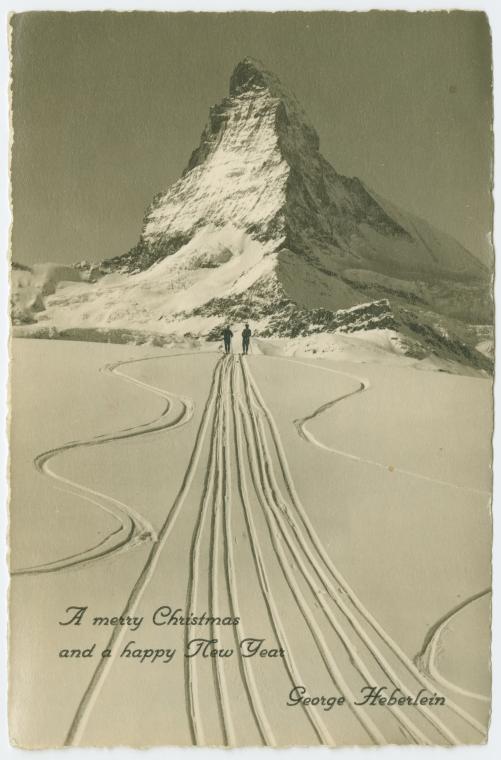
Showing posts with label mountains. Show all posts

read lately / 6.1.2024 - motley stones, the pushcart war, and assorted mountains


I was at the Cleveland Museum of Art on Sunday, looking at an exhibit of fairy tale illustrations and marveling at how dots of white paint can read as glittering mail. The works I was looking at—some drawings, some prints—were all designed to live in the pages of books, but the originals had a sharp, beguiling aliveness that escaped mass reproduction. I snapped pictures—writhing serpents, inky foxes, impossibly beautiful, dead-eyed maidens against shimmering water-color skies—but they don’t capture what made the images so charismatic, the presence of the ghosts of hands. Then I went upstairs and looked at Barbara Bosworth’s photographs of stars and lightning bugs, of a woman holding a soap bubble and a man holding a flashlight, a smear of brightness, many smears of brightness.

In March, I was in Ireland. I spent a year in Dublin long ago, and when I was there, I often went to the National Gallery of Art. Mostly, I went to look at a painting by Caravaggio. Though I had seen it many times, I couldn’t recall what it looked like anymore. I just held a memory of electric feeling, of awe and wonder. As I walked through the galleries again, all this time later, I wasn’t quite sure that I’d find it. But when I saw it, I knew. It was unmistakable, so much more alive than anything else in the room.

It’s a miracle, isn’t it? All these things that people make.


Adalbert Stifter, MOTLEY STONES. There is a specific narrative move I think of as W.G. Sebald’s—a nesting of one seemingly unrelated story inside another, often with a shift of who is telling the tale, thwarting readerly expectations of where a story will go, a step off the groomed path into a wilderness that might hold anything, where the meaning is not plain but muddied and tangled, fractured by life the way tree roots break up a sidewalk. Turns out, this move is not Sebaldian—it’s Stifterian. Adalbert Stifter (1805-1868) was an Austrian writer well-known to Sebald, who cited him as an influence, and reading this collection of electrifyingly strange short stories, most named after a type of rock or mineral formation, full of sentences eschewing the comma, that old reliable friend, I felt dazed and dazzled and pulled back toward the days when I was very small, when every story was new, before patterns had been graven into my sense of how things must go or end. These are stories of kindnesses and cruelties, of specific landscapes and storms, of listening and listeners. I loved reading this book and will read it again.


Jean Merrill, THE PUSHCART WAR. I first made Jean Merrill’s acquaintance via a gleefully destructive elephant who learns the hard way that actions have consequences. THE ELEPHANT WHO LIKED TO SMASH SMALL CARS became one of our favorite picture books. Having a copy around was an excellent personality test for other parents—reflexive pearl-clutchers/non-kindred spirits eschewed chaotic noisy singalongs of “The Smashing Song.” I picked up THE PUSHCART WAR not realizing that it was by the one and same Jean Merrill. I was struck by the Tony Kushner blurb:
The Pushcart War had a profound impact on me; when I was a kid I devoured it several times, and I've carried it deep inside me ever since. The book gave me a point of entrance—my first, I imagine—into the world of resistance to political and economic injustice and chicanery. It made opposition, even non-violent civil disobedience, seem fun and right and necessary and heroic, and something even someone as powerless as a kid could and should undertake.
Well now! I started reading it to Hugh, not quite sure what we were getting into, and we tumbled into glory. It is such a smart, funny, and sharp book about the world that it has made almost everything I’ve read since, from novels to newspaper articles, feel drab and clumsy. Merrill conjures up a New York City of both the future and past, where a nefarious cabal of truck company owners are angling to own the streets. This starts by eliminating the pushcarts—but the pushcart peddlers unite (fractiously, because that is the truth of community organizing) and fight back, sparking a counterculture with its own slang (“don’t be a truck!”), codes, and folk heroes (all hail Frank the Flower). Along the way, Merrill pulls in the police, the media, celebrities, and the government and their various compromised and compromising relations to the situation at hand; it’s like The Wire, but with peashooters instead of guns and a sense of humor. In the way of many children’s authors, Merrill wrote oodles of books, but I am going to get my hands on THE TOOTHPASTE MILLIONAIRE (set in East Cleveland!) and read it next.


Eric Shipton, NANDA DEVI (1936); Maurice Herzog, ANNAPURNA (1951); Lionel Terray, CONQUISTADORS OF THE USELESS (1963); John Evans, NANDA DEVI: 1976 INDIAN-AMERICAN CLIMBING EXPEDITION JOURNAL OF JOHN EVANS (1976); Kurt Diemberger, THE ENDLESS KNOT: K2, MOUNTAIN OF DREAMS AND DESTINY (1991). When I feel a specific degree of overwhelm (presently, due to a combination of current events/big stress + making three magazines at the same time/small stress), I cope by reading books about people doing perilous things for no good reason: venturing to polar regions, sailing alone for long distances, crossing deserts, climbing mountains. The last time I dove this hard into the world of mountaineering literature, I had a baby—for me, contemplating the difficulties of climbing a mountain and getting back down with its endless permutations of murky motivations, self delusion, choice, preparation, chance, weather, skill, improvisations, and pure luck, offered more illumination about parenthood than any number of parenting books. 

Some of these books are more fun to read than others—Eric Shipton’s account of reaching Nanda Devi was wonderful, notable especially for the deep respect and admiration he had for his Sherpa climbing companions—the legendary Ang Tharkay (he reappears as the lead guide in ANNAPURNA), Pasang, and Kusang—and his aliveness to landscape. (For another extraordinary account of trekking in the Himalayas, read Jamaica Kincaid’s AMONG FLOWERS: A WALK IN THE HIMALAYA.) Herzog’s ANNAPURNA is a canonical mountaineering book about the 1950 French expedition to climb an 8,000-meter peak and absolutely wild; two-thirds of the book is about the difficulty of locating the giant mountain, and the last third is a harrowing and unnervingly cheerful account of the costs of summiting it (many, many, MANY fingers and toes). It’s littered with mildly shocking midcentury details like pills popped and trash tossed at the very summit of the mountain. Lionel Terray was a key member of the Annapurna expedition and instrumental in getting people high on the mountain down alive. His memoir, CONQUISTADORS OF THE USELESS (the best title of any adventuring memoir ever), recounts his many, many feats of climbing. Both books are an absolute hoot in that the pictures included make it plain just how much the text accounts, detailed as they are, fail to capture the actual peril of these feats. (As someone who spends a lot of time thinking about words, I find it grimly satisfying to encounter the limit of what words can do.) 

The Evans and Diemberger books both deal with disasters. Evans was part of the troubled 1976 American expedition to Nanda Devi, where the climber Nanda Devi Unsoeld died (her father, Willi Unsoeld, named her after the mountain, and was on the expedition, too). Evans’ diary is a laconic, dude-bro document of going a very long way right after his wife had a baby to do not very much; death is relegated to a postscript. The death of Julie Tullis, Deimberger’s climbing and film-making partner, haunts his book. She died in the K2 tragedy of 1986. It’s weirdly gripping to watch him grapple on the page with an impossible task: justifying questionable choices made for questionable reasons.

*

Currently reading: INTO THE SILENCE: THE GREAT WAR, MALLORY, AND THE CONQUEST OF EVEREST by Wade Davis (reread); STUFF: INSTEAD OF A MEMOIR by Lucy Lippard.

Bookmarked: HEADSTRAP: LEGENDS AND LORE OF THE CLIMBING SHERPAS OF DARJEELING; SHERPA: THE MEMOIR OF ANG THARKAY; IMAGINARY PEAKS: THE REISENSTEIN HOAX AND OTHER MOUNTAIN DREAMS; THE LIFE OF TU FU; FIELD GUIDE TO THE PATCHY ANTHROPOCENE.

Elsewhere: A rock collection.

*

Images:

Robert Frank, "Untitled (Mary and Children with Sparklers on the Beach, Provincetown), "ca. 1958.

Cabinet card of Julia Marlowe’s hand, via Anonymous Works.

Ronni Solbert’s illustration of Frank the Flower and his peashooter, from THE PUSHCART WAR.

Mountaineers from the 1961 Indian Expedition to Nanda Devi looking at the mountain from a snow camp on Devistan I. From the Suman Dubey collection, via Alpinist.
read lately / 1.7.2022


After ending 2021 reading Rachel Cusk's Second Place—a conglomeration of ideas about art and art-making tenuously bound by the structure of domestic novel with a narrator of both frightening acuity and near-total obliviousness (a plethora of exclamation marks; the unmissable signal of an unbalanced mind!)—I took to the mountains. 

First, I read Scott Ellsworth's The World Beneath Their Feet: Mountaineering, Madness, and the Deadly Race to Summit the Himalaya, an enthusiastic, sprawling, sometimes repetitive account of British, German, and U.S. expeditions to various summits in the Himalaya in the 1930s and 40s, ending with the eventual successful summit attempts on Everest/Chomolungma (1953) and K2 (1955). 

They wore cotton parkas and scratchy woolen sweaters, and they climbed five miles into the sky wearing leather hobnailed boots while carrying wood-handled ice axes and heavy coils of manila rope. They slept in drafty canvas tents and tried to cook their meals on fickle kerosene-fueled stoves. They drank brandy and smoked cigarettes, read Dostoevsky and Dickens at 24,000 feet, and they gutted our restless nights only to discover, in the dim light of dawn, that a foot of snow had sifted on top of their sleeping bags during the night. 

There is a dizzying cast of characters (the capsule biographies at the end of the book were welcome) as well as a staggering number of well-supplied expeditions to recount (and Ellsworth is particularly good at the details when it comes to listing all of the esoteric items the quail-in-aspic school of gentlemanly mountain climbing deemed necessary for a proper expedition—a staggering display of ego—though he is prone to flashy, melodramatic sentences, especially as the scenes shift). Fascinating here, alongside the tales of grand (usually doomed), increasingly geopolitically motivated expeditions, is the emergence of a new style of more egalitarian mountaineering, one with a lighter footprint that finally started to value the places en route and around the summit— notably in Terris Moore, Richard Burdsall, Arthur B. Emmons, and Jack Young's attempt on Minya Konka in 1932, and Ang Tharkay, Kusang, Pasang, Eric Shipton, and H.W. Tilman's journey to Nanda Devi through the perilous Rishi Ganga Gorge in 1934. (Throughout the book, Ellsworth shines some welcome light on the extraordinary achievements of the Sherpa climbers who were present on almost all of these endeavors.)


One of the dreamers who pops up in Ellsworth's book is the focus of Ed Caesar's The Moth and the Mountain: A True Story of Love, War, and Everest. (Another grandiloquent subtitle—got to fit those key words in for the algorithmic gods, I guess.) Maurice Wilson was a decorated British World War I veteran who decided to fly to Mount Everest and become the first person to climb it, having never flown a plane or climbed a mountain. Rory Stewart's 11/17/2020 review in the NYT gets to the problem: "Caesar is a fine writer, but he has not managed to find the art to resurrect a man whose final act is so bereft of context or explanation." Parul Sehgal might diagnose Caesar's issue as an infatuation with the trauma plot. He tries  to extract motivations from Wilson's war service and even grasps at flimsy rumors of Wilson's possible proclivity for cross-dressing to find a why that is not there. It's particularly frustrating because in the beginning of the book, Caesar writes that "there is never one fact or secret about a life that explains someone." Well, d'oh!

Sadly, both books lack the true hallmark of a great mountaineering book—cold. I never felt cold while I was reading them. Maybe a slight shiver from the Ellsworth.

I want to read Eric Shipton's book about Nanda Devi now and maybe finally get to John Roskelly's accounting of the harrowing 1976 Indo-American expedition to the mountain. And both Caesar and Ellsworth mention Wade Davis's Into the Silence: The Great War, Mallory, and the Conquest of Everest, though I may pick up Robert Macfarlane's Mountains of the Mind (still my favorite of his books) to re-read his artful reconstruction of the Mallory climb instead.


Much like climbing a mountain exposes a climber's weaknesses, writing about mountains exposes an author's. Ellsworth and Caesar both show technical skill, but lack imaginative capacity—their stories, vivid in themselves, struggle to come alive. The Living Mountain put their weakness in sharp relief. Nan (Anne) Shepherd (1893-1981) lived near the Cairngorm mountains in Scotland—puny bumps compared to Himalayan majesty–and yet, though a lifetime spent walking and being in their presence, she found majesty there. 

This, finally, was the book I needed, after a year spent close to home. A book that took me somewhere else while reminding me that I, too, live in a place of wonder (because any place, observed and experienced closely, holds wonders). Organized into twelve short sections, Shepherd tunes her attention to every aspect of the mountain–its rocks and water and weather, the animals and plants and people that call it home—and her own physical experience of being in mountain space, of tuning her attention to its frequencies, of walking herself into new states of awareness and being. 

Written in the 1930s, the book laid in a drawer until its publication in 1977. The edition I read included a wonderfully perceptive introduction by Robert Macfarlane (and a crabbed closing essay by Jeannette Winterson pettishly lauding the power of reading—yawn). Macfarlane writes:

Most works of mountaineering literature have been written by men, and most male mountaineers are focussed on the summit: a mountain expedition being qualified by the success or failure of ascent. But to aim for the highest point is not the only way to climb a mountain, nor is a narrative of siege and assault the only way to write about one. 

Shepherd writes beautifully about how she came to know the mountain—"to know, that is, with the knowledge that is a process of living," a knowledge that "does not dispel mystery"—and how that knowledge has changed her—"place and mind may interpenetrate till the nature of both is altered."

It's a book that makes you want to stop reading and go outside for a walk.


*

Images:

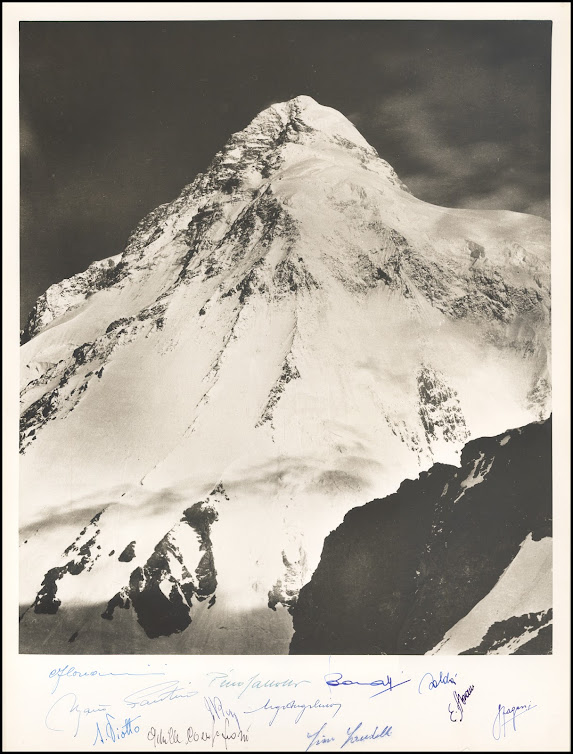
The southeast face of K2, photographed by Vittorio Sella to commemorate the Duke of Albruzzi's 1909 expedition, signed by the Italian climbers who summited the mountain in 1954.
First edition of Eric Shipton's Nanda Devi at Shapero Rare Books.
Folio Society edition of The Living Mountain.

promise


Remember, the time of year
when the future appears
like a blank sheet of paper
a clean calendar, a new chance.
On thick white snow 
you vow fresh footprints
then watch them go
with the wind's hearty gust.
So fill your glass. Here's tae us. Promises
made to be broken, made to last.

Jackie Kay

*

Samuel Bourne, The Manirung Pass, 1866. Albumen silver print from glass negative. The Metropolitan Museum of Art.

gifts some mothers might enjoy


Suzanne Sullivan large vase with gold handles (like a trippy trophy cup for parental achievements).
William Abranowicz for Whisper Editions (because motherhood sometimes feels like learning to steer a tricky craft through ever-changing conditions—dead calms, rogue waves—and places off the map.)
Doing Goods gold hand knobs (lending a helping hand is part of the job).
Masanao Abe: The Movement of Clouds around Mount Fuji (the title is a poem).
Made by Yoke Vata perfume oil: vanilla, coconut, bergamot, rose (it looks like a magic potion).
John Derian x Astier de Villatte beehive mug (a nod to ceaseless industry; female bees are the workers, after all).
Kamperett Cassatt dress (in cotton, with pockets, and a grosgrain belt, AND it is named for a woman artist: so, yes.)
Unpublished poems + expensive art book blank books, Book/Shop x Various Projects (a cheeky way to catalog two ongoing interests).
The Covet shower cap (fabulous and also practical).
Comb honey in a pretty jar (again with the bees; also necessary for tea and toast. This is from Healdsburg Shed.)
Irv Teibel's Environments (for moments of calm, and also because Hua Hsu's review is beautiful).
Mother-of-pearl moons by Gabriella Kiss, photographed by August (because my son says he is a crescent moon and that I am a full moon, and that Sean is a full moon, too, and that together we are a family of moons.)

'monuments to inner thought'


Shipu ... are books of description, poetry, or art dedicated to stones. The first was published between 300 B.C. and A.D. 100, as part of an encyclopedia of facts about the known world.
Rebecca Robertson, "7 Astonishing Chinese Philosophers' Stones That Look Like Monsters and Landscapes." ArtNews, 5/26/14.

*
A number of terms were created to describe the desired qualities in a scholar’s rock, from shou (meaning thin) to tou (conveying ‘openess’). Hollows in the rock, meanwhile, were prized for their dramatic contrast to the solidity of the stone — and light. Other terms denote the rock’s age: gu means ancient but also elegant, while jue is the ultimate accolade, translating as ‘perfect’.
Christie's: Collecting Guide: scholar rocks.

*
Like a landscape painting, the rock represented a microcosm of the universe on which the scholar could meditate within the confines of his studio or garden.
Robert D. Mowr

*
They are not fixed in meaning, the way we are used to art being fixed.The principal thing is to take a rock - which is the most common thing in the world - and to transform its image, through looking, beyond a rock, into something uncommon.
Richard Rosenblum, quoted in the Philadelphia Inquirer, 2/6/1998. (Post title taken from this article.)

*

Related: viewing stones at The National Bonsai Foundation; a review of Rosenblum's collection by John Mendelsohn.

Pictured: Chinese scholar stone at Chista.

glass mountains


13. Everyone in the city knows about the glass mountain.
14. People who live here tell stories about it.
15. It is pointed out to visitors.
16. Touching the side of the mountain, one feels coolness.
17. Peering into the mountain, one sees sparkling blue-white depths.
Donald Barthelme, "The Glass Mountain."

Stained glass mountain ranges by Bespoke Glass Tile.

moon, mars and venus


Filmed on February 20, 2015.

the weight of mountains


A beautiful and educational film by Temujin Doran 'about the processes by which mountains are created and eventually destroyed ... based upon the work of British geographer L. Dudley Stamp.'

artificial mountains


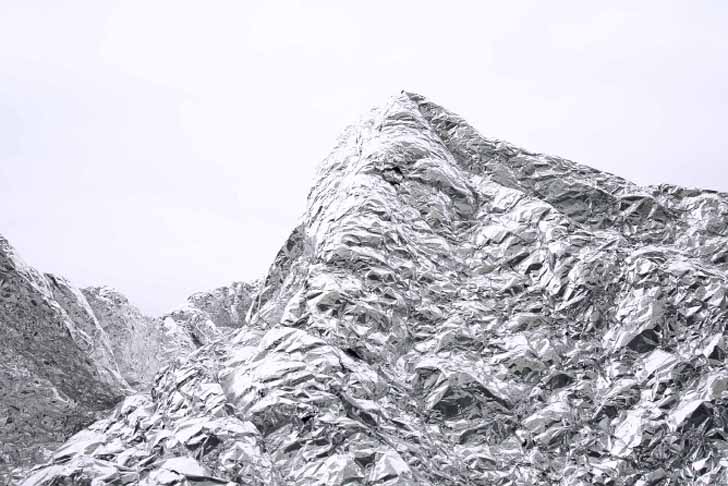
Kimihiko Ohada: Aluminum Landscape. Site specific installation for the courtyard of the Museum of Contemporary Art, Tokyo. 7/5/2008 - 9/23/2008. 902 square meters; 6.5 meters high.

From the artist's statement:
I will employ the natural and artificial in producing new scenery. My creation will reflect rain, wind, and other weather phenomena, as well as the movement of the sun, color of the sky, and other quiet changes in the environment. By reflecting the surfaces and shapes of the landscape, the artwork amplifies and transforms nature and makes it visual.
Discovered via dezeen, designboom and Inhabitat, where you can see more photos.

Photos by Keizo Kioku. © Office of Kimihiko Okada.


Horace Pippin: Lady of the Lake, 1936. Oil on canvas. 20 1/2 x 36 in.