Showing posts with label mothers. Show all posts

silvered flowers, beehive bonbons, and a deck of rainbows/gifts some mothers may enjoy


The Shenandoah Mansions linen robe (and/or the matching pajamas and eye mask) by Desmond & Dempsey and Ash Hotels.

Beehive bonbons from Shane's Confectionery filled with honey and black sesame praline.

[A] series of obscure and eccentric English garden-makers who, between the early seventeenth and early twentieth centuries, created intensely personal and idiosyncratic gardens. They include such fascinating characters as the superstitious antiquary William Stukeley and the animal- and bird-loving Lady Read, as well as the celebrated master of Vauxhall Gardens, Jonathan Tyers, who created ... one of the gloomiest and most perverse anti-pleasure gardens in Georgian England. Others built miniature mountains, shaped topiaries, displayed exotic animals, excavated caves, and assembled architectural fragments and fossils to realise their gardens ...


A snail sketch print by Annette Messager, "Locus Solus XIII," because, snail-like, mothers have the power to carry home with them.

An album worth blasting on the way to and from pick-up.

Bienamé hand creams that smell like life in bloom, the color red, or happy days.

Peaceful girl with fist charm by Leith Clark x Catbird (I like to think she is catching a star).


*

Related posts: choosing motherhood / what's possible / true colors

Other gifts some mothers may enjoy: 2017 / 2018 / 2019 / 2020 / 2021 / 2022 / 2023 / 2024 / 2025

flowers for mothers (not medals)


A piece of art you make by tracing flower shadows.

Pansies for thoughts: Anntian g-mallows t-shirt.

A blank journal by IDEA, with photographs of Shozo Sato's ikebana scattered throughout to encourage words to bloom, or a book about finding flowers (a favorite).

Nonfiction "Open Arms" perfume, "an interpretation of a healing moment, nurtured with elements of nature’s vitality and caring gestures. Ripe fruits, sweet flower blossoms, fresh green leaves from nascent branches, and crushed peels are condensed to create a fresh, bittersweet essence." (A fresh, bittersweet essence is exactly how I'd describe motherhood.)

Garden notecards by Jane Ormes at Bari Zaki.

John Julian x Sarah Lucas classical mug, for coffee flavored with whimsy.

length of floral embroidered ribbon from Minnieolga, to tie in her hair or use as a bookmark.

A long basket by kaaterskill market and a pair of snips, for bringing home bouquets. 


Spiritual Objects golden flower necklace, for everyone and anyone called to mother, in whatever form that takes.

*

(This is the medal I am talking about; absolutely repugnant.)

*


Other gifts some mothers may enjoy: 2017 / 2018 / 2019 / 2020 / 2021 / 2022 / 2023 / 2024

a scattering of leaves and petals and sharp and shiny objects / gifts for mothers


A globe for keeping flowers in water, by Jamjar Edit x Skye Corjewin.


A book that is like a walk in the woods: On Listening to Trees, by Albarrán Cabrera, via C4 Journal.


Cuff covers, for reaching into thickets, and Tajika scissors (for flowers or branches) to make strategic cuts.


Pencils that smell like evergreens, or Moro Dabron's Vita perfume, meant to conjure "the Elizabethan tower of Sissinghurst Castle in the 1930s, where writer and poet Vita Sackville-West spent a great deal of her time writing surrounded by old books, period wood, fresh flowers and cuttings from the magnificent gardens which the room overlooked ..."

A key ring from Ark that says it all.

*

Other gifts some mothers may enjoy: 2017 / 2018 / 2019 / 2020 / 2021 / 2022 / 2023


odds and ends / 5.9.23


*

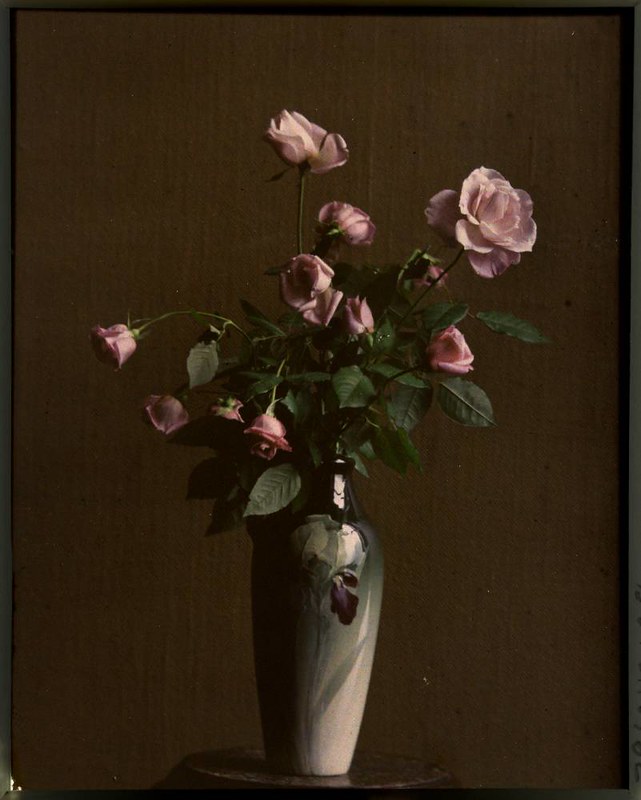
G.W. O'Grady, "Pink roses in vase," ca. 1915. George Eastman House Collection.

*

Maria La Rosa pendant socks.

*

“Ice Music” by Jim McWilliams, performed by Charlotte Moorman for the International Carnival of Experimental Sound, London in 1972, via fluxusgram.

*

A Japanese mother of pearl-inlaid lacquer box and cover. Meiji period, late 19th century, via Freeman's.

*

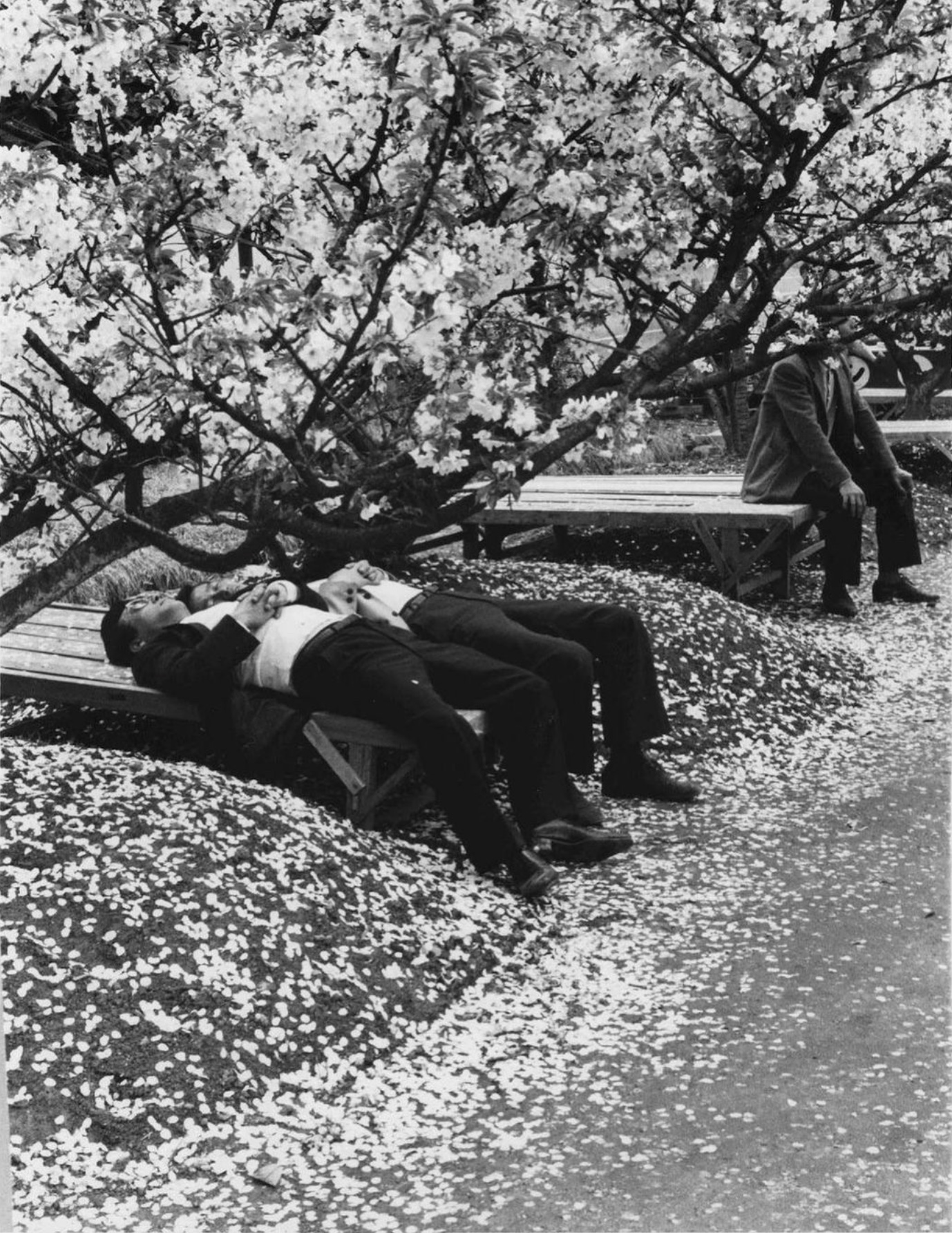
Seiryu Inoue, "Men lying under cherry blossoms." From Kyo no miyako, 1960/1970, via la jardin robo.

*
We live in undeniably ugly times. Architecture, industrial design, cinematography, probiotic soda branding—many of the defining features of the visual field aren’t sending their best. Despite more advanced manufacturing and design technologies than have existed in human history, our built environment tends overwhelmingly toward the insubstantial, the flat, and the gray, punctuated here and there by the occasional childish squiggle. This drab sublime unites flat-pack furniture and home electronics, municipal infrastructure and commercial graphic design: an ocean of stuff so homogenous and underthought that the world it has inundated can feel like a digital rendering—of a slightly duller, worse world.

"Why is Everything So Ugly?" n+1, Issue 44 "Middlemen," Winter 2023.

*
When [Brendon] Babenzien’s first J. Crew collection débuted to great acclaim, last July, [Derek[ Guy noted that the designs were virtually indistinguishable from more expensive, fetishized brands, such as Margaret Howell, Drake’s, Aimé Leon Dore, or Beams Plus. "If your purchases at ‘edgy’ brands like our legacy and visvim are limited to boxy tees and ever-so-slightly different jeans . . . you also look like you’re wearing j crew,” he wrote in a Twitter post. “Everyone is in jcrew. this is the reality.”

Hua Hsu, "J. Crew and the Paradoxes of Prep.The New Yorker, 3/27/2023. 

*

All the sailors get depressed when they’re becalmed. The mood of Kirsten’s calls into headquarters has varied wildly, depending on whether she has wind. No stranger to adventure—she cycled alone from Europe to South Africa when she was twenty-two—she is the kind of person who, when not racing, likes to swim away from the boat “just to get that feeling of vastness, that sense of eternity, that if the boat did sail away, it would be, basically, eternity. And it is a scary thought…but it’s also kind of intriguing…to get that little bit of distance from yourself and the boat in the middle of the ocean.” ... In the last few days she seemed to think she was heading for certain defeat, having been stuck in the Atlantic doldrums for almost a month: “I don’t know how I’m supposed to feel…. I guess I’d be more excited if I knew I had a chance of getting there first.” Assured that fans will be waiting to welcome her, she starts to sound a bit like Moitessier, the French sailor who declined to return to normal life back in 1969: “It would almost be better to disappear onto some mysterious piece of land and vanish, and, you know, not have to go through the whole…”—she trails off.

Jé Wilson, "Swimming Away from the Boat." NYR, 4/27/2023. 

*
Fuzzy interfaces present users with complex, artful scenarios that must be learned and mastered—a novel departure from the unconsciously simple, spoon-fed manner in which interface design has become accustomed, toward a craft-like engagement in which the skill and mastery of an object must be acquired slowly, over time. Another advantage of fuzzy interactions is that they slow us down, creating what Ezio Manzini refers to as ‘islands of slowness’ that allow us to think, experience, and re-evaluate. The relationship between subject and object becomes evolutionary, as the subtle exchange of feed-forward and inherent feedback creates the illusion of mutual growth. Of course, fuzzy interaction is not for everyone, nor is it universally applicable. […] Nevertheless, alternative modes of interaction serve to remind us that perhaps the streaming of endeavors of modern times has inadvertently stripped the world of all its charm.

John Chapman, quoted by Derek Guy in "On Emotional Durability" at Die, Workwear, found via Lin

*
The academic and psychotherapist Lisa Baraitser has argued for a definition of “maternal time” as a temporality specifically related to the repetition of maintenance labour and the “tenuous processes of maintaining familial relations across and between generations”: to do so, she draws on Denise Riley’s work on maternal grief. In Riley’s account of the way loss can create a kind of “suspended time” in her book Time Lived, Without Its Flow, a gestational temporality is identified in which the future literally unfolds within the present over the nine months of pregnancy, and then unspools in both parties forever, reaching backwards and forwards simultaneously. “My time is your time,” the mother says to the child, and vice versa. 

Helen Charman, "The Eternal Daughter." Another Gaze, 2/26/2023.

*
The photographs may have a disembodied hand reaching out to steady an infant propped up in a chair, or the edge of a mother’s body may be visible as she crouches (mostly out of sight). In other less subtle photos, a child will be seated on her mother’s lap while the mother is entirely covered with a large cloth draped over her head and body. Perhaps the most unnerving of the Hidden Mother photographs are the ones in which the mother’s face was visible in the final photograph– and was then scratched out and obliterated. 
*
I was a girl then, in Morris County, New Jersey. My favorite day of the week was Thursday, when I had piano lessons in Florham Park, not because I loved the piano especially, but because we always had time to kill between school and my lesson, time my mother used instead to take me to the Frelinghuysen Arboretum, where we’d walk through the woodlands and meadows. What I liked about those afternoons was that it was just us and the flowers. After my lesson, we’d circle back to the library across the street from the arboretum, and I would check out as many books as I could carry. Flowers, music, books, all within the same circumference, which I now recognize as a gift my mother gave me. She took me by the hand and introduced me to beauty, and while I put it off later in search of knowledge, I’ve come around to seeing that the two are related, that beauty is indispensable, and that books are the reproductive proof of it.

Susan Barba, from the introduction to American Wildflowers: A Literary Field Guide.

*

*

"What more do you want?"


gifts for web-weavers / way-finders / wellsprings / mothers


Wildflower seeds for turning lawns into meadows (or mini meadows).

Sabahar's multitasker towel/wrap/picnic blanket with all the colors of the rainbow.

Eley Kishimoto x Niwaki Flash kantan bag for chic-er schlepping. 

Montbell lock-on sandals for summer days and splash parks. (I also like the slip-on purple variety.)


Cobble Mountain Summit hammock chair for hanging around, with a copy of Lukaza Branfman-Verissimo's we web keepers.

A Beklina ball cap that might actually keep the sun off.


A prism for catching the light.

A woman stepping gingerly forward; a field of tender flowers. (Motherhood?) Jon Beachem, Cadence of Spring

*

Other gifts some mothers may enjoy: 2017 / 2018 / 2019 / 2020 / 2021 / 2022

what's possible


Manuscript of Emily Dickinson's poem 466:

I dwell in Possibility –
A fairer House than Prose –
More numerous of Windows –
Superior – for Doors –

*

“This woman who wanted me always to feel possible.”—Jasmine Mans, describing her mother in Broccoli, Issue 11.

*

I have been pregnant three times. My first pregnancy ended in abortion at 11 weeks, my second pregnancy resulted in a child, and my third pregnancy miscarried. Each time, I willingly chose to enter that space of uncertain possibilities that surrounds pregnancy. Each time, I did not know what to expect, though after that first time, I knew something more about how little anyone can actually know about what to expect when you are expecting. After the second, I was somewhat wiser about how vast and ongoing the commitment to another life is. And the third revealed just how callous practices of care directed toward pregnant people can be. I will not forget walking past all the cozy delivery rooms to access the grubby little curtained alcove where I got a D & C.

To take away what choice a person can have in such an uncertain undertaking as pregnancy, to say to someone, no, you must do this thing, this thing that will radically reshape your life and body and future, is cruel. I do not understand a “love” that looks past the person in front of you, the person who knows their own life, the person who has made a decision, the person asking for help, to prioritize protecting a pulsing clump of cells. Alive, true. But not a life, not yet. Just a possibility.

I wonder about these people, so enamored of blastocysts, of embryos—“a thing at a rudimentary stage that shows potential for development”—that they will demand its potential take precedence over the actualities of the living person sitting in front of them. Is it easier for them to love something abstract and unknown, something that can still be whatever they imagine it to be? Easier than loving actual humans, who can only be what they are? Such hubris, to know better what someone’s options should be. Of course, the fact of being the sort of human who can get pregnant continues to preclude full personhood in our culture, though a few of us may become CEOs and billionaires and whatever else. Better protect the flickering cells, the ones that could actually become a real person, provided it has the correct chromosomes.

Criminalization does increase the risk of physical harm. But that is basically a consumer protection argument: It’s not safe enough. The fact is that whether anyone ever climbed on an abortion table or not, the message of criminalization to all people who can get pregnant is: You don’t have dominion over your own body, you are always vulnerable, always in danger of being surveilled.

Historian Ricki Solinger, from "You Are Endangered as a Citizen." N+1, 5/5/2022


This is a reality like a massive mountain, maybe too massive to see the scope of until the light hits right, and it’s illuminated in its awful vastness. And whenever that happens, when some of us realize yet again that we still are not really seen as actual people, we start sharing our very real stories to assert our full personhood, something only white men and fetuses are granted here in the United States. My feeds this week are full of people sharing their abortion experiences. There are people who didn’t think twice about having an abortion; others, like me, who grieved but felt relieved; still others who later regretted it. And after these outpourings, the certain circle these stories like vultures, picking for narrative morsels that feed their arguments. It’s exhausting.

No single story ever encapsulates any human experience. And I am increasingly wary of stories, anyway. The ugly power of narrative is evident everywhere in this country. Maybe what we need is to step away from storytelling—the repeated tales of what a mother is, of what a person should be—to dwell in possibility. Why is what we do with our bodies endlessly up for debate, whether that is choosing not to be pregnant or getting the care needed to align an inner and outer self? Why are people so afraid of making space for choice? Of accepting that people do, in fact, know what is best for them, in a way others can’t?

What a tragedy to spend fifty years trying to shut a door rather than change the path that leads to it. (See here: the evident hypocrisies in the anti-child policies of so-called pro-life states). What a tragedy that so many people still feel that what they most want is others to have less, not more. What a tragedy that we still have yet to embrace the full bewildering glory of actual human potential.

What I want most for my child is that whoever he is or wants to be feels possible. But I also want him to realize, in such a foundational way that it shapes everything he understands, is that radical possibility extends to everyone around him—that no one is a story set in stone, that everyone is always changing, always becoming. That choice is freedom, and everyone deserves to be free.
*

Other thoughts on choosing motherhood.