Showing posts with label sculpture. Show all posts

odds and ends / 10.12.2023


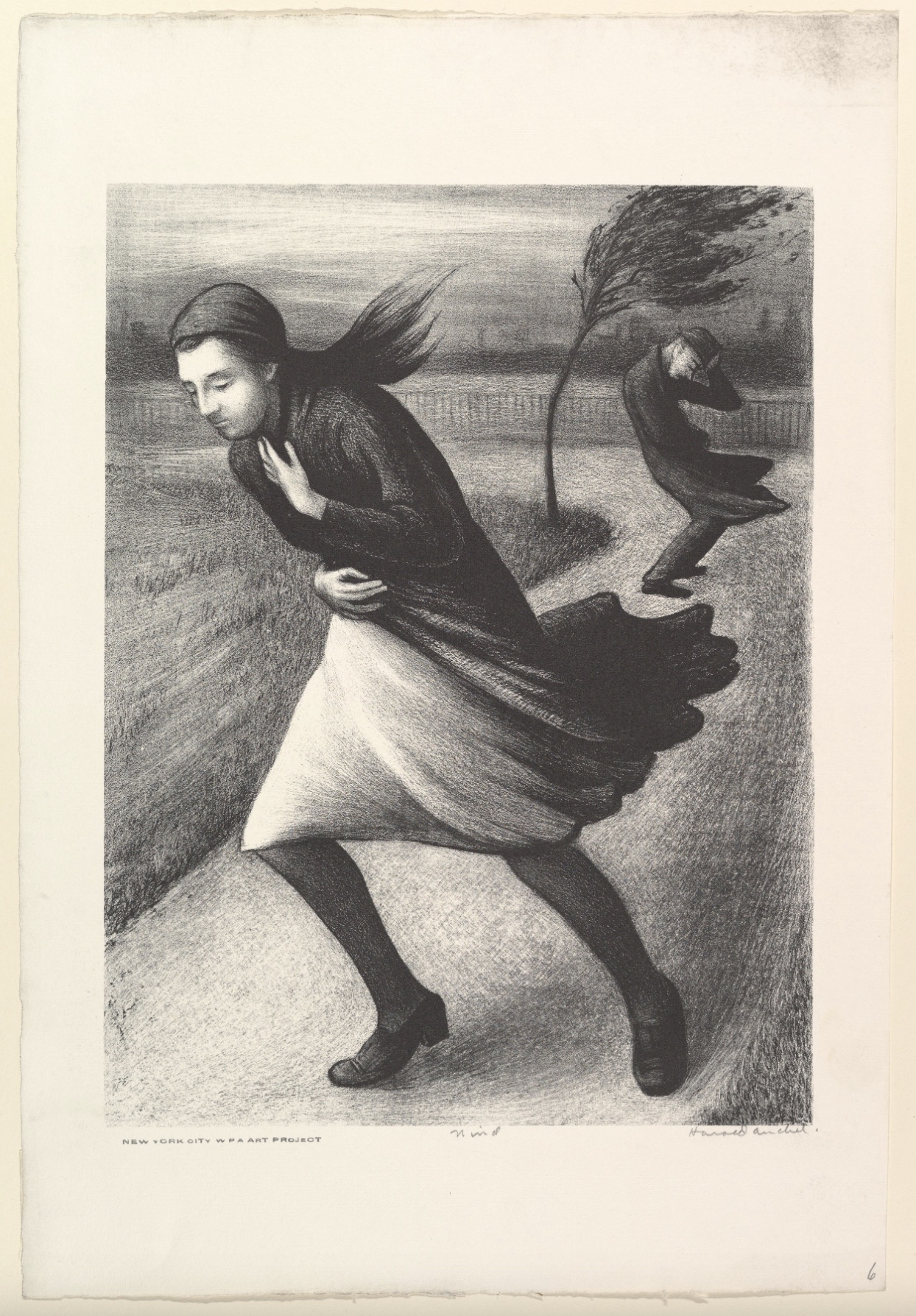
Harold Anchel, Wind. 1935-1943. The Metropolitan Museum of Art.

*

Glove, ca. 1840-1880. Bronze and paint, 1 1/8 × 7 7/8 × 4 7/8". The Menil Collection, Houston.

*

Osborne's Superfine American Water Colours travel set ca. 1830, via criticalEYEfinds.

*

Melissa Catanese, Figures #6, 2021.

*

Still from Himali Singh Soin's "The Spiral," via Ignota Books

*
It has long been the task of the humane left to reject the line of reasoning that would sacrifice civilians on the altar of 'historical inevitability,' whether in its Stalinist or Third Worldist guise—to protest the idea that untold innocents must die in the service of some grand telos. The humane left insists instead on the possibility, on the moral imperative, of bending what others take to be history’s iron tracks. The humane left’s north star is no flag or banner but the unflinching belief in the inherent, even divine, worth of every human life.

After all, it is this same belief out of which the humane left stands in steadfast opposition to Israel’s occupation of the West Bank and siege of the Gaza Strip, that drives our opposition to Israel’s ongoing bombardment of Gaza, our protests against the injustices of apartheid, our demands for a long-term and equal resolution to this conflict. Just as the humane left abhors Hamas’s attack and demands the immediate release of the hostages, the humane left rejects with all its force the exterminationist logic now promulgated by officials in Netanyahu’s government and right-wing politicians in the United States. There is no contradiction here. The left must be humane, or it is no left at all.

*


*
On December 15, 1811, the London Statesman issued a warning about the state of the stocking industry in Nottingham. Twenty thousand textile workers had lost their jobs because of the incursion of automated machinery. Knitting machines known as lace frames allowed one employee to do the work of many without the skill set usually required. In protest, the beleaguered workers had begun breaking into factories to smash the machines. “Nine Hundred Lace Frames have been broken,” the newspaper reported. In response, the government had garrisoned six regiments of soldiers in the town, in a domestic invasion that became a kind of slow-burning civil war of factory owners, supported by the state, against workers. The article was apocalyptic: 'God only knows what will be the end of it; nothing but ruin.'

Kyle Chayka, "Rethinking the Luddites in the Age of A.I." The New Yorker, 9/26/2002. 

*
The knitting machines which provoked the first Luddite disturbances had been putting people out of work for well over two centuries. Everybody saw this happening—it became part of daily life. They also saw the machines coming more and more to be the property of men who did not work, only owned and hired. It took no German philosopher, then or later, to point out what this did, had been doing, to wages and jobs. Public feeling about the machines could never have been simple unreasoning horror, but likely something more complex: the love/hate that grows up between humans and machinery—especially when it's been around for a while—not to mention serious resentment toward at least two multiplications of effect that were seen as unfair and threatening. One was the concentration of capital that each machine represented, and the other was the ability of each machine to put a certain number of humans out of work—to be ''worth'' that many human souls. What gave King Ludd his special Bad charisma, took him from local hero to nationwide public enemy, was that he went up against these amplified, multiplied, more than human opponents and prevailed. When times are hard, and we feel at the mercy of forces many times more powerful, don't we, in seeking some equalizer, turn, if only in imagination, in wish, to the Badass—the djinn, the golem, the hulk, the superhero—who will resist what otherwise would overwhelm us? Of course, the real or secular frame-bashing was still being done by everyday folks, trade unionists ahead of their time, using the night, and their own solidarity and discipline, to achieve their multiplications of effect.

It was open-eyed class war.

Thomas Pynchon, "Is It O.K. to be a Luddite?" The New York Times, October 28, 1984. 

*
At this crisis certain inventions in machinery were introduced into the staple manufactures of the North which, greatly reducing the number of hands necessary to be employed, threw thousands out of work and left them without legitimate means of sustaining life. A bad harvest supervened. Distress reached its climax. Endurance, overgoaded, stretched the hand of fraternity to sedition. The throes of a sort of moral earthquake were felt heaving under the hills of the northern counties. But as is usual in such cases, nobody took much notice.

Charlotte Bronte, Shirley

*
This movie deals with the epidemic of the way we live now.
What an inane card player. And the age may support it.
Each time the rumble of the age
Is an anthill in the distance.

As he slides the first rumpled card
Out of his dirty ruffled shirtfront the cartoon
Of the new age has begun its ascent
Around all of us like a gauze spiral staircase in which
Some stars have been imbedded.

John Ashbery, "This Configuration." The Paris Review, Issue 79, Spring 1981.

*

"It is not true that love makes all things easy: it makes us choose what is difficult."

odds and ends / 6.13.2019


Ruth Clark, Simple Group Dances for Use in Schools, via The Second Shelf.

*

Madeline Weinrib quilt, ca. 2012.

*

William B. Closson, Butterflies, ca. 1887.
*

Pimlico House kitchen designed by Rose Uniacke.

*

The Corleck head, a three-faced stone carving. Ireland, 1st-2nd century A.D.

*
She describes herself as a messy reader, and a messy thinker, and she is stylishly disheveled, with a preference for comfy, colorful clothing with pockets and Birkenstocks with socks.
As a procession of speeches and toasts lauded her life’s work, Dr. Uhlenbeck stood to the side of the lectern and listened, eyes mostly closed. When it finally came time to make her own remarks (unprepared), she began by simply agreeing: “From the perspective of my late seventies, I find myself as a young mathematician sort of impressive, too.”

She went on to note that, for lack of mathematical candidates, her role model had been the chef Julia Child. “She knew how to pick the turkey up off the floor and serve it,” Dr. Uhlenbeck said.

Siobhan Roberts, "In Bubbles, She Sees a Mathematical Universe." NYT, 4/8/2019. A profile of Karen Uhlenbeck, winner of the Abel Prize.

*

Also: 'Astrophysicists have long postulated, if only symbolically, that galaxy clusters have a soapsuds structure.'

*

'She weighed about ninety pounds without her jewels, and when I met her she was ninety years old.'

*

The children's book coverage in the New Yorker's Page-Turner is a platter of delicious treats: Jia Tolentino on Ellen Raskin's The Westing GameRivka Galchen on Curious GeorgeSarah Blackwood on Amelia BedeliaRumaan Alam on William Steig.

*

Lyz Lenz attends Mom 2.0: 'We are preparing ourselves to perform motherhood with a hashtag.'

Related: a 14-year-old on her mom and sister's social media accounts: 'For my generation, being anonymous is no longer an option. For many of us, the decisions about our online presence are made before we can even speak.'

*
Once the queue nears baggage control, despondent submission to contemporary travel proceedings gives way to a fluster of semi-autonomous acts that demonstrate to the persons behind you in the queue the ability to stay calm while efficiently slinging your suitcase into the grey tray and stuffing your hand luggage in another, along with your coat, your cardigan, your shoes, your belt, your mobile phone, your earplugs, your tablet, your battery, your keys, your wallet, your external hard drive, your umbrella, your loose change and your passport – in short, all the belongings that make you you barring your inner organs, crammed into these plastic open caskets that roll into the X-ray machine as into a furnace, ready to be incinerated. Surely, to travel should not cause such fear of discovery?

Astrid Albin, 'Eighteen Seconds to Impact.' The Times Literary Supplement, 3/27/2019.

*

Speaking of bags for travel: I saw some totes by Epperson Mountaineering at Seven Sisters in Portland, Oregon, and am now coveting their backpacks.

*

Strawberry dumpling (easy and delicious).

*

Ordinary sex.


new friend


I just ordered myself this little guy (very little: only 1.25 inches high, and 2.5 inches long). I think he'll be a happy addition to the odds and ends on my bookshelf.

golden fins


Chiriqui shark pendants, 11th to 16th century, Costa Rica or Panama. 

Also: A Shark Story of Great Merit, published in the New York Times, December 4, 1896.

this weekend


Keep safe.

Ivan Mestrovic: The Arcangel Gabriel, 1818.

bookends


Ben Seibel: bookends. 1 / 2 / 3 / 4.

this weekend


This has been a long week, and hard week, for so many. I'm hoping the days ahead are a bit easier.
Most importantly: sleeping bags and other necessaries. Happy weekend.

Harriet Goodhue Hosmer: Clasped Hands of Robert and Elizabeth Barrett Browning, cast after 1853.

plants


I love, love, love Sian Keegan's plants.

I've been working behind the scenes for the Etsy Blog for the past few months. It's been fun finding all kinds of new-to-me things.

crescents


1. Stephen Watson: Limp cradle. 2011.
2. Richard Selesnick and Nicholas Kahn: Moon rocks from Apollo prophecies. 2002-06.

Both via the white hotel (1 + 2).

long ending


Bill Jenkins at Laurel Gitlen:
Jenkins’ sculptures are carefully worked-out problems in which found objects and hand-fabricated elements are held together by a tenuous formal inertia, the simple mechanics of which appear to come easily undone. His chosen materials — a discarded air filter, a lightbulb, an oyster shell, a vent cover, a mattress frame — are remnants of a domestic economy. Flimsy, toxic, saved from the trash or collected after being dejected from it, the objects are no longer of practical importance, instead incarnated into an alternate system of value that is informed by the contact, use, and visibility of vernacular things.
Via Ready For The House.


Bruno Barbey: Bargello Museum, 1984. © Bruno Barbey / Magnum Photos.

2nd photo: found here.


Statuette of a veiled and masked dancer, Hellenistic, 3rd–2nd century B.C. Greek. Bronze.


Giovanni Battista Lombardi (1823–1880): Veiled Woman, 1869.
Antonio Corradini (1668-1752): Veiled Woman (Puritas), ca. 1717-1725.
3 + 4: Giuseppe Croff (d. 1869) - The Veiled Nun, 1860.
Copeland Parian bust: The Bride, 19th century. Derived from Raffaele Monti's Veiled Vestal, 1847.


Sculptures by Alma Allen

Photo via.

crystal bellies, manticores + dour infants


From top: 

Attributed to Master Heinrich of Constance. The Visitation. Walnut with paint, gilding, and rock crystal cabochons. 1310 - 1320. (Fun fact: the crystal covered cavities in the bellies of Mary and Elizabeth may have originally allowed glimpses of the fetal Jesus and John the Baptist.) 

Hard-paste porcelain figure of a manticore. Austrian (Vienna), Du Paquier factory, ca. 1735.

Jean-Joseph Carriés (1855-1894): The Infanta. Glazed stoneware. 1890-1894.

casts


driessens & verstappen: Morphotheque # 12, 2001, 4 elements, 1:1 casts of icicles, polyurethane, 70 cm long. Photo: Hans Gieles.

francesca and paolo


Francesca da Rimini (1255–1285) was a historical contemporary of Dante Alighieri. Her father had been at war with the Malatestas of Rimini, and to solidify a peace treaty, Francesca was married to Giovanni Malatesta. Because Giovanni was deformed, the wedding was performed by proxy using Giovanni's brother, Paolo. Francesca fell in love with Paolo and was unaware of the deception until the morning after the wedding day.
According to Dante, Francesca and Paolo were seduced by reading the story of Lancelot and Guinevere, and became lovers. Subsequently they were surprised and murdered by Giovanni before they were able to repent.
***
L'Inferno, 1911. Director: Francesco Bertolini

Evelyn Millard and Henry Ainley in Paolo e Francesca at the Billy Rose Theater. 

Sir J. Noel Paton's Paolo and Francesca de Rimini as engraved by R. Graves

Detail: Rodin: The Kiss (originally titled Francesca da Rimini). Photo: Sarah Lee/Guardian.

Evelyn Millard and Henry Ainley in Paolo e Francesca at St. James' Theatre, 1902.

Ingres: Paolo and Francesca, 1819