Showing posts with label joseph cornell. Show all posts

'eclipse was all we could see'


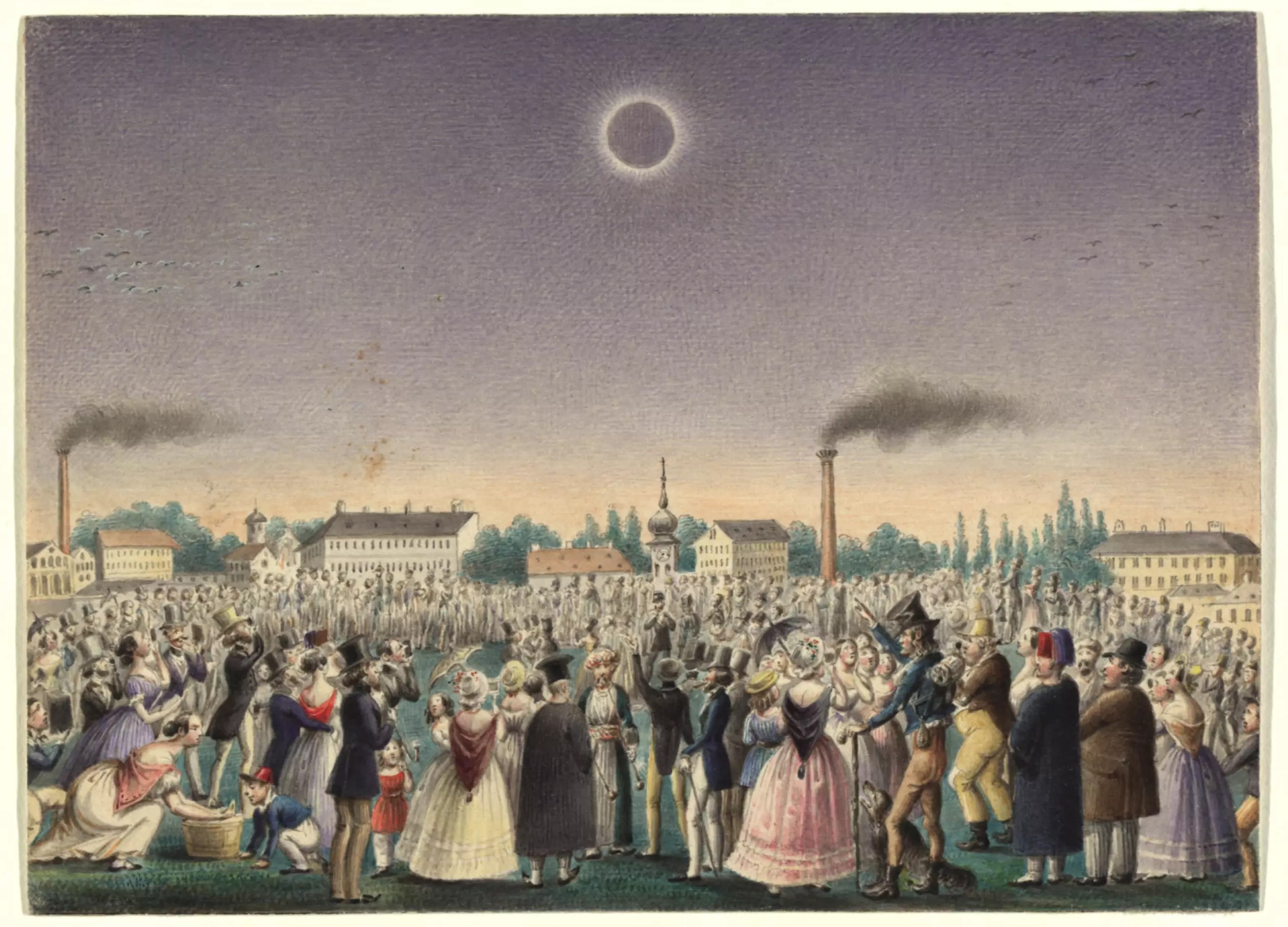
Johann Christian Schoeller, "Sonnenfinsternis, 8. Juli 1842." Wien Museum.

*

John Parker Davis, "Looking at the Eclipse (After Winslow Homer)," 1865. Clark Art Institute.

*


*

Joseph Cornell, "Portrait of Emily Brontë," 1962. The Hudson River Museum.

*

Emily Dickinson archive, Amherst manuscript #256.

*

Crescent-shaped shadows on the snow in the mountains in Bernalillo County, New Mexico, caused by a solar eclipse, photographed by Lee Russell in 1940. New York Public Library Digital Collections.

*

GIFs from Georges Méliès L'éclipse du soleil en pleine lune (The Eclipse: Courtship of the Sun and Moon) from 1907.

*
At one o'clock almost half the sky was blue—two o'clock, and the moon had already bitten a small piece out of the sun's bright edge, still partly obscured by a dimly drifting mass of cloud.

A penetrating chill fell across the land, as if a door had been opened into a long-closed vault. It was a moment of appalling suspense; something was being waited for—the very air was portentous.

The circling sea-gulls disappeared with strange cries. One white butterfly fluttered by vaguely. Then an instantaneous darkness leaped upon the world. Unearthly night enveloped all.

With an indescribable out-flashing at the same instant the corona burst forth in mysterious radiance. But dimly seen through thin cloud, it was nevertheless beautiful beyond description, a celestial flame from some unimaginable heaven. Simultaneously the whole northwestern sky, nearly to the zenith, was flooded with lurid and startlingly brilliant orange, across which drifted clouds slightly darker, like flecks of liquid flame, or huge ejecta from some vast volcanic Hades. The west and southwest gleamed in shining lemon yellow.

Least like a sunset, it was too sombre and terrible. The pale, broken circle of coronal light still glowered on with thrilling peacefulness, while nature held her breath for another stage in this majestic spectacle.

Well might it have been a prelude to the shriveling and disappearance of the whole world—weird to horror, and beautiful to heartbreak, heaven and hell in the same sky.

Absolute silence reigned. No human being spoke. No bird twittered.

Hours might have passed—time was annihilated; and yet when the tiniest globule of sunlight, a drop, a needle-shaft, a pinhole, reappeared, even before it had become the slenderest possible crescent, the fair corona and all color in sky and cloud withdrew, and a natural aspect of stormy twilight returned.

Mabel Loomis Todd, from Corona and Coronet: Being a narrative of the Amherst Eclipse Expedition to Japan, in Mr. James's Schooner-Yacht Coronet, to Observe the Sun's Total Obscuration, 9th August, 1896.

*
It sounded as if the streets were running -
And then the streets stood still -
Eclipse was all we could see at the Window
And Awe - was all we could feel -
By and by the boldest stole out of his Covert
To see if Time was there
Nature was in an Opal apron
Mixing fresher Air

Emily Dickinson 

festive things


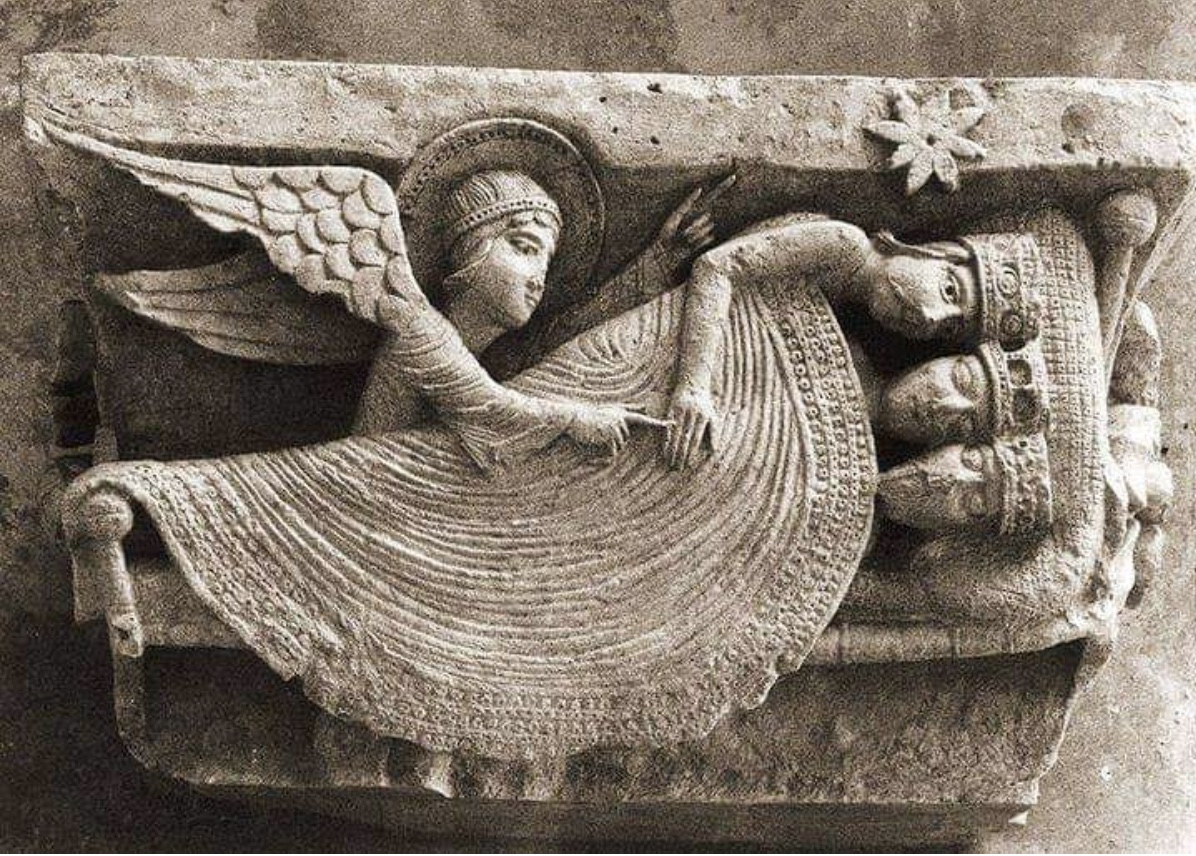
Gislebertus, "Dream of the Magi," circa 1120-30 , Cathedral of Saint-Lazare,  Autun, France. Via Stephen Ellcock.

*

Mary Delany, "Ilex Aquifolium (Tetandria tetragynia)," from an album (Vol.V, 60); Holly with berries. 1775. Collage of colored papers, with bodycolor and watercolor, on black ink background. The British Museum.

*


*

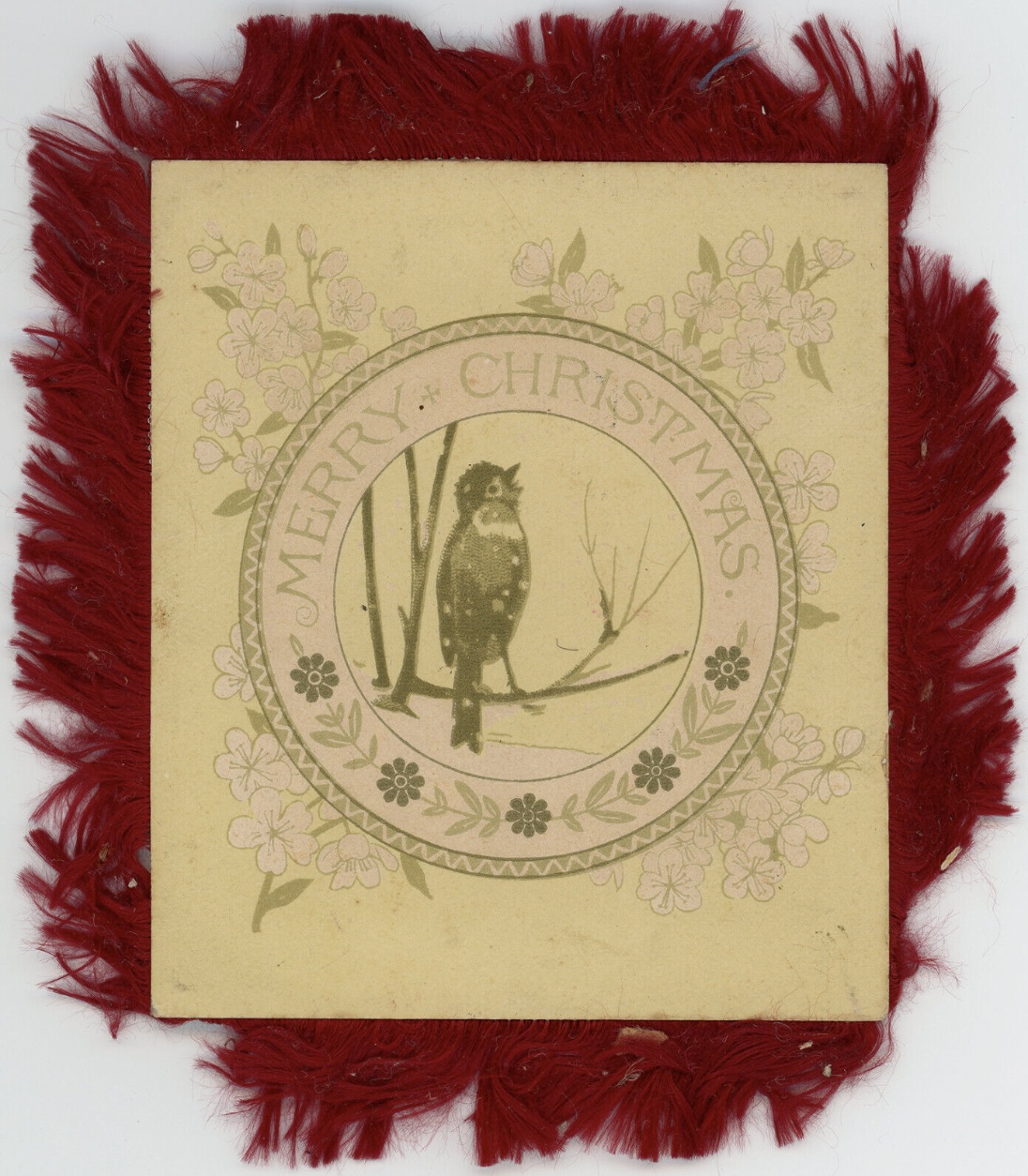
Olivier Dassault, "Untitled/Christmas card," 1987. MFA Boston.

*

Tacuinum Sanitatis, Milan or Pavia, ca. 1390-1400. Via The Fortnight Institute.

*

Schreiber pop-up toy theater book, ca.1885. The V & A.

*


Holiday dress of my dreams: Rothermal Theater Dress by Bode.

*

Star Finial, artist unidentified, United States, 1875–1925, paint and gilding on metal, 45 × 22 × 9 in. American Folk Art Museum.

*


*
... [W]e are seeing our own mortality in the close of day and year. The hours of sunlight run by more quickly, and we’re left behind in the darkness. It’s hard now to feel the privation of former winters, or experience the desolation of the landscape; it’s not even likely to snow. But we see the trees unleafing, and sense the different strains of winter light: sometimes bright and cold, often thin and misted. Much of our enjoyment of this gauntness is in relief. Fasting for advent used to make a penitence of nature’s dearth, relieved at last by ecstatic abundance. On Christmas Eve congregations would hang the branches of the churchyard trees with apples. In Moscow, they deck avenues of leafless boughs with red and gold baubles, which has the same effect.

Our contrivance of these spots of colour has its roots in nature’s contingencies: red berries on a black branch, an evergreen tree in a field of snow—Ruskin’s lesser beauties perhaps. But it takes a mind to frame them, to put the tree in a painting or a living room. Sometimes novelty itself seems poetic, as though the product of design. ... We aestheticise the tree by changing its setting, or we admire it through a picture. Christmas itself is a removal, separated from the rest of the year by its spangles and pageantry. The season makes us tourists of our own nostalgia; it’s best not to think too hard about the absurdity of chopping down a tree and covering it with tiny ornaments. What do we do with the wanwood when the new year comes? In the 16th century, after the feast and the dancing, the tree would be ceremonially burned, marking the end of festivities with a final brilliant spectacle, which does seem better than leaving it on the street for the council to collect.

Alicia Sprawls, "Christmas Trees." London Review of Books,  1/5/2017.

*
In 1419, the Freiburg bakers’ apprentices noted having seen a tree set up in a hospital, decorated with apples, wafers, gingerbread, and tinsel. In Riga, in 1510, a brotherhood of merchants are said to have set up a tree around Christmastime, then decorated it with thread and straw; they burned it at Lent. Many of the hints of early Christmas-tree—or solstice-tree, or New Year’s tree—traditions come from rules limiting them. A regulation in Upper Alsace specified that each citizen could take from the forest no more than one pine, of a height no more than eight shoes. A 1611 ban against felling trees in the Alsatian town of Turckheim is arguably the first appearance of the term “Christmas tree”: Weihnachtsbaum.

Rivka Galchen, "The Science of Christmas Trees." The New Yorker, 12/6/2022. 

*
One thing is for certain—I wouldn’t want to be a Christmas tree. It would be nice to be the center of attention, to be so decorated and lit that people stared at you in wonder, and made a fuss over you, and were mesmerized. That would be nice. But then you’d start dropping your needles and people would become bored with you and say you weren’t looking so good, and then they’d take all your jewelry off, and haul you off to the curb where you would be picked up and crushed and eventually burned. That’s the terrible part. Maybe that’s why so many people today have fake trees. They are quite popular. Their limbs come apart and you can put them in boxes and store them. You can have one of these trees until you die and you can pass them on to your children. They may not be real but when you look at them you can’t tell the difference. That always makes people happy—not being able to tell the difference. And happiness, to want to be happy, is the most natural thing of all.

Mary Ruefle,  "Recollections of My Christmas Tree.Harpers, December 20, 2013. 

*

See also: Robert Frost, "Christmas Trees."

*


*

Merry everything, friends.


boxed


Joseph Cornell: Untitled (Tilly Losch). Dated 1935-38.