Showing posts with label apples. Show all posts

a handful of apples / october


*

Cypriot limestone hand holding a piece of fruit. The Metropolitan Museum of Art.

*

A photograph of unpeeled apples by Richard Tepe, ca. 1900-1930. The Rijksmuseum.

*

Bruised stone apple, from the archives of criticalEYEfinds.

*

"Apples," folio 48 (verso), from Florilegium (A Book of Flower Studies), 1608. The Cleveland Museum of Art.

*

Doris Ulmann, "Women Gathering Apples," ca. 1930s. Ogden Museum of Southern Art

*


*

James Nasmyth,"Back of Hand & Shrivelled Apple. To illustrate the origin of certain mountain ranges by shrinkage of the globe," ca. 1870 (in or before 1873). From The moon : considered as a planet, a world, and a satellite.

*
The composer's white summer suit rests on a hanger in his study; his broad-brimmed Borsalino and stick are on a nearby table. Here is the Steinway grand he was given on his fiftieth birthday (though he composed in head, not on the piano); there is a run of the National Geographic Magazine covering the last five years of his life. On the Russian oak desk at which he worked from the time of his marriage in 1892 lies the wooden ruler Aino carved for him, with which he ruled his scores; also, an empty box of Corona cigars, and an elegant Tiffany photo frame, containing a portrait of Aino, through which the light streams. Open on the desk is a facsimile score of his greatest symphony, the Fourth. But the homely is never far away: in the kitchen, screwed to the wall, is an apple-coring machine Sibelius brought back from one of his trips to America. Made of black cast-iron, it is a Heath Robinsony contraption of prongs, screws, and blades that will peel, core, and slice your apple at the turn of the handle. From the same trip he also brought his wife a Tiffany diamond; but it is the apple-corer that sticks in the mind.

Julian Barnes, from "Ainola: Music and Silence." The Lives of Houses, ed. by Kate Kennedy and Hermione Lee. 

*
The apples are everywhere and every interval, every old clearing, an orchard. You pick them up from under your feet but to bite into them, for fellowship, and throw them away; but as you catch their young brightness in the blue air, where they suggest strings of strange-colored pearls tangled in the knotted boughs, as you notice their manner of swarming for a brief and wasted gayety, they seem to ask to be praised only by the cheerful shepherd and the oaten pipe.

Henry James, from New England: An Autumn Impression, 1905. Via The New York Review

*
The white October sun circles Kirchstetten
With colours of chrysanthemums in gardens,
And bronze and golden under wiry boughs,
A few last apples gleam like jewels.

Stephen Spender, from "Auden's Funeral."

*
I always think of those curious long autumn walks with which we ended a summer holiday, talking of what we were going to do–‘autumn plans’ we called them. They always had reference to painting and writing and how to arrange social life and domestic life better … They were always connected with autumn, leaves falling, the country getting pale and wintry, our minds excited at the prospect of lights and streets and a new season of activity beginning–October the dawn of the year.

Virginia Woolf, writing to her sister Vanessa Bell, ca. September 1927.

*

odds and ends / 9.14.2023


Image of two trees, shared by Rebecca Herbert: "The thinner tree was cut years ago and the big one has been holding and feeding it since then. They 'wake up' together in the spring and 'go to sleep' together in the autumn."

*

"Experiments with Dailiness," an exercise from The Art of Science Writing by Dale Worsley and Bernadette Mayer, via Common Books.

*

Fairfield Porter, Interior by electric light, 1966.

*
Soldered house, ca. 1900s, via tihngs.

*

Sarah Holloway's Apple Powered Computer, 2023. Gleaned Macintosh Plus computer (circa 1987) powered by crab apples housed in a cabinet made of repurposed hog-feed crates. For Mold, Holloway writes:
It took a lot of apples to run the computer and it didn’t last for long but the point still was there, that all our systems are connected and our food and ecological systems are either directly or indirectly tied to our computers and digital technologies. Data centers take up space like mono crops and they take insane amounts of energy. The project is meant to be a fun way of wondering how our food and tech systems make strange bedfellows. A few weeks ago I was talking to a friend who told me about a farm her friend manages. It is owned by a tech company based in Vancouver, Canada. They have a farm that tech workers are allowed to go to for “rejuvenation.”(Think therapy horses but like pulling carrots).

The world is a weird place where technology and industry are flowing into all other sectors.
*
I was once driven in a taxi by a man who had no room for a piano in his house and had moved it under an apple tree. He told me he liked to hear the rain falling on the keys or sometimes fruit, and often the wind would arrive at night and bang branches on the broken lid.
 
That was 10 years ago. I imagine it is worn down now to a skeleton of wires. I imagine on windless nights, the moon moves over the wires, playing silence. There are wonderful tunes composed of a piano, but if, like me, you are interested in the edge where the mind gives up and matter begins to describe itself, then these weather tunes, these erosions, unpredictably composed by time itself, are worth celebrating. Perhaps, as Bergsten said, there is a mathematical order inherent in matter, and we have only to stop speaking—we have only to stop composing and performing and singing and thinking to hear it. 

Alice Oswald, from her lecture, "The Art of Erosion," given on 9/12/2019 at the University of Oxford.

*
Many scientists have been upset because Barbara McClintock characterized herself as a mystic. But to her, mystic did not mean someone who mystifies ... Instead, for Barbara McClintock, a mystic was someone with a deep awareness of the mysteries posed by natural phenomena. Mystification came, in her view, when we tried to use our current concepts to explain phenomena that demanded new ways of thinking.


James Shapiro, quoted by Alexis Madrigal in his Oakland Garden Club essay, "What Was Barbara McClintock's Mysticism?" I keep re-reading the ending:

We are assemblages of cooperating cells and tissues, each unit of life competent within the spaces our body creates. Trillions of brilliant little cells each doing its thing to make … me. I’m held together by bioelectric fields and metabolic processes and the convenient sense that I am a single being. At my own scale, I am a galaxy of sorts, hiding in plain sight, obscured by the bright sun of consciousness. And so are you.

Or, as McClintock told her biographer, “Basically, everything is one. There is no way in which you draw a line between things.”

*

Remembering Steve Roden: "In this world there are some artists who listen so very deeply, who cherish the minor, the incidental, the unexpected, the hushed; Steve was one such artist."

*
Not everything she tried worked, and some critics complained about the too-muchness of it all, her books like an overstuffed shopping bag, full of odd characters and clever lines that should have been left on the shelf ... in the end none of those blemishes really matters. What does matter is the ever-continuing ambition, the steady professionalism, the fact that [Zadie] Smith hasn’t frittered away her early success into unproductive stardom. What matters is that it’s a long time since she’s sounded like anyone else. She’s made her world ...

Michael Gorra, "Playing with the Past." The New York Review, 9/21/2023.

*


*
At a time when revolution gripped the country, the Whole Earth Catalog reflected [Stewart Brand's] right-wing thought by omission. After one young staffer suggested ways to make the catalog more political, Stewart vetoed the notion with a surprising set of rules: “No politics, no religion, and no art.” What was left? Computers and shopping. As a futurist, he had that much right.

Malcolm Harris, "The Zen Playboy: The Life and Times of Stewart Brand." The Nation, 6/13/2022. 

*

"o meager times, so fat in everything imaginable !"

foodie gifts you should not eat


Beer that is easy to burn off (because it is actually a candle by Cereria Introna).

Japanese crayons with pigments made from cabbages and leeks, corn and carrots.

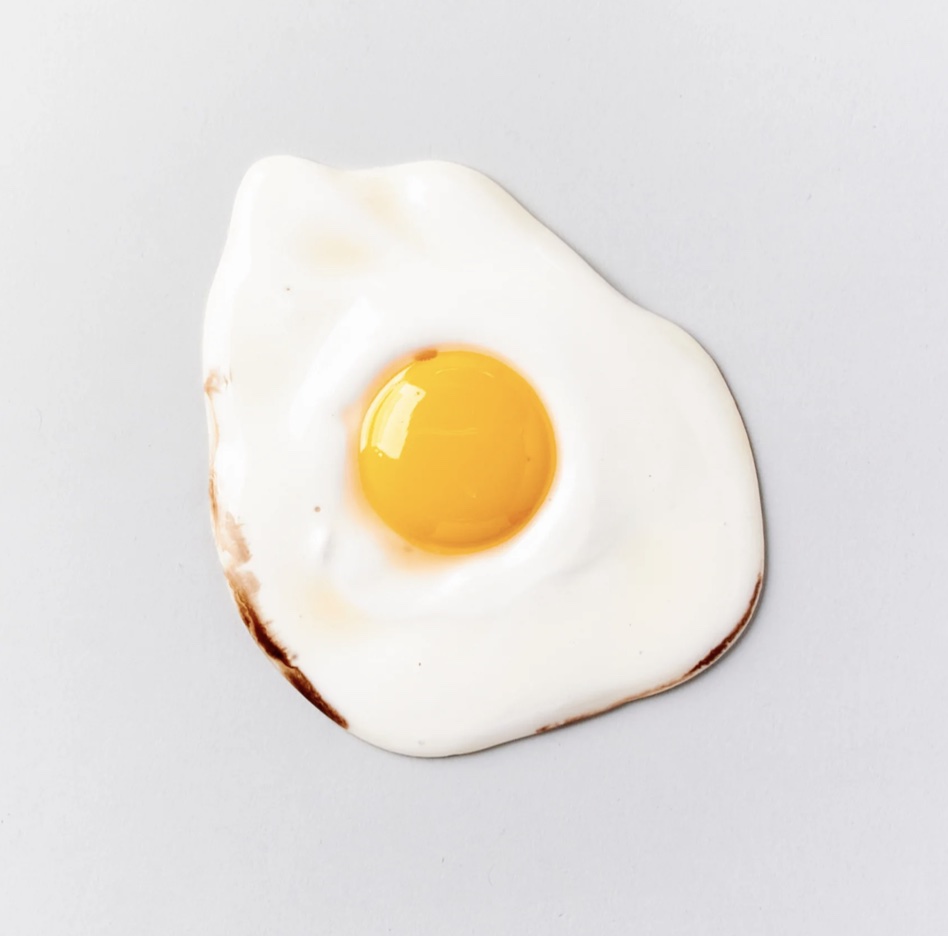
Chris Chiappa's fried egg sculpture at Good Friend (or if you prefer soft-boiled, these).


Gohar World's plate of beans.


Disco cherries (or ice cream or pineapples) by Sofiest Designs.

Jellycat's extremely huggable sandwich (or Folkmanis wormy apple).


The ultimate New York City bagel.

An arty cookbook by Esther Choi that "uses food to create edible interpretations of modern and contemporary sculptures, paintings, architecture, and design."

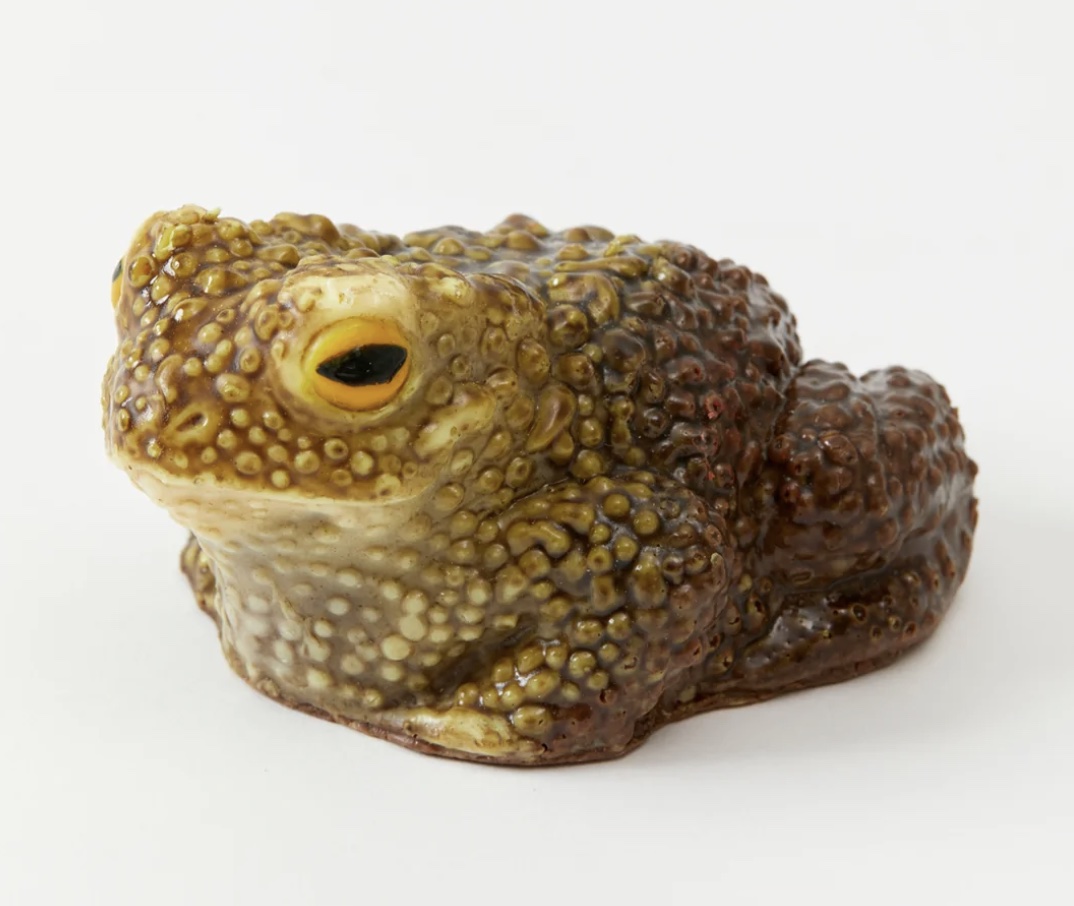
And a Fortnum and Mason chocolate toad—frighteningly lifelike, but actually eatable!

birthday gifts some 44-year-olds might enjoy


In a digression at the end of The Cave of Forgotten Dreams, Werner Herzog trains his cameras on a group of albino crocodiles basking in pools of runoff from a nuclear power plant and muses on crocodiles staring into the abyss of time. For this reason, the image of mortality in my mind is a white crocodile, and the crocodile of time feels very near at my birthday, when I wonder if this is the year it eats me. And maybe because I have spent past few weeks thinking of ghost crocodiles, I misread a sign the other day as "ghost lobsters" and suddenly had a hilarious and terrifying vision of what it would be like to be visited by the ghosts of all the lobsters I have ever ate, hearing the ghost-rattle of their exoskeletons, their ghost eye-stalks observing me, an army of the crustacean dead trailing ghost butter and clouds of steam. And then I half-remembered hearing Edna O'Brien describe a bad experience with LSD, which seemed to involve years of seeing her phone as a lobster, and apparently Jean-Paul Sartre, too, was plagued with visions of lobsters. He kept seeing three or four at a time after a mescaline trip, knew they were not real, but saw them there just the same. So maybe the lobsters are waiting in my psyche with the crocodile.

Fortunately, I forgot all of this on my actual birthday and had an uncommonly nice time. 

Some gifts:

A tool for measuring the blue of the sky, based on blue skies in Ukraine.

Monogrammed rose-scented lip balm by Officine Universelle Buly. 

A matching Sayaka Davis scarf and sweater.

A book out of print: Sam Stephenson's Love and Work: Lyric Research on Jason Molina.

A Marcie McGoldrick ring that doubles as a family portrait.

butterfly hair claw (or a cloud barrette).

Bright Himukashi wool socks.

A pleasingly wobbly hairbrush by Y.S. Park.

Ithell Colquhoun's Color as Taro.

Porcelain lady apples.

The complete Virago Modern Classic Collection and the most beautiful bookshelf to hold them, made by Sara Levitas Design Studio.

Perfect gold shoes by Avril Gau, just right for stepping into another year.

Money to send to women fighting to live life on their own terms in the U.S. and in Iran.

gifts empyrean and edenic


A comet-strewn tea towel celebrating Caroline Herschel, from a design by Judy Chicago.

Nested trees for desktop edens.

Paradisiacal apples (more specifically, the tree to grow your own).

A book of Leonora Carrington's otherworldly visions.


A scarf dyed with the colors of the world.

Celestial objects, suspended in alignment

A tempting serpent (Sheila Metzner's Hand With Snake, 1994, available on 1stDibs).