

*
1980s British Telecom Picturephone at wertwerk.kr, via Mildew.
*
Button seemingly referencing Gilbert and Sullivan lyrics in "The Sun Whose Rays Are All Ablaze" from Act 2 of The Mikado:
Ah, pray, make no mistake, we are not shy
We're very wide awake, the Moon and I
*
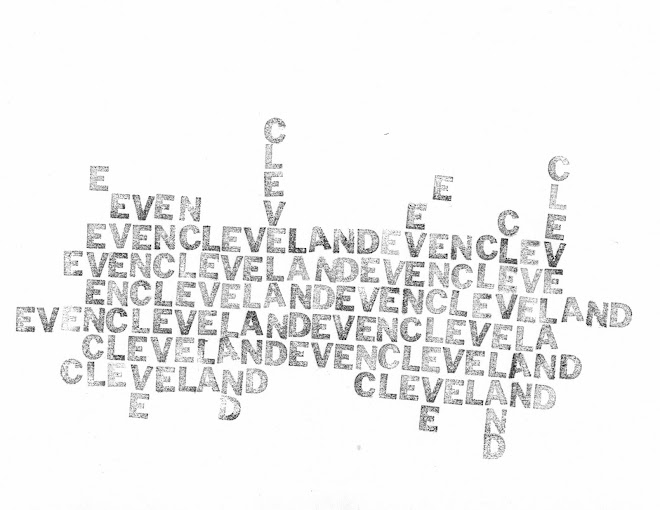
Ray Johnson's "Evaporations" book stamp, via the London Centre for Book Arts:
Johnson had his "Evaporations by Ray Johnson" rubber stamp made after a May 1970 Artforum article by Robert Pincus-Witten that mused on the legacy of Pop art and dismissed Johnson, along with "Wesselman, Indiana, Marisol,…[and] so many others" as “evaporations” who had "fall[en] away to nothingness."
*
People today, especially younger people, have to go out of their way to know literature qua literature—to understand it as a living thing separate from trade publishing as presented to them by mainstream reviews and Goodreads. They live in a world in which people are happily (always happily) "creative"; they understand an activity called "creative writing"; they might even know that there are many professional writers spread across the land like peppercorns spilled across a hardwood floor, teaching at universities and community colleges while paying off debts to Home Depot and Subaru, watching Netflix, and checking their retirement accounts. They understand, at every level from pillow design to haute cuisine to wet-sand sculpture, the whole idea of "art"; but what is meant by "literature," in the sense that Howard deploys it throughout his study of [Malcom] Cowley, has largely passed from view. The idea that a small number of people belonging to each generation have thrown themselves at literature, have tried to become part of it and pound it and reshape it and alter its history—that they have risked their chances of satisfactory, comfortable lives for it—all of that is becoming increasingly difficult to explain.
Vince Passaro, "In the Aftermath of Victory: Malcom Cowley and the Dream of the American Canon," Harpers, January 2026.
*
What people click—and what they think they like—is largely a matter of what is available to them. Publics are made and maintained, not discovered preformed, like rock formations. It is a sign of a fatally limited imagination to assume that we can only ever desire the pittance to which we are currently reconciled. It is par for the course that, in a woefully limp statement on the carnage, the [Washington] Post’s executive editor, Matt Murray, referred to the paper’s subscribers not as “readers” but as “consumers.” A consumer is a person whose preexisting tastes you strive to satisfy over and over; a reader is someone you hope to change, convince, and surprise. ... The prospect of a paper that flatters its readers by regurgitating what they already click is familiar and depressing. It puts me in mind of [Jeff] Bezos’s other marquee product, another service that dealt a disastrous blow to books. On Amazon, the glorious inconvenience of browsing shelves or combing through piles has been eliminated. There is no occasion to pick up an unfamiliar book out of sheer curiosity. Every book that the site’s algorithm recommends is similar to one that you have purchased already. In this way, you encounter nothing but iterations of yourself forever. It is a world in which the customer is always right. But if you didn’t want to be proved wrong, if you didn’t want to be altered or antagonized in ways that you could never predict, why would you read at all?
Becca Rothfield, "The Death of Book World," The New Yorker, February 10, 2026.
*
"The Learner must be led always from familiar objects toward the unfamiliar, guided along, as it were, a chain of flowers into the mysteries of life."
*
"I had a transcendent experience three or four years ago when I decided I was going to finally dust my books, and had to take all of them down by hand," he said. "It was sublime. I couldn’t restrain myself from going through each book. Every one had a whole story for me."
Richard Hell, describing his apartment in the New York Times, March 4, 2026 (gift link).
*